

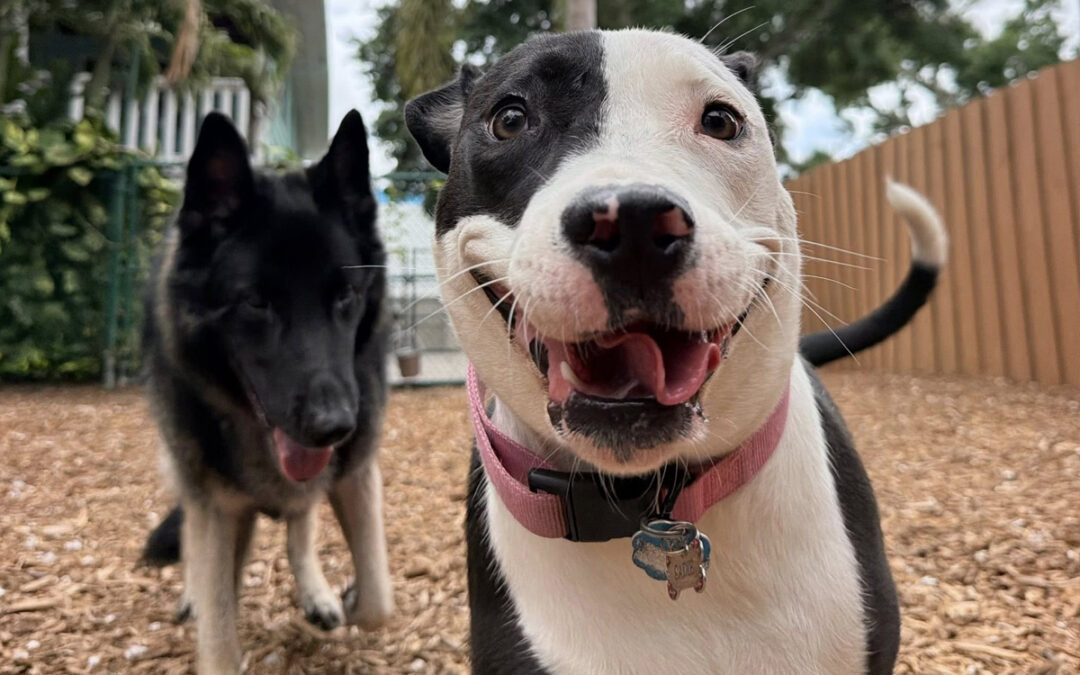
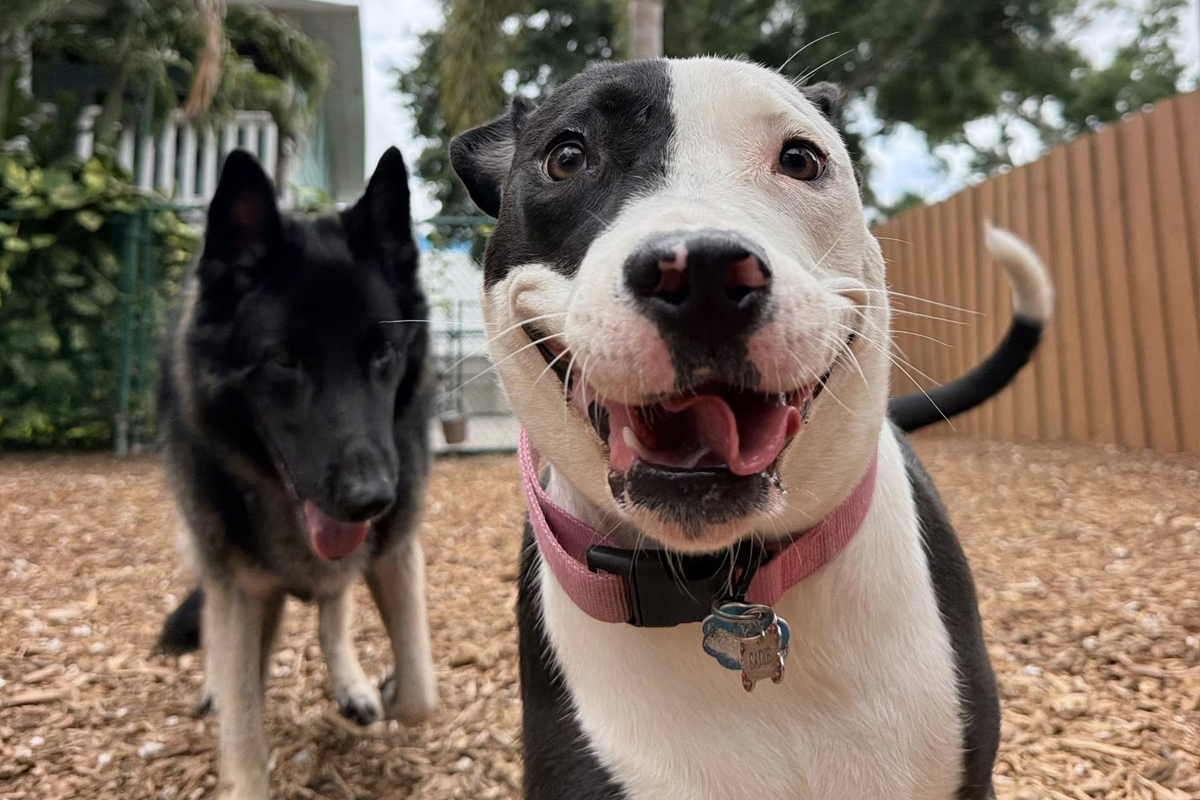
Summer is one of those seasons when homes tend to feel much more open.
People stop by more often. Family visits. Friends come over. Kids bring other kids in and out. Vacation schedules create overnight guests, longer stays, and a lot more movement through the front door than usual. For many families, that is part of what makes summer feel fun and full. But for a lot of dogs, it can also make the house feel much more overstimulating than normal.
As a trainer and business owner, I see this every year. Owners start realizing very quickly that their dog is not as comfortable with visitors as they had hoped. Maybe the dog jumps, barks, rushes the door, shadows guests around the house, cannot settle once people are over, or acts so excited that everyone feels a little tense. Sometimes the dog is not aggressive at all. They are just emotionally unable to handle the constant change in the home without losing control.
That is why summer guests can become such a big issue.
They do not just test whether the dog is “friendly.” They test whether the dog can stay calm when the home no longer feels quiet, predictable, and familiar. And for many dogs, that is exactly where the struggle starts.
Visitors Change the Emotional Tone of the House
I think one of the biggest things owners miss is that visitors do not just add people. They change the whole emotional tone of the home.
The sound is different. The movement is different. Conversations are different. The front door opens more often. People may be carrying bags, laughing more loudly, walking through different rooms, staying later than usual, or sleeping in spaces the dog is used to seeing empty. Even if the guests are calm and kind, the dog still feels that the house is not moving in its normal pattern.
For a dog who already struggles with overexcitement, poor settling, weak impulse control, or sensitivity to routine changes, this can feel like a major disruption.
That is when owners start seeing all the little weak spots in behavior become much more obvious. The dog who was “a little excitable” becomes impossible to settle. The dog who “loves people” becomes physically overwhelming. The dog who “just barks a bit” now barks every time someone moves. It all starts to feel bigger because the environment is asking more from the dog than it usually does.
Being Friendly Is Not the Same as Being Calm
This is something I think matters so much.
A lot of owners assume that because their dog likes people, guests should not be a problem. But friendliness and calmness are not the same thing at all.
A dog can absolutely love visitors and still be terrible with visitors.
They may jump all over them, bark nonstop, crowd them, follow them room to room, lose all ability to listen, or stay emotionally elevated the entire time someone is in the home. That kind of dog may look social, but they are not stable. They are overwhelmed by their own excitement and do not know how to hold themselves together while guests are present.
As a female trainer, I think this is one of the hardest dynamics for owners because people often excuse it for too long. They say the dog is just happy, just excited, just loves company. But after a while, that same behavior becomes stressful for everyone. The guests cannot relax. The owners cannot relax. And the dog is not actually relaxed either.
That is why calmness matters so much more than friendliness.
Summer Guests Create Repetition Very Fast
One reason this issue becomes so obvious in summer is that the dog gets more chances to rehearse it.
If guests only come over once in a while, owners may be able to brush off the behavior or try to manage it in the moment. But during summer, when visitors are more frequent or houseguests are staying longer, the dog starts practicing the same emotional routine again and again.
The door opens. The dog explodes.
People move through the house. The dog follows or reacts.
Guests sit down. The dog cannot settle.
Someone stands up. The dog pops back up with them.
Over time, that pattern becomes stronger.
The dog starts expecting every visit to feel big and chaotic. Their body goes there faster. Their excitement builds earlier. Their ability to listen drops sooner. What might have started as a manageable issue becomes much harder because repetition is teaching the dog that houseguests always mean heightened emotion.
That is exactly why early structure matters so much.
Calm Guest Behavior Has to Be Taught Before Guests Arrive
I think this is one of the most important truths owners can understand.
A dog does not usually learn how to be calm around visitors while visitors are already filling the house. That is much harder. By then, the dog is often too stimulated, too emotional, and too practiced in the wrong routine to suddenly make better choices.
Calm guest behavior has to be built ahead of time.
That means the dog needs to learn how to hold place, how to wait, how to move away from the door instead of rushing it, how to settle while people are present, and how to stop making every visitor the center of their emotional world. They need to experience calmness as the pattern, not chaos.
That is one of the reasons board-and-train can help so much with this kind of issue. It gives the dog repeated practice with stronger structure before the summer guest pattern has a chance to keep deepening.
Board-and-Train Helps Dogs Stop Living in a State of Anticipation
One thing I notice often with houseguest-related behavior is that many dogs are not just reacting to the guest. They are reacting to the anticipation of the guest.
They hear movement at the door and start rising emotionally right away. They hear people talking in another room and start becoming alert. They follow someone down the hallway because they do not know how to let go of the need to monitor what is happening. They struggle to lie down because every moment feels like something might happen next.
That constant anticipation is exhausting for the dog and for the family.
A good board-and-train program helps break that pattern by teaching the dog that they do not need to be emotionally involved in every single movement in the house. They begin learning that someone can enter, stand up, sit down, move around, or carry on a conversation without it becoming their job to react. That is a huge shift.
And for dogs who have spent a long time living in a constant state of anticipation around guests, that kind of change can be life-changing.
A Calm Dog Makes Summer Feel Better for Everyone
I do not think this part gets enough attention, but it matters.
A dog who can stay calm around visitors changes the feel of the whole season.
The owner can enjoy company more. The guests can relax. The children can move more naturally through the house. Meals and conversations feel easier. The dog is still part of the home, still included, still loved, but they are no longer turning every social moment into something the family has to brace for.
That emotional difference is huge.
Owners often do not realize how much tension they have been carrying until it starts lifting. They stop anticipating chaos every time someone knocks. They stop apologizing for the dog before people even come in. They stop feeling like the dog is one more thing they have to manage in a season that is already busy enough.
From my perspective, that relief is one of the most meaningful outcomes of good training.
Houseguests Require More Than a Quick Fix
When people are staying overnight or for several days, this issue becomes even more important.
A short visit is one thing. A dog may get overstimulated, but eventually the person leaves and the house resets. Houseguests are different. The dog has to live inside the change for longer. New sleeping patterns, new movement through the home, new voices, more doors opening and closing, luggage, food, shared spaces, and less privacy for everyone can make a fragile dog feel emotionally overloaded very quickly.
That is why stronger settling skills matter so much.
The dog has to know how to be calm even when the home no longer feels completely like their own predictable routine. They need more than social tolerance. They need emotional stability. And that is something that takes more than hoping they will “get used to it.” It usually takes clearer structure and repeated practice.
Helping your dog stay calm around summer visitors and houseguests is really about teaching them how to handle a fuller home without losing control.
Summer guests do not just bring people into the house. They bring movement, unpredictability, new routines, and emotional pressure that can expose every weak spot in a dog’s behavior very quickly. A dog who jumps, barks, shadows, or cannot settle is often not being difficult on purpose. They are showing that they do not yet know how to stay stable when the home gets more active.
That is why structure matters so much.
From my perspective, the goal is not just to have a dog who tolerates guests. It is to have a dog who can truly live through a busy summer season with more calm, better self-control, and much less chaos for everyone in the home.
Contact The DogHouse LLC to learn how a structured board-and-train program can help your dog stay calmer around summer visitors, houseguests, and all the extra activity that comes with a busier season.