

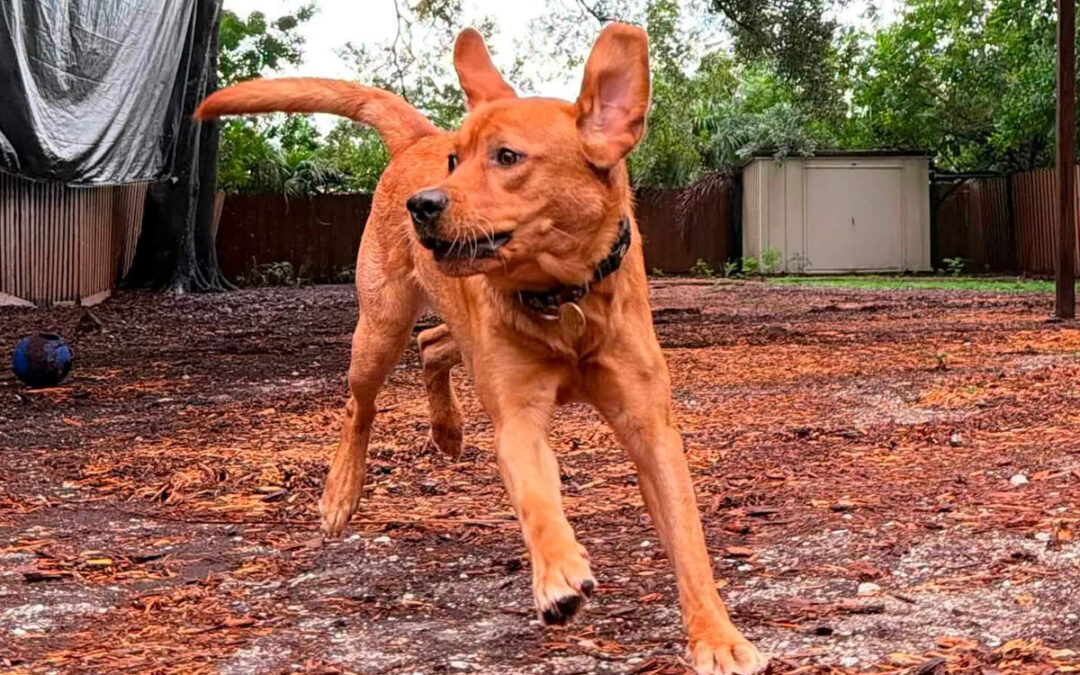
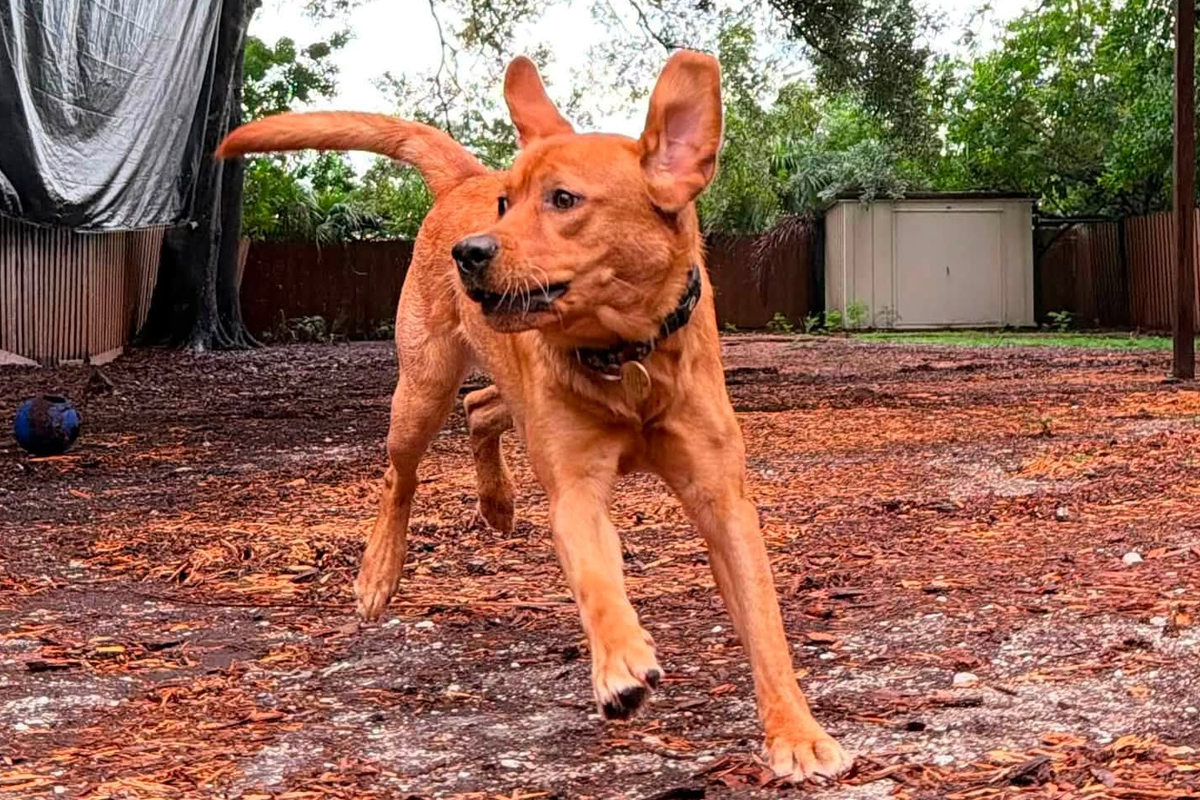
Neighborhood activity can be difficult for dogs to ignore.
People walk past the house, children ride bicycles, delivery drivers stop nearby, lawn equipment runs, dogs bark behind fences, and wildlife moves through yards and sidewalks. In Pinellas County, outdoor activity may continue from early morning through the evening, especially during warmer months when families adjust their schedules around the heat.
Some dogs notice these changes and move on. Others become emotionally involved in nearly everything they see or hear.
They may bark through the window, rush toward the door, stare at people passing, pull toward dogs on walks, or patrol the backyard fence. Even when the activity is harmless and far away, the dog may react as though it requires their full attention.
Helping a dog become more neutral does not mean teaching them to ignore the world completely. It means helping them notice ordinary activity without feeling the need to chase, bark, pull, investigate, or control it. This kind of emotional stability is an important part of the dog training and boarding support families receive from The DogHouse LLC in Pinellas County, Florida.
Neutrality Is Different From Obedience
A dog may understand basic commands and still struggle with neighborhood activity.
They may sit when asked inside the home, come when called in the yard, and walk reasonably well when the street is quiet. The problem appears when another dog, person, vehicle, or unexpected sound enters the environment.
At that point, the dog may stop listening.
This does not always mean the dog forgot the command. It may mean the environment has become more emotionally important than the person handling them.
Neutrality is the ability to notice something without becoming controlled by it. A neutral dog can see another dog across the street and continue walking. They can hear a delivery truck and remain on place. They can watch a neighbor enter a yard without barking through the window.
Obedience gives the dog clear actions to perform. Neutrality helps the dog remain emotionally capable of performing them.
Both skills matter.
Constant Exposure Does Not Automatically Create Neutrality
Owners often assume that dogs will eventually get used to neighborhood activity if they see enough of it.
Sometimes repeated exposure helps. In other cases, the dog becomes more reactive because each exposure gives them another chance to practice the same emotional response.
A dog that barks at ten people passing the house is not necessarily learning that people are harmless. They may be learning that passing people should always trigger barking.
The same applies to fence running, leash pulling, fixed staring, and rushing windows.
Repetition strengthens whatever the dog repeatedly does. If the dog remains calm, calmness becomes more familiar. If the dog reacts, the reaction becomes more automatic.
This is why exposure needs structure.
The goal is not to place the dog in front of constant stimulation and wait for improvement. It is to create manageable situations where the dog can notice activity and still remain responsive.
Window Watching Can Become a Full Time Habit
Windows provide dogs with an endless view of neighborhood movement.
A dog may watch people, vehicles, dogs, birds, delivery workers, and children throughout the day. At first, this may seem like harmless entertainment. The problem begins when the dog starts treating every movement as something they need to monitor.
They may stare, stiffen, bark, run from window to window, or remain alert long after the person has passed.
This can become emotionally exhausting.
The dog rarely settles deeply because they are always waiting for the next event. Their resting area becomes a monitoring station, and the home starts feeling like a place they are responsible for protecting.
Limiting access to highly stimulating windows can help break this pattern.
Closing blinds, rearranging furniture, or moving the dog’s resting area does not avoid the problem. It prevents hours of uncontrolled rehearsal while better habits are being taught.
Backyard Access Can Increase Territorial Behavior
The backyard often becomes another place where neighborhood activity feels important.
Dogs hear conversations, gates, vehicles, lawn equipment, and other animals. They may see people through fencing or notice movement along the property line.
A dog with poor neutrality may begin patrolling.
They run the fence, bark at neighbors, react to dogs, and remain focused on activity outside the yard. Over time, they may begin rushing outside with the expectation that something will be there.
This behavior is often self-rewarding.
The dog barks, the person or animal eventually leaves, and the dog may believe their reaction caused the result. Each repetition strengthens the dog’s sense that monitoring the yard is their responsibility.
Backyard time should still include guidance.
The dog should be able to disengage, respond to recall, leave the fence, and return indoors calmly. A fenced space may provide physical safety, but it does not automatically create healthy behavior.
Walks Reveal Whether the Dog Can Stay Connected
Neighborhood walks often provide the clearest test of neutrality.
The dog may encounter people, dogs, bicycles, wildlife, golf carts, construction sounds, and yard activity within a short distance. A dog that becomes emotionally pulled toward each distraction may spend the entire walk scanning and reacting.
The owner may feel like they are simply holding the leash while the environment controls the dog.
A more neutral dog remains aware but connected.
They may look at a person or dog, but they can disengage. They can continue moving, respond to direction, and avoid turning every sight into a major event.
This does not mean the dog must walk without ever looking around. Healthy awareness is normal. The problem is fixation.
When the dog cannot move on, take direction, or release their attention, the environment has gained too much control.
Staring Often Comes Before the Reaction
Barking and lunging are obvious, but the reaction usually begins earlier.
A dog may stop moving, close their mouth, raise their body, shift their weight forward, or stare intensely at something in the distance. Owners sometimes allow the staring because the dog is still quiet.
But staring can be the beginning of emotional buildup.
The longer the dog remains locked on, the harder it often becomes to regain their attention. By the time the barking or pulling begins, the dog may already be too involved to respond well.
Recognizing fixation early gives the owner more options.
They can create distance, change direction, ask for engagement, or move the dog before the emotional intensity grows. Waiting for the reaction makes the situation much harder to manage.
Neutrality is often built in those early seconds, before the behavior becomes dramatic.
Distance Makes Learning Easier
Dogs are more likely to remain calm when a distraction is far enough away.
A dog may be able to notice another dog across the street and still respond. The same dog may lose control when passing within a few feet. This does not mean the dog should avoid all close encounters forever. It means the current training level has a limit.
Working at an appropriate distance helps the dog practice success.
They can see the trigger, remain under guidance, and learn that nothing important needs to happen. Over time, that distance may decrease as the dog becomes more emotionally stable.
Forcing the dog too close too soon often creates the opposite result.
The dog reacts, the owner struggles, and both sides rehearse a difficult pattern. Successful training should challenge the dog without placing them in a situation where failure is almost guaranteed.
Neutrality Does Not Require Greeting Everyone
Some dogs become overly interested in neighborhood activity because they expect access.
They see a person and want attention. They see a dog and expect a greeting. They pull toward children, neighbors, or familiar homes because they have learned that seeing something may lead to interaction.
This expectation can create frustration when access is denied.
The dog begins whining, pulling, barking, or staring because they believe the person or dog should be available to them.
Not every encounter needs to become social.
A dog can pass people without greeting. They can see another dog without approaching. They can remain near neighborhood activity without participating in it.
This kind of neutrality is often more useful than trying to make the dog social with everyone they meet.
Familiar People Can Still Trigger Overexcitement
Dogs do not react only to strangers.
They may become especially excited around familiar neighbors, delivery workers, children, or dogs they see regularly. The dog recognizes them and begins anticipating interaction before the person arrives.
This can make the reaction stronger.
The dog pulls toward a familiar yard, barks when a certain vehicle appears, or waits near the window at a predictable time. Familiarity has created expectation rather than calmness.
Owners may excuse the behavior because the dog is friendly.
Friendly behavior still needs boundaries. A dog should not drag the owner, rush the door, or bark through the window simply because they recognize someone.
Calm familiarity is a better goal than uncontrolled enthusiasm.
Leash Tension Can Increase Emotional Pressure
Owners often tighten the leash the moment they see a distraction.
This may feel necessary for control, but constant tension can add pressure to the situation. The dog feels restraint, becomes more alert, and may begin leaning harder toward the trigger.
The walk becomes physically and emotionally tense.
Clear leash handling matters.
The dog should understand where to walk, how to respond to changes in direction, and how to remain connected without being dragged or allowed to pull continuously. The owner also needs enough awareness to act before the dog is fully fixated.
A loose leash does not mean the dog has complete freedom.
It means the dog and handler are moving together without constant physical conflict. Better leash structure creates clearer communication and can reduce the emotional buildup around neighborhood activity.
Barking at the Door Can Strengthen the Same Pattern
Doorway reactions are another form of neighborhood overinvolvement.
The dog hears a knock, vehicle, voice, or package delivery and rushes toward the entrance. They bark, jump, scratch, or remain stationed at the door after the activity ends.
The family may respond by moving toward the door with the dog.
This can confirm that the alert was important.
A better routine gives the dog a different responsibility. They may go to place, remain away from the entryway, or hold position while the family handles the visitor.
The dog can still notice that someone arrived.
They simply do not need to control the entrance.
This helps reduce the connection between neighborhood sounds and immediate physical reaction.
Place Work Helps Dogs Observe Without Participating
Reliable place work can help dogs develop neutrality inside and outside the home.
A designated bed, mat, or cot gives the dog a clear location while people move, doors open, neighbors pass, or outdoor activity occurs nearby.
The dog learns that seeing or hearing something does not automatically release them from the expectation.
They may notice the movement, but they remain settled. Over time, this teaches them how to observe without becoming involved.
Place work is especially useful near windows, patios, garages, and areas where the dog regularly encounters neighborhood activity.
The setup should still support success.
Placing the dog directly beside the busiest window while expecting perfect calm may be too difficult initially. The distance and intensity should increase gradually as the dog becomes more reliable.
Household Reactions Can Make Activity Seem More Important
Dogs watch how people respond to the environment.
When a delivery arrives, family members may move quickly. When a neighbor walks by, someone may look out the window. When dogs bark outside, people may ask what is happening.
These reactions can make the event feel more significant.
The dog sees the household respond and may believe their own alertness is justified.
Calm human behavior helps lower the emotional importance of ordinary activity.
The family can handle the door without rushing, continue a conversation while someone passes, and guide the dog without turning the event into a group investigation.
The goal is not to ignore real concerns.
It is to show the dog that ordinary neighborhood movement does not require an emotional response from everyone in the home.
More Exercise Is Not Always the Answer
Owners sometimes try to reduce reactivity by tiring the dog out.
Appropriate exercise can support better behavior, but a physically tired dog may still remain emotionally alert. Some dogs become more stimulated through long walks, constant fetch, or repeated backyard activity.
They return home tired but still reactive.
The problem is not always excess energy. It may be a lack of emotional control and an inability to disengage.
Neutrality requires practice with calmness, not only movement.
The dog needs to learn how to notice activity, respond to guidance, and return to rest. Exercise alone does not teach that sequence.
A balanced routine combines appropriate movement with place work, impulse control, calm transitions, and meaningful rest.
Multi Dog Homes Can Magnify Neighborhood Reactions
One dog’s reaction can spread quickly through a multi dog home.
One dog barks at the window, and the others join. One dog rushes the fence, and the group follows. One dog becomes excited on a walk, and the others respond to the movement and tension.
The dogs begin reacting to one another as much as the original activity.
This group momentum can make ordinary neighborhood sounds feel like major events.
Individual training becomes essential.
Each dog should be able to respond to their name, remain on a separate place, and disengage without relying on what the others are doing. Families may need to manage access to windows, doors, and yards more carefully until individual skills improve.
A calm group begins with dogs who can function independently.
Children Can Accidentally Increase Reactions
Children often respond quickly when a dog notices something.
They may run to the window, call out what they see, open a door, or become excited when another dog passes. This adds energy to the moment and may strengthen the dog’s belief that the activity matters.
Children may also encourage greetings.
They want the dog to see a friend, run toward a neighbor, or interact with another dog. The dog begins expecting access whenever someone familiar appears.
Families should create simple rules.
Do not run to the window when the dog barks. Do not open the door because the dog is excited. Do not allow the dog to drag you toward people or animals.
Adults should handle situations where the dog is already reactive or physically difficult to manage.
Dogs Need Time to Recover After Activity
A dog may appear calm once a trigger has passed but remain emotionally elevated.
They continue scanning, breathing faster, watching the direction where the activity disappeared, or reacting more strongly to the next sound.
This means the dog has not fully recovered.
Recovery is an important part of neutrality.
The dog should learn how to notice something, respond appropriately, and then let it go. Without that final step, each event adds more emotional pressure to the next.
A return to place, a calm walking pattern, or a short quiet period can help the dog come back down.
Dogs that recover well are much less likely to carry one neighborhood event through the rest of the day.
Family Consistency Shapes the Dog’s Expectations
Neutral behavior is difficult to build when family members respond differently.
One person allows the dog to bark at the window. Another calls them away. One family member permits greetings on walks while another expects neutrality. Someone opens the door when the dog whines, while another waits for calm.
The dog continues testing because the outcome changes.
Families should agree on the main expectations.
Window barking is interrupted. Doorways require waiting. Walks do not include every greeting. Backyard reactions are not allowed to continue endlessly. Calm behavior creates access.
The exact routine may vary between homes, but consistency helps the dog understand that neighborhood activity does not change the rules.
Management Protects Training Progress
Some owners feel that closing blinds, using gates, or choosing quieter walking times means avoiding the problem.
In reality, management protects the dog from rehearsing unwanted behavior while training develops.
A dog that barks at the window for hours is not improving. A dog that fence runs every afternoon is becoming more practiced. A dog that reacts to several close encounters on every walk is rehearsing the same emotional pattern.
Reducing unnecessary exposure gives the dog fewer opportunities to fail.
Training can then happen under controlled conditions where the dog is more capable of learning. As reliability improves, more freedom and exposure can be added gradually.
Management and training work together.
Neutrality Gives Dogs More Freedom
A dog that can remain neutral is easier to include in everyday life.
They can sit on the patio without barking at neighbors. They can walk through the neighborhood without pulling toward everyone. They can stay in the room when a delivery arrives. They can enjoy the yard without patrolling the fence.
Dogs without these skills often lose access.
Blinds remain closed, yard time becomes limited, walks happen only at unusual hours, and guests become stressful because the dog cannot handle ordinary activity.
Better neutrality creates the opposite result.
The dog earns more freedom because the family can trust them to remain responsive and emotionally manageable.
Board-and-Train Can Help Build Real-World Neutrality
When neighborhood activity affects many parts of the dog’s day, families may feel like they are constantly correcting reactions.
The dog barks at windows, rushes doors, pulls on walks, reacts in the yard, and remains alert long after activity ends. These behaviors often share a foundation of weak impulse control, poor disengagement, and limited emotional stability around distractions.
A structured board-and-train program can help rebuild that foundation.
The dog receives consistent practice with leash behavior, place work, doorway manners, recall, waiting, impulse control, and calm exposure to real-world activity. They learn that people, dogs, vehicles, and sounds can exist nearby without requiring a reaction.
The family also receives guidance on maintaining those habits at home.
This follow-through is essential because the neighborhood will continue presenting the same activity that challenged the dog before training.
Helping your dog stay more neutral around neighborhood activity means teaching them that ordinary movement does not always require their involvement.
People will walk by. Dogs will bark. Vehicles will stop. Children will play. Wildlife will move through yards, and doors will open throughout the day. A dog cannot control every part of the environment, and they should not feel responsible for trying.
Better neutrality comes from clear expectations, appropriate distance, reliable place work, stronger leash behavior, calm household responses, and fewer opportunities to rehearse reactions.
From our perspective, the goal is not to create a dog who never notices anything. It is to create a dog who can notice the world, remain connected to their family, and move on without allowing every sight and sound to control their behavior.
Contact The DogHouse LLC to learn how a professional board-and-train program can help your dog develop calmer neighborhood behavior, stronger emotional control, and more reliable responses around everyday distractions in Pinellas County, Florida.