


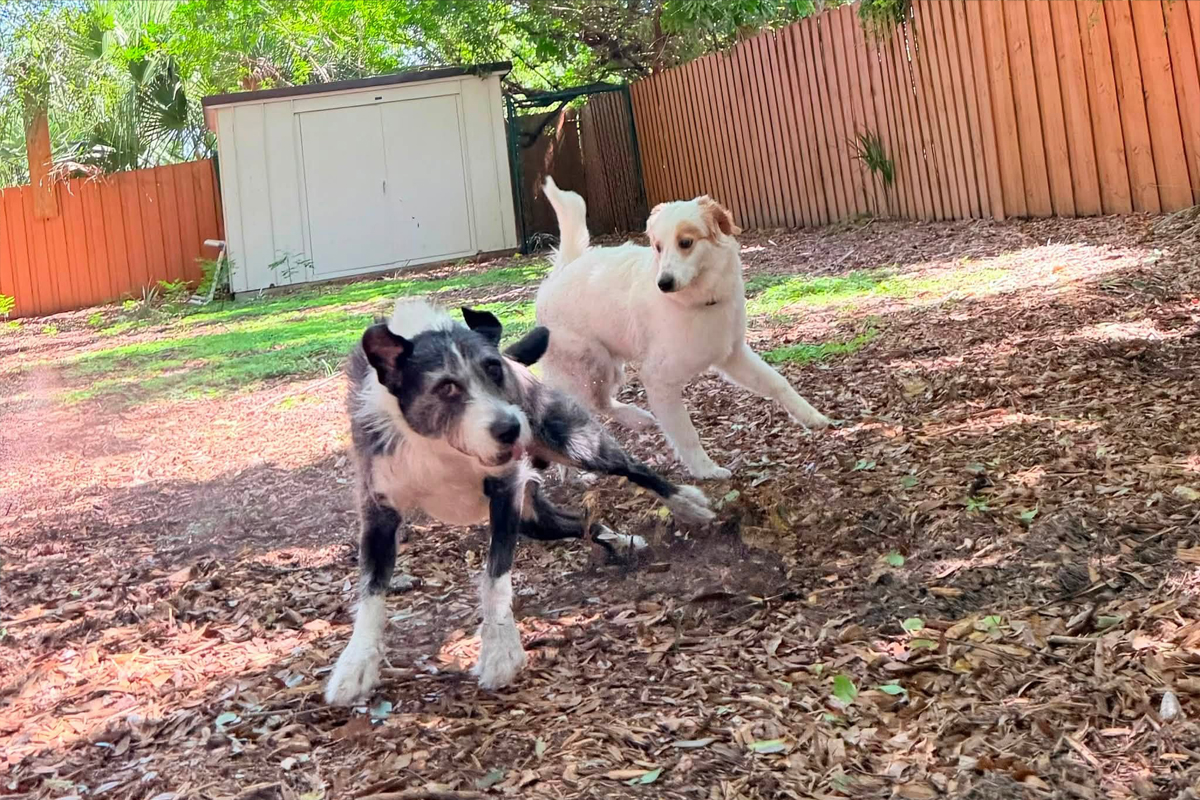
Summer often changes the rhythm of the entire household.
Children may be home more often, work schedules may shift, vacations and day trips become more common, guests come and go, and normal feeding, walking, and rest times may become less predictable. In a home with one dog, these changes can be noticeable. In a multi dog home, they can affect the energy of the entire group.
Dogs are highly responsive to routine, movement, and one another. When the household becomes busier, one dog’s excitement can spread quickly. A change that one dog handles well may make another dog restless, reactive, or more demanding. Small tensions can become easier to trigger, and behaviors that seemed manageable during a steady schedule may become much more obvious once summer begins.
This does not mean multi dog homes cannot enjoy a flexible season. It means the dogs may need more structure than owners expect during periods of change. Maintaining clear routines, individual boundaries, and intentional downtime can help prevent summer activity from turning into household chaos. This is an important part of helping families create calmer multi dog routines at The DogHouse LLC in Pinellas County, Florida.
Dogs Notice Routine Changes Quickly
Dogs often recognize changes in the household before people realize how much has shifted.
They notice when someone is home at a different time, when breakfast is delayed, when the morning walk is shorter, or when the usual quiet afternoon becomes active. They notice suitcases being packed, doors opening more frequently, and family members moving through the home with different energy.
In a multi dog household, each dog may respond differently.
One dog may become more excited and playful. Another may begin pacing or following people. A third may become more withdrawn or protective of resting space. These reactions can influence one another, creating a group that feels less settled even if none of the dogs has developed a major behavior problem on their own.
Consistency helps dogs understand what to expect. When summer removes too many predictable points from the day, the dogs may begin relying more heavily on the activity around them to decide what happens next.
One Dog’s Energy Can Quickly Affect the Others
Dogs living together often feed off one another’s emotional state.
One dog hears a sound and barks. The others join in before they even understand what caused the reaction. One dog runs toward the door, and the group follows. One dog becomes excited before a walk, and suddenly every dog in the room is spinning, whining, and crowding the exit.
This emotional spread can happen quickly during summer because there are more opportunities for stimulation.
People are arriving, children are moving through the house, neighbors are outside, and outdoor activity continues later into the evening. If the dogs are already more alert because the routine has changed, it may take very little for the whole group to become elevated.
Owners often focus on the dog who starts the behavior, but the larger issue is the group pattern. Each dog learns that when one reacts, everyone reacts. Without enough structure, that pattern can become the normal emotional rhythm of the home.
Looser Schedules Can Create More Competition
Summer freedom can create competition that was less noticeable during a more organized routine.
Dogs may compete for attention when family members are home more often. They may crowd around visitors, hover during meals, rush toward toys, or become more involved when people move through the house. If feeding, play, or outdoor access happens less predictably, anticipation can increase.
Competition does not always look aggressive.
It may appear as one dog constantly pushing between another dog and the owner. One dog may block access to a doorway or resting area. Another may become more demanding when attention is given elsewhere. The dogs may begin racing outside, crowding narrow spaces, or interrupting one another during greetings.
These moments can create low-level tension even when the dogs generally get along.
Clear routines reduce the need for dogs to compete. When each dog knows how attention, food, movement, and access are handled, the group does not have to create its own rules.
Changes in Exercise Can Affect Each Dog Differently
Summer heat often changes how much outdoor activity dogs receive.
Walks may become shorter, backyard time may be limited during the hottest part of the day, and the family may shift activity to early mornings or evenings. Some dogs adjust well. Others become restless because they are no longer receiving the same physical outlet.
In a multi dog home, different exercise needs can make the problem more complicated.
A younger dog may still have energy when an older dog needs rest. One dog may enjoy indoor play while another becomes irritated by it. A high-energy dog may repeatedly invite a calmer dog to engage, creating frustration for both.
Treating the group as though every dog has the same needs can increase tension.
Each dog may benefit from individual walks, separate training sessions, or different forms of enrichment. Meeting their needs separately can help them live together more peacefully when outdoor activity is limited.
Constant Group Time Can Become Overwhelming
Dogs that live together do not necessarily need to spend every moment together.
During summer, families may be home more often and assume the dogs are enjoying the additional group activity. But constant access can become overwhelming, especially when the household is louder and busier than usual.
One dog may need more sleep. Another may need a break from play. A dog that normally enjoys the others may have less patience when the home is crowded or warm. Without separate resting areas, the dogs may never fully relax.
This can create subtle warning signs.
A dog may begin leaving the room when another approaches. They may guard a bed, stiffen around shared space, or become quicker to correct playful behavior. These signals often mean the dog needs distance, not more group interaction.
Providing individual downtime is not a punishment. It allows each dog to recover and prevents small frustrations from building into larger conflict.
Visitors Can Intensify Group Behavior
Summer often brings more guests into the home.
In a multi dog household, arrivals can become especially chaotic. One dog barks, another jumps, a third rushes the doorway, and the excitement spreads before the visitor is fully inside. Even dogs with mild greeting issues can become difficult to manage when they are reacting as a group.
This can also make guests uncomfortable or create a safety concern near the entrance.
Trying to control several excited dogs at once is much harder than giving each dog a clear responsibility before the door opens. Place work, individual leashes, gates, crates, or separate greeting routines can help the family manage the moment more safely.
Not every dog needs to greet every visitor at the same time. In many homes, calmer individual introductions create a much better experience than allowing the entire group to rush into the interaction.
Feeding Routines Matter More During Schedule Changes
Food can become a source of tension when summer schedules are inconsistent.
If meals are served at different times, dogs may begin anticipating food for longer periods. They may hover in the kitchen, follow family members, guard feeding areas, or become impatient with one another. Treats and snacks may also be given more casually when children or guests are home.
In a multi dog home, feeding should remain clear and controlled.
Each dog should have a designated space. Food should not be left in shared areas if there is any concern about guarding or stealing. Dogs should not be allowed to crowd one another’s bowls or rush into another dog’s feeding space after finishing.
Predictable feeding routines reduce confusion and competition. They also help prevent minor food-related tension from becoming a more serious problem.
Doorways and Outdoor Access Can Become Chaotic
Summer creates more movement through doors, gates, garages, and patios.
When several dogs rush the same opening, the risk increases quickly. Dogs can collide, redirect frustration toward one another, knock into people, or escape before the owner can respond. Even a group that normally gets along may become tense when everyone is competing to be first through a narrow space.
Teaching dogs to wait individually can make these transitions much safer.
The dogs do not always need to exit together. One may be released at a time, or each dog may be asked to hold a place until invited. This reduces the emotional pressure around the doorway and gives the owner more control.
Calm thresholds are especially important in multi dog homes because excitement multiplies. A routine that begins with one dog rushing can turn into a full group surge within seconds.
Group Play Needs Clear Beginning and End Points
Multi dog play can be healthy, but it should not continue without limits.
During summer, dogs may spend more time together indoors because of the heat. Play can become one of their main outlets, but constant play may also lead to overstimulation. Dogs can become louder, rougher, and less responsive as excitement builds.
Owners should watch for changes in body language and intensity.
Healthy play includes pauses, role changes, and the ability to disengage. A dog that is constantly chasing, pinning, body-slamming, or ignoring another dog’s attempts to stop may need a break. Likewise, a dog that repeatedly tries to leave should not be forced back into the interaction.
Ending play before it becomes chaotic helps protect the relationship between the dogs. A calm transition afterward also teaches them that activity does not have to continue until everyone is exhausted or irritated.
Individual Training Strengthens the Whole Household
Owners in multi dog homes often try to train everyone at once.
Group work can be useful, but individual training is usually necessary first. Each dog needs to understand place, waiting, recall, leash behavior, and basic obedience without relying on what the other dogs are doing.
When dogs only practice together, one may copy another without truly understanding the command. They may also become so focused on each other that the owner loses influence.
Individual sessions help build a direct relationship between each dog and the handler.
Once each dog has stronger skills, those behaviors can be practiced as a group. The owner can ask one dog to hold place while another moves, call one dog without triggering the entire household, and guide the group through transitions more calmly.
This kind of individual reliability becomes especially valuable during a busy summer schedule.
Children Being Home Can Change the Dogs’ Behavior
School breaks can significantly change the environment in a multi dog home.
Children may move through the house more often, invite friends over, leave doors open, carry food, or engage the dogs throughout the day. The dogs may receive more attention, but they may also get less uninterrupted rest.
Some dogs become more playful and excited. Others may become tired, irritable, or overwhelmed.
Families should make sure children understand the dogs still need boundaries and downtime. Resting dogs should not be disturbed. Rough indoor play should be limited, and children should not manage doorways, feeding, or high-excitement situations without appropriate supervision.
A dog that is repeatedly awakened, crowded, or overstimulated may eventually react more strongly than expected. Protecting the dogs’ quiet time helps protect everyone in the home.
Vacation and Boarding Changes Can Affect the Group
Summer travel may temporarily separate dogs that normally live together.
One dog may travel with the family while another boards. The dogs may stay in different environments, follow different routines, or return home with different energy levels. Even dogs that are closely bonded may need time to settle after being reunited.
Owners should not assume the dogs need immediate, high-energy interaction.
A calm reintroduction, structured movement, and individual rest can help the group return to its normal rhythm. Dogs may carry excitement, fatigue, or stress after travel, and giving them space can prevent unnecessary conflict.
Professional dog boarding can also provide structure during travel, especially when the dogs are accustomed to predictable routines and appropriate supervision. Families should share relevant information about each dog’s behavior, feeding, medications, and relationship with the other dogs before boarding.
Restoring Structure Does Not Mean Removing Summer Fun
Some owners worry that maintaining rules will make summer less enjoyable for their dogs.
In reality, structure often allows the dogs to participate in more of family life.
Dogs that can settle around guests, wait at doors, remain calm during meals, and respond individually are easier to include safely. The family can enjoy summer activities without feeling like every moment will turn into barking, rushing, or conflict.
The goal is not to create a rigid household. It is to keep the dogs from becoming responsible for managing the household themselves.
Predictable routines and clear expectations create the stability dogs need to handle flexibility. When the foundation remains strong, schedule changes are less likely to affect the group in negative ways.
Board-and-Train Can Help Multi Dog Homes Reset
This is one of the reasons board-and-train can be valuable for families struggling with group behavior.
Problems in multi dog homes often involve more than one isolated habit. The dogs may feed off one another’s excitement, ignore commands when together, compete for attention, rush thresholds, and struggle to settle as a group.
A structured board-and-train program can help each dog build stronger individual skills.
Place work, impulse control, leash behavior, doorway manners, recall, and emotional regulation can all improve the dog’s ability to function independently. Once each dog is more reliable, the family can begin rebuilding calmer group routines at home.
The goal is not simply to make the dogs behave while separated. It is to create a stronger foundation so they can live together with less competition, less emotional escalation, and clearer guidance from the owner.
Summer schedule changes can affect multi dog homes because every shift in routine influences more than one animal.
More household activity, less predictable rest, limited outdoor exercise, visitors, children, travel, and looser boundaries can all increase excitement and tension. One dog’s reaction may quickly spread to the others, making small problems feel much larger.
Families can help by maintaining predictable feeding and rest times, giving dogs individual attention and training, managing doorways carefully, supervising group play, and providing separate downtime when needed.
From our perspective, multi dog households function best when each dog has clear expectations and the group is not allowed to create its own emotional routine. Summer can still be relaxed and enjoyable, but the structure that keeps the dogs calm, safe, and respectful should remain in place.
Contact The DogHouse LLC to learn how a structured board-and-train program can help the dogs in your home develop better individual skills, calmer group behavior, and more reliable routines throughout the busy summer months in Pinellas County, Florida.