


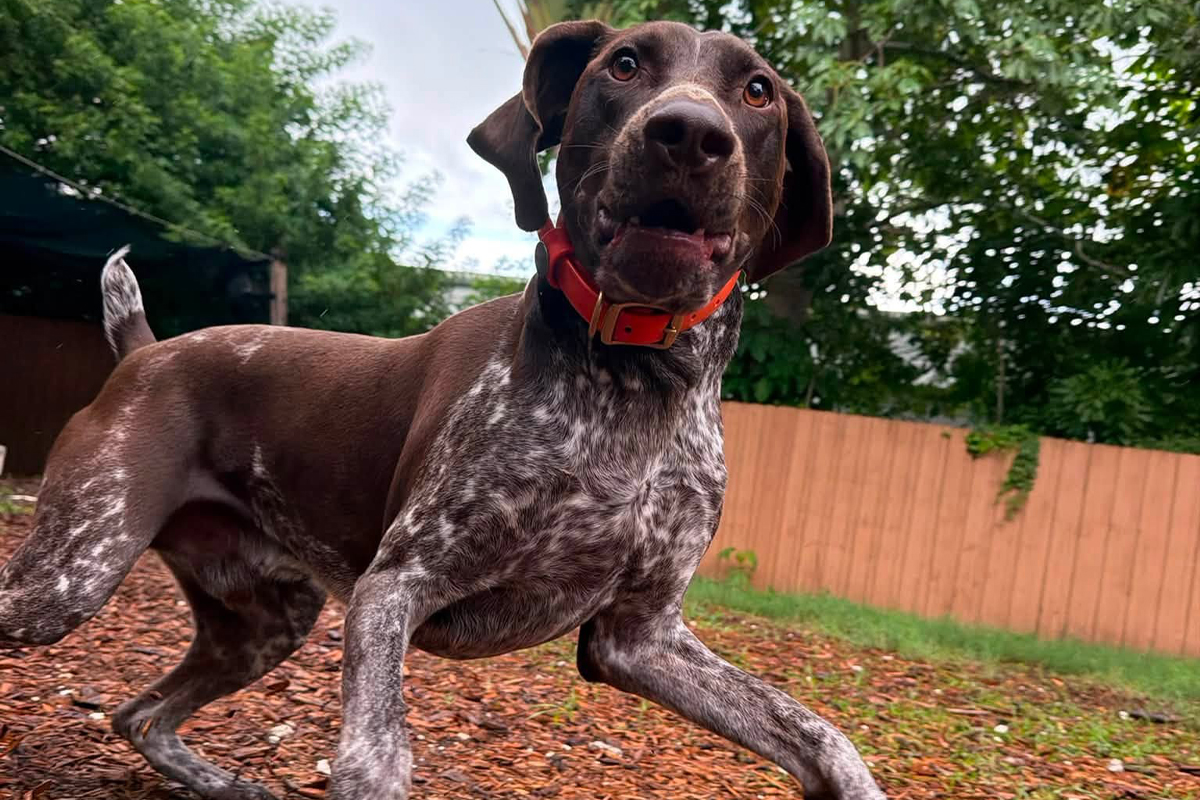
Summer walks can become much more stimulating than owners expect.
The sidewalks are busier, children are outside, more dogs are being walked, lawn equipment is running, wildlife is active, and neighborhood activity often continues later into the evening. Add Florida heat and humidity, and even a familiar walk can begin placing much more pressure on a dog’s ability to stay calm and focused.
Some dogs respond by pulling harder, scanning constantly, barking at movement, fixating on other dogs, or becoming unable to respond to basic commands. Others begin the walk well but gradually lose control as stimulation builds. By the time the family returns home, the dog may still be panting, pacing, barking, or acting emotionally elevated long after the outing has ended.
A walk should provide healthy movement and meaningful time with the dog. It should not leave the owner frustrated and the dog more unsettled than before. Preventing overstimulation requires more than simply walking farther or trying to tire the dog out. It involves choosing the right conditions, creating calmer transitions, and helping the dog remain connected throughout the outing. This is an important part of the real-world training families receive from The DogHouse LLC in Pinellas County, Florida.
Summer Adds More Pressure to an Ordinary Walk
A route that feels routine to the owner may look completely different to the dog in summer.
There may be more people in driveways, more bicycles passing, more children playing, more dogs behind fences, and more open garages producing unfamiliar sounds and smells. Birds, squirrels, and lizards may create constant movement close to the ground. Delivery vehicles, landscaping crews, and outdoor gatherings can add even more activity.
Each distraction asks the dog to make a decision.
Will they remain connected to the handler, or will they follow the movement? Will they continue walking calmly, or will they stop, stare, pull, or react? A dog with limited impulse control may make dozens of poor decisions during one short outing.
This is why a walk can feel progressively harder. The dog is not responding to one major event. They are absorbing a steady stream of stimulation from the moment they leave the house.
Overstimulation Often Begins Before the Walk Starts
Many dogs are already emotionally elevated before the front door opens.
They see the leash and begin jumping, barking, spinning, or pacing. They rush toward the door, crowd the threshold, and pull outside the moment there is an opening. By the time the walk begins, the dog is already operating from excitement rather than focus.
The environment then pushes that excitement higher.
A calm walk is difficult to build from a chaotic beginning. This is why the routine before leaving the house matters so much. The dog should be able to see the leash, wait at the door, and begin moving without treating the transition like an emotional release.
This does not mean the dog cannot be happy about going outside. It means excitement should not control the first several minutes of the outing.
A calmer start gives the owner a much better chance of maintaining connection once summer distractions appear.
Heat Can Shorten a Dog’s Ability to Focus
Hot, humid conditions affect more than physical comfort.
A dog that is working harder to regulate body temperature may have less mental energy available for leash manners, impulse control, and obedience. They may become slower to respond, more impatient, or more interested in finding shade and returning home than in staying engaged with the handler.
This can make overstimulation happen faster.
The dog may tolerate several distractions early in the walk, then suddenly begin pulling, staring, or ignoring commands. Owners may interpret this as stubbornness, but the dog may simply have reached the point where physical discomfort and environmental pressure are becoming too much.
Choosing cooler times of day, shaded routes, and shorter sessions can help preserve the dog’s focus. Adjusting the conditions does not lower the training standard. It creates an environment where the dog is more capable of meeting that standard safely.
A Longer Walk Is Not Always a Better Walk
Owners often assume that more distance will produce a calmer dog.
For some dogs, longer walks actually create more emotional buildup. The dog encounters more triggers, receives more opportunities to pull, and spends more time in an elevated state. By the end, they may be physically tired but mentally more reactive.
This is especially common when the walk has little structure.
The dog moves from smell to smell, scans constantly, pulls toward movement, and mentally disconnects from the owner. The outing provides physical activity, but it also gives the dog thirty or forty minutes of practice following every impulse.
A shorter, more organized walk can be much more valuable.
Ten or fifteen minutes of calm leash work, good engagement, and successful responses may build better habits than a long outing filled with tension. The goal should be quality of movement and connection, not simply distance.
Constant Scanning Keeps Dogs Emotionally Elevated
Some dogs spend the entire walk looking for what might happen next.
Their head moves constantly. They watch driveways, fences, yards, parked vehicles, and every person or animal in the distance. Even when they are not barking or lunging, their body may remain tense and alert.
This kind of scanning can be an early sign of overstimulation.
The dog is not calmly noticing the environment. They are monitoring it. That mental state makes reactions more likely because the dog is already emotionally prepared for something to happen.
Owners often wait until the dog explodes before intervening. By then, the dog may have spent several minutes building toward the reaction.
Better leash structure and engagement help interrupt constant scanning. The dog should be allowed to notice the world, but they should not spend the entire walk mentally separated from the person handling them.
Sniffing Can Be Helpful or Overwhelming
Sniffing is a normal and valuable part of a dog’s experience.
It can provide mental enrichment and help dogs gather information about their environment. But unstructured sniffing is not always calming. Some dogs become more aroused as they move rapidly from scent to scent, pull toward every patch of grass, and lose all awareness of the handler.
The difference is whether the dog can disengage.
A dog should be able to enjoy a short sniffing opportunity and then continue when asked. If they resist leaving every scent, drag the owner across the sidewalk, or become increasingly frantic, the activity is no longer supporting calmness.
Structured walks can include sniffing without allowing the dog to control the entire outing. The owner can provide appropriate opportunities while maintaining clear expectations around movement and responsiveness.
Freedom and structure do not have to compete. The dog can enjoy the environment while still remaining connected.
Repeated Exposure Does Not Always Create Improvement
Some owners believe the dog simply needs to see more people, dogs, and activity until they get used to it.
Exposure can be useful, but repeated overwhelm often makes the problem worse.
If the dog is already too aroused to listen, every difficult encounter becomes another rehearsal of pulling, barking, staring, or lunging. The dog is not learning that the trigger is safe or unimportant. They are learning that the trigger predicts an emotional reaction.
This is why the distance from a distraction matters.
A dog may be able to notice another dog across the street and remain responsive. The same dog may lose control if forced to pass within a few feet. Working at a manageable distance allows the dog to practice better choices instead of repeatedly failing.
The goal is not to avoid all distractions forever. It is to expose the dog at a level where learning can still happen.
Owners Should Notice the Early Signs of Overstimulation
Overstimulation does not always begin with obvious barking or lunging.
Early signs may include:
Faster panting that does not match the level of activity
Constant scanning or fixed staring
Quicker, more erratic movement
Increased leash tension
Slower responses to familiar commands
Inability to take food or disengage from a distraction
Repeated shaking off, whining, or pulling toward home
Recognizing these signs helps owners adjust before the dog completely loses control.
The response may involve increasing distance, shortening the route, returning to a quieter area, or ending the session while the dog can still finish successfully. Waiting for a major reaction often means the dog has already been overwhelmed for several minutes.
Early intervention protects the quality of the walk and helps prevent the dog from practicing a larger problem.
Clear Leash Expectations Reduce Mental Chaos
A dog that has no clear expectations on leash often feels responsible for making every decision.
They decide where to go, what to investigate, when to stop, what to chase, and which distractions deserve attention. That freedom may seem enjoyable, but it can become mentally exhausting for dogs that are already highly alert or reactive.
Clear leash expectations reduce that burden.
The dog learns where to walk, when stopping is appropriate, how to respond to changes in direction, and when they are free to explore. This creates predictability and keeps the handler involved in the experience.
A structured walk does not mean dragging the dog through the neighborhood without allowing them to enjoy anything. It means the owner guides the outing rather than following the dog from one emotional reaction to another.
That clarity can help dogs feel calmer because they no longer have to manage the environment themselves.
Repeating Commands Can Make the Walk Less Clear
When a dog becomes distracted, owners often repeat commands.
They say the dog’s name several times, repeat “heel,” ask for “leave it” again and again, or continue talking while the dog remains mentally checked out. Over time, the dog learns that the first cue does not require an immediate response.
This can make a summer walk feel even more chaotic.
The owner becomes more frustrated, the dog hears constant verbal pressure, and neither side feels clear about what should happen next. Good training relies on commands the dog understands, consistent follow-through, and conditions where the dog can reasonably succeed.
If the dog cannot respond because they are already overwhelmed, repeating the command is unlikely to restore focus. Creating distance, simplifying the situation, and reestablishing connection may be more effective.
The goal is clear communication, not filling the walk with constant talking.
Passing Other Dogs Requires More Than Holding the Leash Tighter
Seeing other dogs is one of the most common causes of overstimulation.
Some dogs pull forward because they want to greet. Others bark, stiffen, freeze, or lunge. Even dogs that are social can become difficult when anticipation takes over.
Tightening the leash and hoping the dogs pass without incident may prevent immediate contact, but it does not teach emotional control.
The dog needs to learn how to notice another dog without becoming completely absorbed by them. This may involve maintaining greater distance, changing direction, asking for engagement before the dog locks on, and practicing around controlled distractions.
On-leash greetings are not always helpful. Allowing a dog to meet others whenever they pull toward them can reinforce the idea that excitement leads to access.
Calm neutrality is often a more useful goal than expecting the dog to interact with every dog they see.
Family Members Need Consistent Walking Rules
Dogs quickly learn that different people allow different behavior.
One family member may require a loose leash, while another allows pulling. One person stops for every sniff, while another expects continuous movement. Children may hold the leash without enough control or allow the dog to rush toward people.
Inconsistent expectations make reliable behavior much harder.
The dog continues testing because the rules change depending on who is walking them. During summer, when more family members may be home and participating in dog care, this inconsistency can increase quickly.
Families should agree on a few basic standards.
The dog should not drag the handler, rush through doors, or decide which distractions to approach. Everyone should use the same commands and follow the same routine as closely as possible.
Consistency helps the dog understand that leash manners are part of every walk, not only the walks taken with one particular person.
Cooling Down Should Include Emotional Recovery
Returning home does not always mean the dog is calm.
A dog may drink water and lie on the floor while remaining mentally elevated. They may watch the windows, pace, bark at sounds, or demand more activity. If the walk was overstimulating, that emotional energy can continue well after the physical outing has ended.
A clear cooldown routine can help.
The dog may be given water, guided to a comfortable resting area, and expected to settle. Place work can be especially useful because it creates a predictable transition from outdoor stimulation to indoor calm.
This teaches the dog that the walk has a beginning and an end.
Without that transition, the outing may blend into another hour of restless behavior. A dog that learns how to recover after stimulation will usually handle future walks more successfully too.
Walks Should Match the Individual Dog
Not every dog needs the same type of summer walk.
A young, energetic dog may benefit from short periods of structured movement and training. A senior dog may need a slower, quieter route. A reactive dog may need more distance from busy sidewalks. A dog with a short muzzle, heavy coat, or limited fitness may require especially careful scheduling in the heat.
Comparing one dog to another can lead to poor decisions.
The fact that a neighbor’s dog can comfortably handle a long evening walk does not mean every dog should. Owners should pay attention to their dog’s physical condition, training level, and ability to recover.
Any sudden or concerning changes in breathing, coordination, energy, or behavior should be discussed with a veterinarian. Training should always support responsible health and safety decisions.
Board-and-Train Can Improve Real-World Walking Skills
Some dogs become overstimulated on walks because they have never developed strong enough engagement or impulse control outside the home.
They may understand basic commands indoors but lose all connection once the environment becomes interesting. Heat and summer distractions then make the weakness even more obvious.
A reliable board-and-train program can help build better leash behavior, attention, emotional regulation, and responsiveness around real-world distractions.
The dog receives repeated practice walking without dragging the handler, disengaging from triggers, waiting at thresholds, and returning to calm after activity. The goal is not to make the dog ignore the world completely. It is to help them move through it without becoming controlled by every sight, scent, and sound.
The family also learns how to maintain clearer expectations once the dog returns home. This follow-through is essential because the dog will continue encountering summer distractions in the neighborhood.
Keeping summer walks from becoming overstimulating requires more than trying to tire the dog out.
Heat, humidity, neighborhood activity, wildlife, other dogs, and longer daylight hours can place significant pressure on a dog’s ability to remain calm and focused. A long walk filled with pulling, scanning, and repeated reactions may create more stress than benefit.
Calmer walks begin with a better departure routine, reasonable expectations, clear leash structure, and attention to the dog’s physical condition. Shorter routes, quieter times, appropriate distance from triggers, and a reliable cooldown routine can all help prevent emotional overload.
From our perspective, a successful walk is not measured only by distance. It is measured by whether the dog can remain connected, responsive, and emotionally manageable from the time they leave the home until they settle again afterward.
Contact The DogHouse LLC to learn how a top board-and-train program can help your dog develop calmer leash behavior, stronger focus, and more reliable responses during busy summer walks in Pinellas County, Florida.