

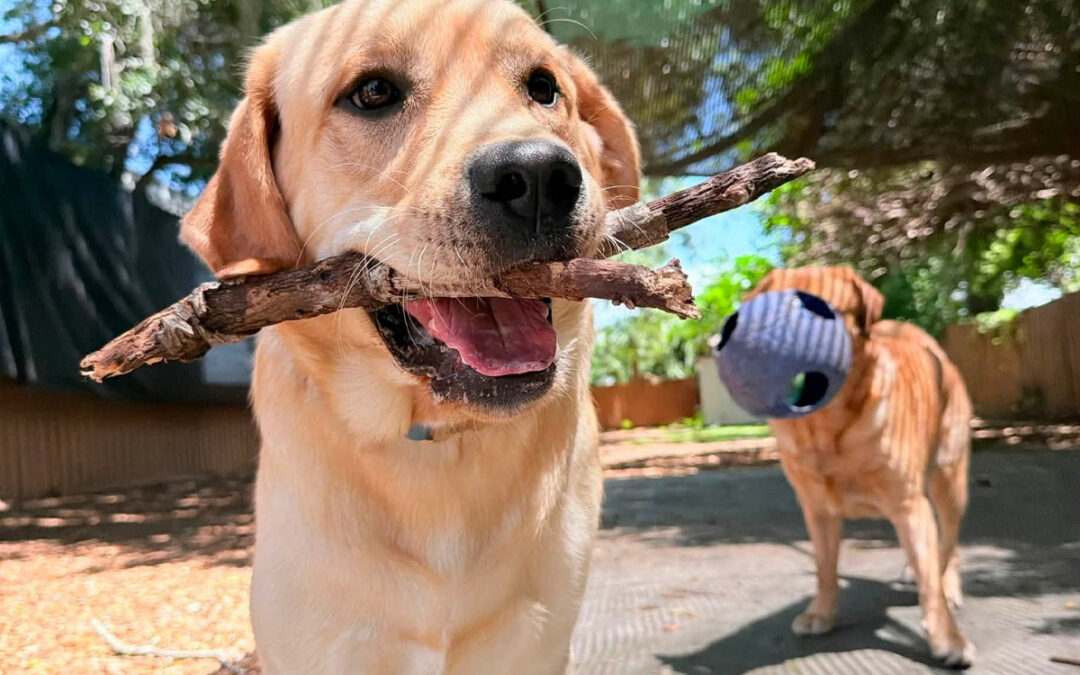

Summer changes the world for dogs in a very real way.
There is more movement in the neighborhood, more dogs outside, more people walking, more children playing, more smells in the air, more activity at parks and beaches, and more reasons for a dog’s attention to get pulled away from the person handling them. Even dogs that seem fairly manageable during quieter parts of the year can suddenly look much less focused once summer gets busy.
That is why so many owners feel frustrated during this season. A dog that seemed to be improving can suddenly feel distracted by everything. Walks become harder, listening becomes less reliable, and simple outings start feeling much more unpredictable. Usually, the dog did not forget their training. Summer simply puts much more pressure on the dog’s ability to stay connected, calm, and responsive. That is exactly why stronger focus matters so much for families working with The DogHouse LLC in Pinellas County, Florida.
Summer Adds More Competition for Your Dog’s Attention
One of the biggest reasons dogs lose focus in the summer is that the environment becomes much more interesting than it was before.
The dog is not just walking through the same quiet routine. They are moving through a world full of motion, scent, sound, and social activity. Another dog across the street, a child on a bike, neighbors outside talking, the smell of food, open garage doors, lizards moving through the grass, and activity happening in every direction all create competition for the dog’s attention.
That matters because focus is not tested much when life is easy.
A dog may look very responsive in a calm environment simply because there is not much pulling their attention away. Once summer increases the number of distractions, the dog begins showing whether their focus is actually strong or whether it depended on the environment being simple. In many cases, this is the season where owners realize their dog’s connection is not yet as reliable as it seemed.
More Distraction Usually Means More Emotional Arousal
A lot of people think distraction is just about a dog “looking at things.”
But in reality, summer distraction is often tied to emotional arousal.
The dog is not merely noticing more. They are feeling more. Their body rises faster, their mind gets busier, and the environment begins pulling on their emotions before it ever pulls on obedience. That is why a dog may know exactly what is expected and still fail to respond once summer activity increases. The issue is often not understanding. It is overstimulation.
This is where owners can get discouraged. They ask for a command the dog clearly knows, and the dog acts as if they have never heard it before. What is really happening is that the dog’s internal state is no longer calm enough to support that skill well.
From my perspective, that is why focus training in the summer has to address more than commands. It has to address the dog’s emotional state too.
Focus Starts Before the Walk Ever Begins
One of the most important things owners can understand is that outdoor focus usually begins long before the dog reaches the distraction.
It starts with the way the dog handles the leash coming out. It starts with how they move toward the door. It starts with whether they are already emotionally high before the outing even begins. A dog that is exploding at the threshold, pulling toward the sidewalk, and loading up with excitement before the walk starts is much less likely to stay focused once summer distractions appear.
That is why summer focus is often built in transitions.
If the owner can create calmer routines around exiting the house, waiting at doors, and beginning movement with more structure, the dog starts the outing in a much better state. But if every walk begins with urgency, the outside world only pushes that urgency higher.
In my experience, a lot of what looks like distraction is really a dog leaving the house already too elevated to make good choices.
Dogs Need Practice Staying Connected in Busy Environments
Another big mistake owners make is assuming that if the dog can focus at home, they should automatically focus outside.
That is rarely how it works.
Focus has to be practiced in the kind of environments where the dog will actually need it. Summer can expose this quickly because it creates more of those real-world situations. Dogs that have only practiced attention in easier settings often struggle the moment the environment becomes more alive.
This does not mean owners should flood the dog with the hardest situations right away. It means they need to be intentional. The dog has to learn that staying connected to the handler is still part of the job, even when the outside world gets more interesting. That kind of focus only becomes reliable through repeated success in gradually more challenging situations.
Without that, the dog keeps learning that once the environment gets exciting enough, outside distractions always win.
Stronger Focus Often Comes From Better Boundaries
A lot of summer focus problems improve when the dog’s overall structure improves.
That may not seem obvious at first, but it is usually true. Dogs that struggle with focus outside often also struggle with impulse control, patience, and emotional regulation inside daily life. They are quick to rush, quick to react, quick to follow their feelings, and weak in the habit of pausing before acting. Those same patterns show up on walks and outings too.
That is why better place work, better waiting, better doorway routines, and better calmness at home often improve outdoor focus more than owners expect.
The dog is no longer living in a constant pattern of following every impulse. They are learning how to stay with guidance instead of letting the environment pull them in every direction. Once that mindset starts strengthening at home, it usually becomes much easier to build focus when summer distractions show up outside.
Summer Outings Should Not Become One Long Battle
When a dog is distracted by everything, owners often fall into one of two patterns.
Either they keep repeating commands while the dog stays checked out, or they stop asking much at all because the outing feels too frustrating. Neither option usually creates better focus. One turns into nagging. The other turns into the dog practicing emotional independence from the handler.
A better approach is to make the outing clearer.
The dog should not feel like they are free to mentally drift through the whole walk just because the environment is stimulating. At the same time, the owner should not expect perfect focus without enough support and repetition. Summer outings need structure. They need moments of reconnection, clearer transitions, and enough consistency that the dog understands their person still matters even when the world feels very exciting.
That is where real progress often begins.
Board-and-Train Can Help Build Focus Before Bad Summer Habits Deepen
This is one of the reasons board-and-train can be especially valuable during the summer months.
If a dog is already losing focus faster, getting overstimulated outdoors, and becoming harder to guide once distractions increase, letting that continue all season usually makes the problem stronger. The dog gets more and more practiced at checking out, pulling away mentally, and rehearsing exactly the habits the owner does not want.
A strong board-and-train program helps interrupt that pattern.
It builds better engagement, better leash behavior, better emotional control, and better real-world obedience in the kinds of environments that summer tends to magnify. Instead of spending the entire season falling deeper into distraction, the dog starts learning how to stay with the handler even when the world gets busier. That kind of work often changes not just summer walks, but the dog’s overall reliability long term.
Keeping your dog focused when summer distractions increase is really about helping them stay connected in a season that pulls their attention in every direction.
Summer brings more movement, more scent, more stimulation, and more emotional pressure than many dogs are naturally prepared to handle well. That is why focus often weakens during this season, even in dogs that seemed to be doing fairly well before. The answer is not just more commands. It is better structure, calmer transitions, stronger engagement, and a dog that knows how to stay emotionally steady while the world gets busier.
From my perspective, summer is one of the most important seasons to strengthen focus because it shows exactly where the weak spots are. And when that focus improves, everything else starts feeling easier too.
Contact The DogHouse LLC to learn how a structured board-and-train program can help your dog build better focus, stronger obedience, and calmer real-world behavior during the busy summer season in Pinellas County, Florida.