


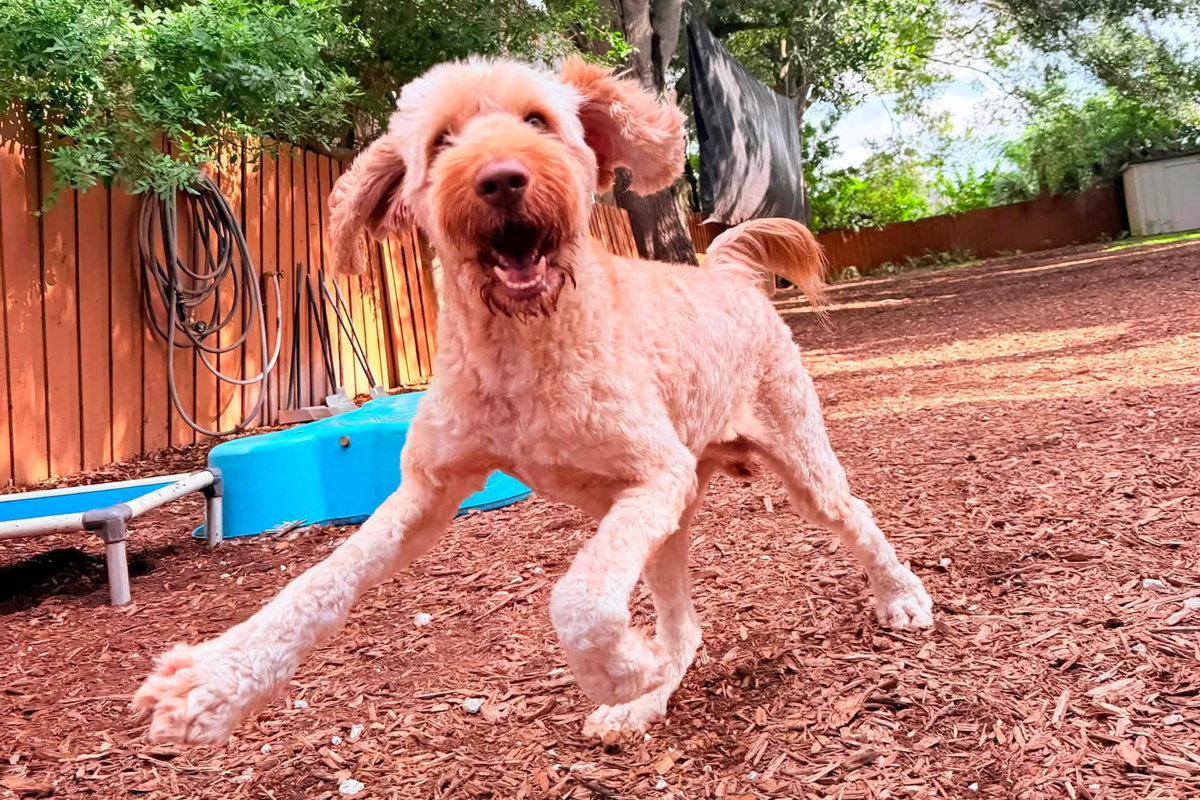
Summer break changes the atmosphere of a home in ways dogs notice immediately.
Children may be home all day, friends may visit more often, doors may open constantly, and the family may move between indoor and outdoor activities from morning until evening. The dog may receive more attention, more play, more noise, and more opportunities to become involved in everything happening around them.
At first, this can seem like a positive change. The dog has more company, more interaction, and more activity. But for many dogs, the increased stimulation begins to build faster than their ability to recover from it.
They may start following people constantly, barking more often, playing too roughly, reacting to every sound, demanding attention, or struggling to settle even when they are clearly tired. Some dogs become clingy and restless, while others become irritable or less tolerant of children, visitors, and other pets.
Preventing overstimulation is not about keeping a dog isolated or removing all summer fun. It is about helping the dog participate in family life without feeling responsible for every person, sound, movement, and activity. This balance is an important part of the professional dog training and boarding support families receive from The DogHouse LLC in Pinellas County, Florida.
Overstimulation Builds Through the Entire Day
Dogs do not always become overstimulated because of one major event.
The problem often develops through many smaller experiences that happen without enough recovery between them. A child calls the dog to play. Someone opens the back door. A visitor arrives. The dog barks at a sound outside. Another game begins. Food is prepared. People move through the house, and the dog follows.
Each moment may seem manageable on its own.
Together, they can keep the dog emotionally active for hours.
A dog may lie down occasionally but still remain alert to every change in the home. They lift their head when someone stands, move toward the door when it opens, and follow the family from room to room. The dog is technically resting, but they are not fully disengaging.
By late afternoon or evening, the dog may have very little emotional patience left. That is when jumping, barking, rough play, demand behavior, and weaker obedience often become more noticeable.
A Busy Dog Is Not Always a Fulfilled Dog
Summer break often leads families to keep the dog busy.
They may provide more walks, toys, backyard play, games, treats, enrichment activities, and interaction with children. These outlets can be helpful, but constant stimulation does not automatically create a satisfied dog.
Some dogs become increasingly dependent on activity.
They finish one game and immediately look for another. They complete a food puzzle and begin following someone. They return from outside and start barking near the door again. The dog is receiving plenty of engagement, but they are not learning how to accept quiet time.
This creates a dog who is busy but still restless.
True balance includes both activity and recovery. A dog should be able to enjoy play, training, and family interaction, then settle without pressuring the household for more.
Without that ability, summer break can strengthen the belief that something should always be happening.
Children Can Create Constant Emotional Activity
Children often change the dog’s daily experience more than any other part of summer break.
They run, laugh, shout, carry food, invite play, open doors, and move unpredictably. They may call the dog repeatedly, wake them from rest, or encourage high-energy games without realizing how much stimulation is building.
Many dogs continue participating because the activity is exciting.
The dog may chase, jump, mouth, bark, or steal toys. At first, everyone may view the behavior as playful. As the dog becomes more elevated, they may stop responding well to adults or begin interacting too roughly.
Children may also struggle to recognize when the dog needs a break.
A dog that walks away, lies down, or moves toward a quieter area may be trying to disengage. If the child continues calling or touching them, the dog loses the opportunity to recover.
Adults should supervise active interactions and protect the dog’s downtime. Summer break should not mean the dog is available for play all day.
Overstimulated Dogs Often Look Like They Need More Exercise
One of the most common mistakes families make is assuming every restless dog needs more physical activity.
An overstimulated dog may pace, pant, bark, grab toys, jump, or move from room to room. These behaviors can look like excess energy, so the family adds another walk or game.
That may temporarily redirect the dog.
Once the activity ends, the dog becomes restless again because the deeper problem was not a lack of movement. The dog was already emotionally elevated and needed help returning to calmness.
More activity can sometimes add to that pressure.
The dog becomes physically tired but mentally busier. They may be less capable of listening, waiting, or tolerating frustration after a full day of stimulation.
Exercise remains important, but it should be matched with structured rest and calmer transitions. The goal is not simply to exhaust the dog. It is to help them regulate themselves.
Signs of Overstimulation Can Be Easy to Miss
Not every overstimulated dog looks wild or out of control.
Some early signs are much quieter. The dog may begin following more closely, getting up repeatedly, watching doors, panting when they have not been active, or responding more slowly to familiar commands.
Other signs may include:
Increased barking or whining
Rougher play or more mouthing
Constant scanning and difficulty lying still
Jumping or crowding personal space
Greater sensitivity to ordinary sounds
Demand behavior around attention or outdoor access
Difficulty settling after play, walks, or visitors
These behaviors often increase gradually.
Families may not recognize the pattern until the dog is already struggling. Paying attention to small changes allows the family to reduce pressure before the dog completely loses control.
Scheduled Rest Helps Protect the Dog
Many dogs do not choose enough rest when the household is active.
They continue following the family because something interesting may happen. Even when a bed or crate is available, the dog may remain in the busiest room and react to every movement.
Scheduled rest can help break this pattern.
The dog may spend time in a crate, on place, or in a quiet room away from children, visitors, and household traffic. This is not punishment. It is a protected period where the dog is not expected to monitor or participate.
Children and guests should understand that the dog should be left alone during these breaks.
Rest is especially important for puppies, adolescent dogs, senior dogs, and dogs that become easily reactive or excitable. A dog who receives meaningful recovery is more likely to behave well when they rejoin the family.
Place Work Creates Calm Within the Activity
Place work can help a dog remain part of the household without becoming involved in everything.
A designated bed, mat, or cot gives the dog a clear location and responsibility. The dog can observe family activity while staying out of doorways, away from food, and outside the center of children’s play.
This skill helps reduce constant following.
The dog learns that someone standing up, walking toward the kitchen, or opening a cabinet does not always mean they should get involved. Movement around them becomes less emotionally important.
Place work should be introduced under manageable conditions.
A dog may begin practicing while one person moves around quietly. As the skill improves, the family can add more realistic activity. Asking a dog to remain settled during the busiest part of summer break without earlier practice may be too difficult.
Reliable place work gives the dog a clear alternative to pacing, hovering, and reacting.
Active Play Needs Clear Limits
Play can be one of the biggest sources of summer overstimulation.
Children may throw toys repeatedly, chase the dog, wrestle, or encourage fast movement around the home and yard. The dog becomes more excited with each repetition and may stop responding to guidance.
Healthy play should have a clear beginning and ending.
The dog can wait before the game begins, respond during the activity, and accept when the toy is put away. Short pauses help the dog remain mentally connected and give the family a chance to notice whether the intensity is rising too quickly.
The dog should not be allowed to jump, mouth, chase children, or bark until the game continues.
If play always begins and ends through chaos, the dog begins learning that losing control is part of the activity.
Visitors Can Add More Pressure Than Families Realize
Summer break often brings friends, relatives, and children’s guests into the home.
Every arrival creates a new wave of sound, movement, scent, and social activity. Dogs may rush the door, bark, jump, follow visitors, or remain emotionally involved long after the greeting.
Even friendly dogs can become overwhelmed by repeated interactions.
A predictable greeting routine can reduce the pressure.
The dog may remain on place, behind a gate, or on leash while the guest enters. They can be given time to observe and settle before greeting, or they may remain separated if the visit is brief or especially active.
Not every person needs to interact with the dog.
Allowing the dog to remain neutral around some guests can be more helpful than expecting them to participate in every arrival.
Open Doors Keep Dogs in a State of Anticipation
Summer break often means constant movement through front doors, garages, patios, and gates.
A dog may begin waiting near these areas because openings predict activity. They rush forward when someone approaches, bark for outdoor access, or try to slip through whenever the opportunity appears.
This keeps the dog emotionally prepared for the next event.
Strong threshold manners create more calm.
The dog should remain away from the opening, wait for permission, and understand that doors can be used without including them. This reduces rushing and helps the dog stop treating every transition as an invitation.
Clear doorway routines also improve safety when children and guests are moving in and out.
A dog that is constantly waiting for the next open door will have a much harder time resting.
Food and Snacks Can Increase Restlessness
Summer break often brings more food into more areas of the home.
Children carry snacks, meals happen outdoors, and plates may be left on low tables. Dogs quickly learn that busy family activity creates opportunities.
They begin following children, hovering in the kitchen, or moving from person to person looking for food.
This constant food monitoring keeps the dog engaged and alert.
Clear food boundaries help. The dog may remain on place during meal preparation and eating. Children and guests should avoid sharing from their plates, and food should not be used repeatedly to quiet or distract the dog.
A dog that spends the entire day searching for food is not resting, even when they appear physically still.
Noise Can Prevent Meaningful Recovery
Summer break usually makes the home louder.
Children play, televisions run, visitors talk, doors open, and neighborhood activity continues outside. Some dogs remain alert to every sound and struggle to rest deeply.
They may bark, lift their head repeatedly, or move toward the source.
Environmental management can help reduce unnecessary pressure. Closing blinds, using fans or appropriate background noise, and placing the dog’s resting area away from the busiest spaces can make recovery easier.
This does not replace training.
It creates conditions where the dog can practice calmness without being exposed to the hardest version of the environment all day.
Multi Dog Homes Can Escalate Faster
Overstimulation can spread quickly between dogs.
One dog hears a sound and barks. The others join. One dog runs toward the door, and the group follows. One dog becomes excited during play, and the others raise their intensity.
The dogs begin reacting to one another as much as the original event.
Group energy can make each dog less responsive and more difficult to settle. Even dogs that behave well individually may become chaotic together.
Each dog needs individual skills.
Separate place areas, individual training, controlled outdoor access, and separate rest periods may be necessary. Not every activity needs to include all of the dogs at once.
Treating them as individuals helps prevent group momentum from controlling the household.
Keep Training Short and Consistent
Summer break can make formal routines harder to maintain, but training does not need to disappear.
Several short sessions throughout the day can reinforce place, waiting, recall, doorway manners, leash behavior, and calm attention. Ordinary moments can also become training opportunities.
The dog waits before going outside. They remain on place while someone prepares food. They settle after play. They respond to recall in the yard before the hardest distraction appears.
Short, successful practice protects existing skills.
Long, frustrating sessions with an already overstimulated dog are less useful. Training should happen while the dog is still mentally capable of responding.
Calm Transitions Reduce Emotional Buildup
A summer day may include many transitions.
The dog moves from rest into play, from indoors to outdoors, from a walk into family activity, and from a quiet room into greeting visitors. If each transition begins with excitement and ends without recovery, emotional pressure continues building.
Calm transitions create important pauses.
The dog waits before leaving the house. They return indoors without racing. They settle after a game. They remain on place while guests enter.
These moments teach the dog how to move between activity and rest.
Without them, the entire day can feel like one long event.
A Predictable Rhythm Helps Dogs Feel Secure
Summer break may not allow a perfect schedule, but dogs still benefit from a recognizable daily pattern.
Meals, bathroom breaks, exercise, training, interaction, and rest can happen in a general order. This reduces the dog’s need to follow people or demand activity because they have a better understanding of what comes next.
Predictability lowers uncertainty.
A dog who trusts the routine is more likely to wait. They do not need to bark at every door, hover near food, or pressure the family for attention all day.
Structure does not require every day to look identical.
It simply gives the dog enough consistency that the household does not feel unpredictable from morning until night.
Family Members Need the Same Expectations
Overstimulation becomes harder to manage when each person responds differently.
One person allows jumping, another corrects it. A child restarts play when the dog barks. Someone opens the door after whining, while another waits for quiet.
The dog continues testing because the behavior still works in some situations.
Families should agree on a few clear rules.
The dog waits at doors. Barking does not create access. Place remains place until release. Food does not come from begging. Active play ends when the person decides.
Consistent expectations make the environment easier for the dog to understand and reduce the amount of emotional testing throughout the day.
Structure Does Not Mean Excluding the Dog
Some families worry that scheduled rest, place work, or controlled access will make the dog feel left out.
In reality, structure often allows the dog to participate more successfully.
A dog who can settle is easier to keep near children and guests. A dog who waits at doors can safely join backyard activity. A dog who accepts rest can participate without becoming exhausted or irritable.
Dogs without these skills often lose access because the family can no longer manage them.
They are removed from gatherings, kept away from children, or excluded from shared spaces because the behavior becomes too difficult.
Structure protects inclusion by making it calmer and safer.
Board-and-Train Can Help Reset Overstimulated Patterns
When overstimulation has already become part of the household routine, families may feel as though the dog never truly settles.
The dog follows constantly, demands attention, reacts to sounds, rushes doors, plays too roughly, and becomes more difficult as the day continues. These behaviors often share a foundation of weak impulse control and limited emotional recovery.
A structured board-and-train program can help create a clearer reset.
The dog receives consistent practice with place work, doorway manners, leash behavior, waiting, recall, impulse control, and transitions from activity into rest. They learn that household movement does not always require participation.
The family also receives guidance on maintaining a healthier rhythm after the dog returns home.
This follow-through matters because the same children, visitors, noise, and summer routines will continue to test the dog’s ability to remain calm.
Keeping your dog from getting overstimulated during summer break requires more than trying to tire them out.
Children, visitors, open doors, food, noise, play, neighborhood activity, and changing routines can keep dogs emotionally active from morning until night. Without enough rest and structure, they may become restless, demanding, rough, vocal, or less responsive.
The answer is not to remove the dog from family life.
It is to create a healthier balance between activity and recovery. Predictable routines, place work, protected rest, clear play boundaries, calmer greetings, doorway manners, and consistent family expectations all help the dog remain involved without becoming overwhelmed.
From our perspective, a successful summer break is not one where the dog participates in every moment. It is one where the dog can enjoy activity, step away from it, and return to calmness without needing the household to shut down around them.
Contact The DogHouse LLC to learn how a structured board-and-train program can help your dog develop better emotional control, calmer household habits, and more reliable behavior throughout summer break in Pinellas County, Florida.