


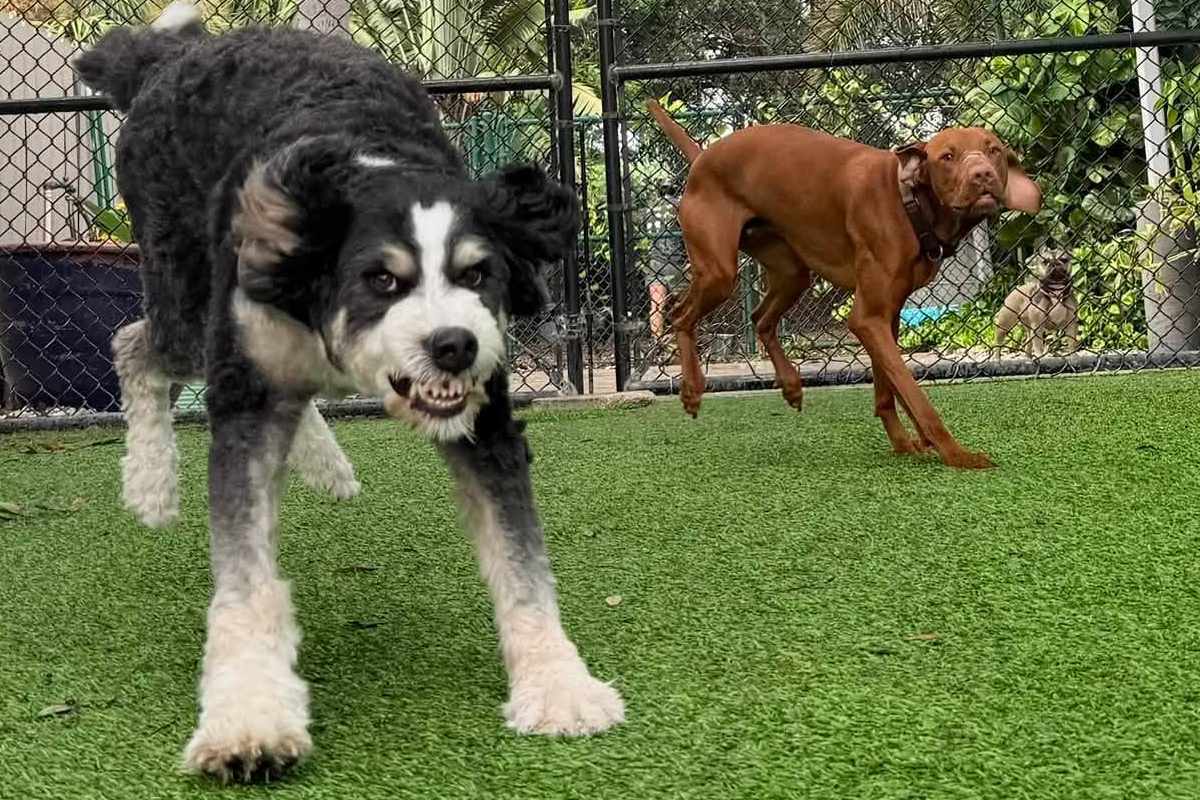
The backyard should be one of the easiest places for a dog to enjoy.
It is familiar, convenient, and close to home. Dogs can stretch their legs, explore scents, use the bathroom, and spend time outside without the family needing to plan a full outing. During summer, the yard often becomes an even bigger part of daily life as families grill, relax, play, and move between indoor and outdoor spaces.
But for many dogs, the backyard does not stay calm for long.
The dog hears a neighbor, sees another animal, notices movement near the fence, or becomes excited when the door opens. Within seconds, they may begin barking, sprinting, chasing, digging, jumping, or ignoring every attempt to call them back. In multi dog homes, one dog’s reaction can spread through the group and turn a simple trip outside into a loud, chaotic event.
Backyard behavior becomes difficult when access is treated as complete freedom instead of another part of daily life that still needs structure. Dogs do not automatically know how to use outdoor space calmly. They often practice whatever feels most exciting, and those habits can become stronger very quickly. Helping dogs develop better outdoor manners is an important part of the structured training families receive from The DogHouse LLC in Pinellas County, Florida.
Excitement Often Begins Before the Door Opens
Backyard chaos usually starts inside the house.
The dog hears someone move toward the door and immediately becomes alert. They rush forward, pace, bark, spin, or crowd the threshold. If several dogs are involved, they may begin pushing into one another before anyone has even stepped outside.
By the time the door opens, the dogs are already emotionally elevated.
This matters because the way the outing begins often determines what happens next. A dog that explodes through the doorway is much more likely to sprint toward the fence, chase movement, or ignore the owner once outside.
A calmer backyard routine begins with a calmer transition.
The dog should be able to approach the door without treating it like a starting line. Waiting, giving space, and moving outside only when invited help reduce the emotional surge before it becomes physical chaos.
The goal is not to remove enthusiasm. It is to prevent excitement from deciding how the entire backyard experience unfolds.
Free Access Can Create Poor Habits Quickly
Many owners assume the yard is a safe place to give the dog complete freedom.
The space may be fenced, familiar, and physically secure, but that does not mean the behavior being practiced there is healthy. A dog with unlimited backyard access may begin patrolling, fence running, barking at every sound, digging, chasing wildlife, or ignoring recall.
These behaviors are self-rewarding.
The dog feels movement, excitement, and purpose while doing them. They do not need a person to reinforce the habit because the activity itself feels rewarding. Every repetition makes it more likely that the dog will respond the same way next time.
This is how a dog who once wandered calmly can become a dog who rushes outside looking for something to react to.
Access should match the dog’s ability to use the space responsibly. If the dog cannot remain responsive, disengage from distractions, or return indoors calmly, they may need more supervision and structure rather than more freedom.
Fence Running Can Become a Daily Obsession
Fence running is one of the clearest examples of backyard excitement turning into chaos.
The dog sees another dog, person, bicycle, golf cart, or vehicle and begins racing along the property line. They may bark, jump, scrape at the fence, or continue running long after the original trigger has passed.
This behavior can look like exercise, but it is usually emotional rehearsal.
The dog is practicing high arousal, territorial behavior, and loss of control. Over time, they may begin reacting to smaller triggers because the fence has become associated with excitement.
Fence running can also create conflict between neighboring dogs.
Both animals may begin anticipating one another and reacting before they are even fully visible. What starts as occasional barking can become a daily routine that keeps both dogs emotionally elevated.
Owners should interrupt the pattern early rather than allowing the dog to repeat it until they are exhausted. The yard should not become a place where the dog practices losing control.
Barking Can Turn the Dog Into a Full Time Backyard Monitor
Some dogs begin treating the yard like a job site.
They listen for neighbors, watch the fence, scan the sky, and react to every small sound. A gate closes, someone walks nearby, a bird lands, or another dog barks several houses away, and the dog responds immediately.
This constant alert behavior can become deeply ingrained.
The family may think the dog is simply protecting the property, but the dog may be building a pattern of hypervigilance. They no longer go outside to relax. They go outside to monitor.
That emotional state often follows the dog back indoors.
They begin watching windows, rushing doors, and reacting to sounds from inside the house because the same monitoring habit has expanded beyond the yard.
Backyard calm requires teaching the dog that not every sound or movement is their responsibility. The dog can notice activity without barking, charging, or taking control of the situation.
Wildlife Can Trigger Chasing and Poor Recall
Florida backyards offer plenty of distractions.
Lizards, squirrels, birds, frogs, and other small animals can turn a calm dog into a focused hunter in seconds. The dog may sprint across the yard, ignore commands, crash into landscaping, or become fixated on a location long after the animal disappears.
Chasing is highly rewarding for many dogs.
Even when they never catch anything, the movement and pursuit can reinforce the habit. This is why repeated chasing often leads to weaker recall. The dog learns that following the trigger is more rewarding than responding to the owner.
Owners sometimes continue calling while the dog ignores them.
After enough repetitions, the recall command becomes background noise. The dog hears it but has learned that responding is optional when something more interesting is happening.
Backyard reliability needs to be practiced before the hardest distraction appears. A dog should not receive complete freedom around wildlife until they have a strong history of responding in easier situations.
Recall Should Work Before the Dog Needs It Most
Many families rely on recall only when a problem is already happening.
The dog is barking at the fence, chasing something, or refusing to come inside, and the owner begins calling repeatedly. At that point, the dog is often too emotionally involved to respond well.
A reliable recall is built during ordinary moments.
The dog is called when they are calm, when the yard is quiet, and when they are capable of succeeding. The owner follows through consistently and makes responding meaningful. Over time, the dog learns that coming back matters even when the environment is interesting.
The command should not be repeated endlessly.
If the dog learns they can ignore the first several calls, the cue becomes weaker. Clear communication and consistent follow-through are more effective than increasing volume or frustration.
A strong recall gives the family a way to interrupt excitement before it becomes chaos. It also allows the dog to enjoy more freedom safely because the owner can still influence what happens outside.
Backyard Play Needs Structure Too
Play can be a healthy part of backyard time.
Fetch, tug, movement, and appropriate games can give dogs an outlet and help strengthen the relationship with the owner. The problem begins when play has no boundaries.
The dog may begin jumping for the toy, barking when the game pauses, refusing to release, or becoming more frantic with every repetition. In multi dog homes, play can turn into competition, body slamming, chasing, or conflict over access.
Structured play has a clear beginning and end.
The dog waits before the game starts, follows rules during the activity, and settles when it is over. The owner controls the toy and decides when the session ends.
This helps the dog enjoy excitement without becoming controlled by it.
A dog who can transition out of play is much easier to manage than one who continues demanding activity long after the family is finished.
More Exercise Does Not Always Create Better Behavior
Backyard chaos is sometimes mistaken for healthy energy release.
Owners may think the dog needs to run until tired. They allow repeated sprinting, fence racing, rough play, or nonstop fetch in the hope that exhaustion will create calmness.
Physical activity is important, but uncontrolled activity can build more stamina without building more self-control.
The dog becomes better at staying excited for longer periods. They may return indoors physically tired but still mentally elevated, pacing, panting, barking, or looking for the next activity.
Exercise should support behavior, not replace training.
A dog needs movement, but they also need to know how to wait, respond, disengage, and settle. Without those skills, backyard activity can create a fitter dog who is still difficult to manage.
Heat Can Make Backyard Behavior Less Predictable
Summer heat adds another layer to outdoor behavior.
A dog may become excited to go outside, then quickly become uncomfortable once they are in the sun or humidity. Some dogs slow down, while others become more restless, impatient, or difficult to guide.
Hot surfaces, limited shade, and heavy humidity can shorten the dog’s ability to focus.
The dog may ignore commands, rush toward the door, or resist staying outside because the environment is uncomfortable. Owners may interpret this as stubbornness when the dog may simply be struggling physically.
Outdoor sessions should match the weather.
Shorter periods, cooler times of day, access to water, and shaded areas can help dogs remain comfortable enough to behave well. Any concerning changes in breathing, coordination, energy, or physical condition should be discussed with a veterinarian.
Good backyard training always includes responsible safety decisions.
Open Door Access Can Increase Indoor and Outdoor Chaos
When dogs are allowed to move freely between the house and yard, excitement can spread through both spaces.
The dog hears something outside and rushes through the door. They bark at the fence, sprint back inside, track dirt through the house, then return outside when another sound appears. The entire home becomes part of the reaction.
This pattern can become especially difficult with several dogs.
One dog moves, the others follow, and the group repeatedly surges through the doorway. People may be knocked into, children may be pushed aside, and the dogs may redirect frustration toward one another in the narrow space.
Controlled transitions reduce this momentum.
The dog should not decide when every trip outside begins. Doors can remain closed until the dog is calm, and access can be provided intentionally rather than in response to barking or rushing.
This helps separate indoor calm from outdoor activity.
Multi Dog Yards Can Escalate Very Fast
Backyard behavior often becomes more complicated when several dogs are involved.
One dog sees movement and runs. The others follow. One dog barks at the fence, and the whole group joins. Play becomes rougher because each dog adds more speed and excitement.
The dogs may stop responding to the owner because they are focused on one another.
Group energy can make normally manageable dogs behave very differently. A dog that recalls well alone may ignore the owner when running with the others. A dog that rarely barks may participate because the group reaction is rewarding.
Each dog needs individual outdoor skills.
They should be able to respond to their name, come when called, settle, and move through the door without relying on what the others are doing. Some dogs may need separate yard time until those skills are stronger.
Not every backyard activity needs to involve the whole group.
Children Can Accidentally Increase Backyard Excitement
Children and dogs often spend more time together outside during summer.
Running, shouting, throwing toys, splashing in water, and chasing games can quickly raise the dog’s energy. The dog may begin jumping, nipping at clothing, chasing children, or ignoring adult direction.
What starts as playful interaction can become unsafe.
Children may continue running because the dog is chasing, which makes the game more rewarding. They may throw toys without requiring the dog to wait or encourage barking because it seems funny.
Adults should supervise and create clear limits.
Dogs should not be allowed to chase children, steal toys, or become physically overwhelming. Children should not tease, corner, or continue exciting the dog after the dog has become difficult to control.
Backyard fun should still include stopping points and rest.
Place Work Can Be Useful Outside Too
Place work is often associated with indoor behavior, but it can also be valuable in the yard.
A raised cot, bed, or designated area gives the dog a clear location during grilling, family gatherings, outdoor meals, or periods when the yard is active. Instead of wandering, begging, barking, or chasing movement, the dog learns how to remain settled outside.
This skill helps the dog understand that being in the yard does not always mean running.
They can be present while people talk, eat, or move around without needing to participate in every moment.
Outdoor place work should be practiced gradually and in safe conditions. The dog needs shade, comfort, and a level of distraction they can handle.
Over time, it can become one of the most useful ways to include the dog without allowing excitement to control the yard.
Calm Transitions Help the Dog Come Back Inside
Many dogs become difficult when backyard time ends.
They avoid the owner, refuse to come inside, grab toys, begin another chase, or bark at the door after returning. The dog has learned how to go outside but not how to finish the activity calmly.
A better routine creates a clear ending.
The dog responds to recall, enters without rushing, receives water if needed, and transitions into a calmer indoor expectation. The family does not immediately start another high-energy activity.
This helps the dog recover.
Without a cooldown routine, outdoor excitement may continue through the house for the next hour. The dog remains elevated and begins looking for another reason to move.
Teaching the dog how to come down is just as important as teaching them how to enjoy the yard.
Family Members Need the Same Backyard Rules
Inconsistent handling keeps outdoor chaos alive.
One person allows fence barking while another stops it. One family member lets the dog ignore recall because they are “having fun.” Another expects an immediate response. Children may open the door whenever the dog barks, while adults are trying to teach calm waiting.
The dog learns that the rules depend on who is present.
Families should agree on a few important expectations.
The dog should not rush doors, ignore recall, bark endlessly at the fence, or demand access by scratching and whining. Outdoor play should have boundaries, and everyone should follow the same transition routine.
Consistency makes the yard more predictable.
It also prevents one person from becoming responsible for correcting behavior that everyone else continues to reward.
Better Backyard Behavior Creates More Freedom
Structure is not about preventing dogs from enjoying the yard.
It is what allows them to enjoy it safely.
A dog that responds to recall, ignores ordinary neighborhood activity, and returns indoors calmly can receive more outdoor freedom. A dog that fence runs, barks constantly, and refuses to respond needs closer supervision and fewer opportunities to rehearse those behaviors.
Without training, dogs often lose backyard access because the family can no longer trust them.
They are kept indoors, taken outside only on leash, or removed from family activities because the yard has become too chaotic.
Better behavior creates the opposite outcome. The dog earns more access because the family can rely on their responses.
Board-and-Train Can Help Reset Backyard Habits
When backyard chaos has become part of the daily routine, changing it can feel difficult.
The dog may explode through the door, race the fence, chase wildlife, ignore recall, bark for long periods, and resist coming inside. The yard itself has become associated with emotional freedom and poor responsiveness.
A board-and-train program can help rebuild the foundation behind these behaviors.
The dog receives consistent practice with recall, doorway manners, leash guidance, waiting, place work, impulse control, and transitions between activity and rest. They learn that outdoor access does not remove expectations.
The family also receives guidance on maintaining the same structure at home.
This follow-through is essential because the backyard will continue presenting the sights, sounds, and movement that created the original habits.
Preventing backyard excitement from turning into chaos begins with recognizing that the yard is still part of the dog’s training environment.
A fenced space may provide physical safety, but it does not automatically create calm behavior. Dogs can quickly develop patterns of fence running, barking, chasing, rushing doors, ignoring recall, and becoming emotionally overinvolved in every sound or movement outside.
The answer is not to remove outdoor enjoyment.
It is to add enough structure that the dog can enjoy the yard without losing control. Calm doorway routines, reliable recall, supervised access, organized play, outdoor place work, and clear transitions back inside all help create a better pattern.
From our perspective, the backyard should be a place where dogs can move, explore, and spend time with the family while still remaining responsive and manageable. Better boundaries protect that freedom and keep ordinary outdoor activity from becoming a daily source of stress.
Contact The DogHouse LLC to learn how a structured board-and-train program can help your dog develop calmer backyard behavior, stronger recall, and more reliable responses during the busy summer months in Pinellas County, Florida.