

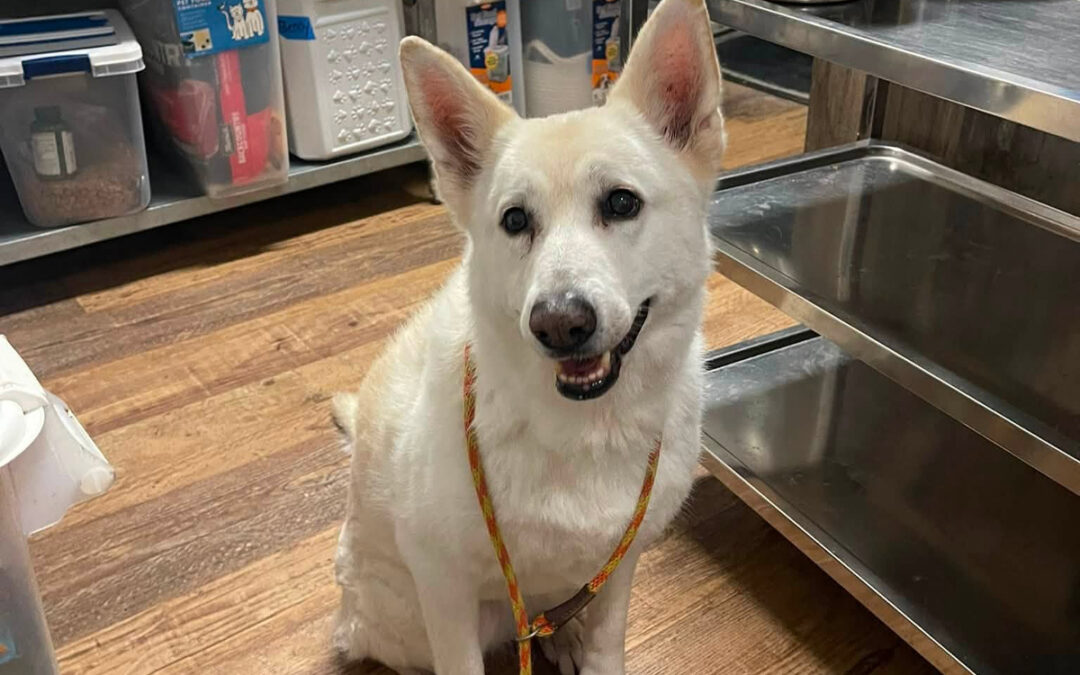
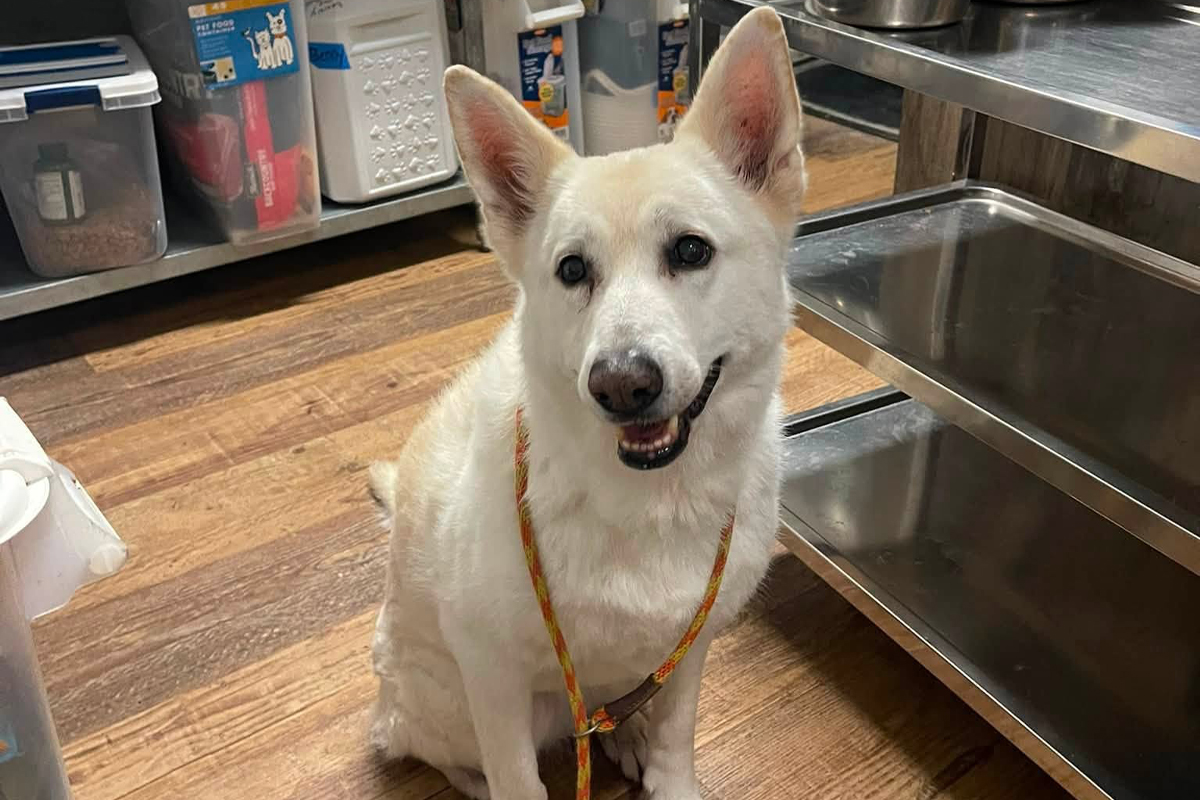
Some dogs seem determined to stay within a few feet of their owners at all times.
They follow into the kitchen, bathroom, bedroom, garage, and every other part of the home. The moment someone stands up, the dog stands too. If the owner walks across the room, the dog follows. If a door closes between them, the dog may wait outside, whine, scratch, or pace until access returns.
At first, this behavior can seem affectionate.
Many families enjoy having a dog that wants to be close. The problem begins when closeness turns into constant monitoring and the dog never learns how to relax independently.
A dog that follows everywhere may struggle to rest deeply, become overly involved in household activity, demand more attention, or have difficulty when the owner is unavailable. In some cases, the behavior also makes everyday tasks harder because the dog is always underfoot.
Helping a dog develop healthier independence does not mean creating distance in the relationship. It means teaching the dog that they can feel safe, comfortable, and relaxed even when they are not following someone from room to room. This is an important part of the professional dog training and boarding support families receive from The DogHouse LLC in Pinellas County, Florida.
Following Often Starts as a Rewarded Habit
Dogs repeat behaviors that consistently lead to something valuable.
A dog follows someone into the kitchen and receives a piece of food.
They follow into the living room and receive attention.
They follow to the back door and are let outside.
They follow into the bedroom and are invited onto the bed.
Over time, movement becomes meaningful.
The dog learns that whenever a person gets up, something interesting may happen. Even if the dog only receives a reward occasionally, that possibility can be enough to keep the behavior going.
This is one reason constant following can become so persistent.
The dog is not necessarily worried every time someone moves. They may simply have learned that staying close creates opportunities.
Breaking the habit begins by making ordinary human movement less important.
Constant Following Can Prevent Real Rest
A dog may spend much of the day lying down and still not be truly relaxed.
If they get up every time someone stands, they are remaining mentally connected to household activity. They may nap lightly but stay prepared to move at any moment.
This kind of rest is different from fully disengaging.
The dog never really turns off.
By evening, they may become more restless, demanding, or reactive because they have spent the entire day monitoring what everyone else is doing.
Deep rest requires the ability to stay settled even while normal life continues.
Teaching a dog not to follow everywhere can improve more than convenience. It can help the dog develop a healthier off switch and a calmer overall routine.
Some Dogs Follow Because They Expect Attention
Following and attention-seeking often happen together.
The dog follows into another room, then nudges a hand, brings a toy, paws at a leg, or stands directly in front of the owner.
If someone responds, the pattern becomes stronger.
The dog begins learning that staying close increases the chances of interaction.
This can create pressure on the family.
The dog is always nearby, always watching, and always prepared to ask for something.
Attention should remain part of the relationship, but it does not need to happen every time the dog follows.
Allowing some movement to occur without interaction helps the dog understand that proximity does not always lead to attention.
Place Work Can Break the Following Pattern
Place work is one of the most effective tools for dogs that follow constantly.
A designated bed, mat, or cot gives the dog a clear location and responsibility.
Instead of automatically following when someone stands up, the dog learns to remain settled until released.
At first, this may be difficult.
The owner takes three steps toward the kitchen, and the dog immediately gets up. That response shows how automatic the habit has become.
Begin with short distances.
Walk across the room and return. Step into the kitchen briefly. Move around while the dog remains on place.
Gradually increase the difficulty.
The dog begins learning that people can move without requiring them to move too.
Do Not Wait Until You Need Privacy to Practice
Many owners only address following when it becomes inconvenient.
They want to cook, work, take a shower, or speak with someone without the dog underfoot.
By that point, the dog may have followed freely for thousands of repetitions.
Training should happen during easy moments too.
Practice having the dog remain on place while you move around the living room. Walk into another room for a few seconds. Open a cabinet, sit down, stand back up, and move again without releasing the dog.
These small repetitions teach independence before the situation becomes frustrating.
The more normal separation becomes, the less emotional importance the dog places on it.
Gates Can Help Create Healthy Boundaries
Baby gates and other household barriers can be useful while a dog learns that they do not need access to every room.
A gate allows the dog to see or hear the family without following directly.
This can create a useful middle step.
The dog is not completely isolated, but they cannot continue practicing the exact shadowing behavior the family is trying to change.
For example, the dog may remain outside the kitchen while someone cooks.
They can settle several feet away instead of standing underfoot.
Over time, the physical barrier may become less necessary as the dog learns the boundary.
Management is often helpful because it prevents constant rehearsal while training catches up.
The Kitchen Is a Common Following Hotspot
Many dogs follow most closely when someone enters the kitchen.
There are obvious reasons.
Food is prepared there, items fall on the floor, and people frequently move between counters and appliances.
A dog that follows into the kitchen often receives accidental reinforcement.
Someone drops food. A family member gives a treat. The dog gets spoken to because they are in the way.
This makes kitchen following highly rewarding.
Creating a clear kitchen boundary can help.
The dog may remain on place outside the room or stay behind a gate while food is prepared.
This reduces begging, improves safety, and teaches the dog that being involved in every household activity is not necessary.
Stop Making Every Movement Predict Something
Dogs often become highly sensitive to human movement because movement has become a signal.
Someone stands up and the dog assumes they are going outside.
Someone walks toward the garage and the dog thinks a ride may happen.
Someone enters the bedroom and the dog assumes they are coming too.
Owners can help by moving around more casually.
Stand up, walk across the room, and sit back down.
Open the back door without letting the dog out.
Walk into the kitchen and return without food or attention.
The dog gradually learns that human movement is not always meaningful.
This lowers the need to follow every change.
Do Not Talk to the Dog Every Time They Follow
Some families accidentally reinforce following through conversation.
The dog follows into another room and the owner says their name, asks what they want, tells them to lie down, or begins petting them.
From the dog’s perspective, following created interaction.
Even negative attention can be rewarding for dogs that are highly social.
The owner does not need to acknowledge every movement.
If the dog follows quietly, the owner can continue what they are doing without turning the moment into an event.
Better yet, the dog can be guided back to place when appropriate.
Calm, consistent boundaries are usually more effective than constant conversation.
Affection Should Have Natural Endings
Some dogs follow because they do not understand when affection is over.
The owner pets the dog, then gets up and walks away. The dog follows immediately, nudging for more.
The interaction never really ends.
Teaching clear endings can help.
The owner can provide affection, then stop and return to normal activity. If the dog remains settled, that is a successful transition.
If the dog immediately follows and demands more, attention should not automatically restart.
The dog learns that affection is enjoyable, but it does not need to continue indefinitely.
Independent Relaxation Should Be Practiced Daily
A dog cannot become independent if the only time they are separated is when the owner leaves the house.
That jump is too large for some dogs.
Independence should be practiced in small ways while people are still home.
The dog rests on place while the owner works nearby.
They remain behind a gate while someone cooks.
They settle in another part of the room while the family watches television.
These ordinary moments teach the dog that separation can be safe and boring.
Boring is useful.
Dogs that can tolerate uneventful moments usually handle household independence much better.
Crate Training Can Support Better Independence
A crate can be useful for dogs that struggle to disengage from the family.
It creates a defined resting area where the dog is not able to follow every movement.
When introduced properly, crate time can become a normal part of the day.
The dog may rest after a walk, training session, or meal while the household continues around them.
This can be especially valuable for dogs that wake constantly whenever someone moves.
Crate time should not be used only after the dog becomes annoying or difficult.
It is more effective when it is part of a predictable routine associated with rest.
Following Is Different From Separation Anxiety
Not every dog that follows constantly has separation anxiety.
Some dogs simply have a strong habit of staying close because it has been repeatedly rewarded.
They may follow all day but remain perfectly calm when the owner actually leaves.
Other dogs show more serious distress when separated.
They may panic, vocalize excessively, attempt to escape, destroy doors or barriers, eliminate indoors, or show intense physiological stress.
These situations are different.
A dog showing significant separation-related distress may need a more individualized behavior plan and veterinary guidance.
Families should avoid assuming that every shadowing dog has anxiety, but they also should not dismiss signs of genuine panic.
Understanding the difference helps determine the right approach.
Work From Home Can Strengthen Constant Following
Dogs living with people who work from home often have access to their owners throughout most of the day.
The dog may follow from desk to kitchen, kitchen to bathroom, and back again.
Because the owner is almost always available, the dog gets very little practice being independent while someone is home.
This can become a problem when the schedule changes.
A family member returns to an office, begins traveling more, or simply needs uninterrupted work time.
Creating workday boundaries can help.
The dog may spend part of the day on place, in a crate, or in another room.
Breaks can include walks, play, training, and affection.
The dog learns that being home together does not mean being physically connected every minute.
Do Not Use Exercise as the Only Solution
Owners sometimes assume a dog follows constantly because they have excess energy.
They increase walks, play, and enrichment.
Appropriate activity is important, but it may not change the following habit.
A dog can be physically tired and still get up every time someone moves.
The problem is not always energy.
It may be anticipation and lack of independence.
Exercise should be balanced with deliberate practice in settling while still awake and aware.
A dog should not need to be completely exhausted before they can remain in one place.
Clear Doorway Rules Can Reduce Shadowing
Dogs that follow constantly often rush through interior and exterior doorways too.
They assume that if a person goes somewhere, they should go too.
Doorway boundaries create another opportunity to teach independence.
The owner may walk through a doorway while the dog remains behind.
The dog can wait until invited rather than automatically following.
This can be practiced between rooms, at the back door, or around gates.
Small doorway exercises help teach the dog that another person changing location does not always mean access.
Allow the Dog to Make Good Choices
Not every successful moment needs a command.
As training improves, the dog may begin choosing to stay on their bed when someone moves.
That is exactly what the family wants.
Allow the calm choice to continue.
The dog does not need constant praise or interaction for doing it correctly.
Sometimes the best reinforcement for relaxation is simply being left alone to relax.
Over time, the dog begins choosing independence because it has become familiar and comfortable.
Multi Dog Homes Can Reinforce Following
In homes with several dogs, one dog may start the following behavior and the rest join.
One dog gets up when someone moves, then everyone follows into the kitchen.
This creates a group habit.
Even a dog that might have stayed settled gets pulled into the movement of the others.
Individual place work can help.
Each dog should have a separate resting area and the ability to remain there even when another dog gets up.
The family may also need to practice with dogs separately before expecting the entire group to succeed together.
Independent dogs make calmer groups.
Children Can Accidentally Encourage Shadowing
Children often enjoy having the dog follow them.
They call the dog from room to room, invite them into games, and give attention whenever they appear.
This can make the following habit much stronger.
Families do not need to stop children from interacting with the dog.
They simply need to balance engagement with boundaries.
Children can learn not to call the dog off place and not to encourage them to follow constantly.
Adults should supervise and help maintain the same household expectations.
Demand Behavior Often Appears When Following Is Interrupted
When a dog is first prevented from following, they may protest.
They whine behind a gate, get up repeatedly from place, bark, or stare intensely at the owner.
This can make families feel guilty and release the dog.
If that happens consistently, the dog learns that protesting restores access.
Patience matters during this stage.
The dog is adjusting to a new expectation.
Clear, calm follow-through teaches them that staying behind, settling, or waiting is normal.
The behavior often becomes easier once the dog realizes the old strategy no longer changes the outcome.
Do Not Turn Independence Into Constant Correction
A dog that has followed freely for years may get up frequently at first.
The family can become frustrated and spend all day saying no.
That creates tension without necessarily teaching a clear alternative.
Use behaviors the dog understands.
Go to place. Remain behind the gate. Rest in the crate. Wait at the doorway.
The dog needs a specific job.
Training works better when the family clearly communicates what should happen rather than simply objecting every time the dog follows.
Gradually Increase Distance
Independence is easier to build in steps.
A dog that cannot remain settled while the owner is ten feet away may not be ready for the owner to disappear upstairs for twenty minutes.
Start where the dog can succeed.
Move around the same room.
Then step briefly into an adjacent space.
Increase distance and duration gradually.
This helps the dog build confidence without repeatedly becoming frustrated or overwhelmed.
Success at small distances eventually creates greater independence throughout the home.
Independence Can Improve Household Manners Overall
Constant following rarely exists by itself.
Dogs that shadow people may also crowd doors, hover near food, demand attention, interrupt work, and struggle to settle.
As independence improves, many of these behaviors become easier.
The dog is no longer present for every kitchen opportunity.
They are not standing beside every exterior door.
They are not available to react to every movement.
Teaching the dog to stay settled creates fewer opportunities for poor habits and more opportunities to practice calm behavior.
Healthy Independence Does Not Damage the Bond
Some owners worry that asking the dog to stay away or rest independently will weaken their relationship.
Healthy boundaries usually create the opposite effect.
Time together becomes more intentional.
The dog receives affection, walks, training, play, and interaction without believing they must constantly monitor the owner to remain connected.
A secure dog can enjoy closeness and independence.
They do not need to choose one or the other.
The goal is a dog who wants to be with the family but is also comfortable when they are not directly involved.
Independent Dogs Often Earn More Freedom
A dog that follows constantly may eventually lose access because the behavior becomes inconvenient or unsafe.
They are gated out of the kitchen, removed from workspaces, or crated because they will not settle.
A dog that understands boundaries can often have more freedom.
They can remain loose in the house because they choose to rest instead of following every movement.
Structure creates that freedom.
The goal is not to manage the dog forever. It is to teach enough reliability that constant management becomes less necessary.
Board-and-Train Can Help Break Deeply Established Following Habits
Some dogs have practiced constant following for so long that it affects nearly every part of the day.
They get up whenever someone moves, struggle with place, demand attention, crowd doorways, and appear unable to rest unless they are close to a family member.
A structured board-and-train program can help rebuild the habits underneath this behavior.
The dog receives consistent practice with place work, waiting, crate routines, impulse control, doorway manners, and calm transitions. They learn that people can move through the environment without requiring their involvement.
Just as importantly, the dog practices relaxing without receiving constant feedback or entertainment.
The family then receives guidance on maintaining these expectations at home.
That follow-through is essential because the old shadowing pattern can return quickly if the dog once again receives unlimited access to every movement.
Stopping your dog from following you everywhere is not about pushing them away.
It is about teaching healthy independence.
Dogs that shadow family members all day may be responding to habits that have been rewarded for months or years. They follow because movement predicts food, attention, outdoor access, play, or simply another opportunity to be involved.
Breaking that pattern takes clear alternatives.
Place work, household boundaries, predictable rest, crate routines, doorway manners, and small periods of separation can help the dog discover that they do not need to follow every step.
From our perspective, a strong relationship with a dog should include both connection and independence. A dog who can enjoy being close and also relax comfortably on their own is better prepared for everyday household life.
Contact The DogHouse LLC to learn how a structured board-and-train program can help your dog develop healthier independence, stronger household boundaries, and calmer daily behavior in Pinellas County, Florida.