


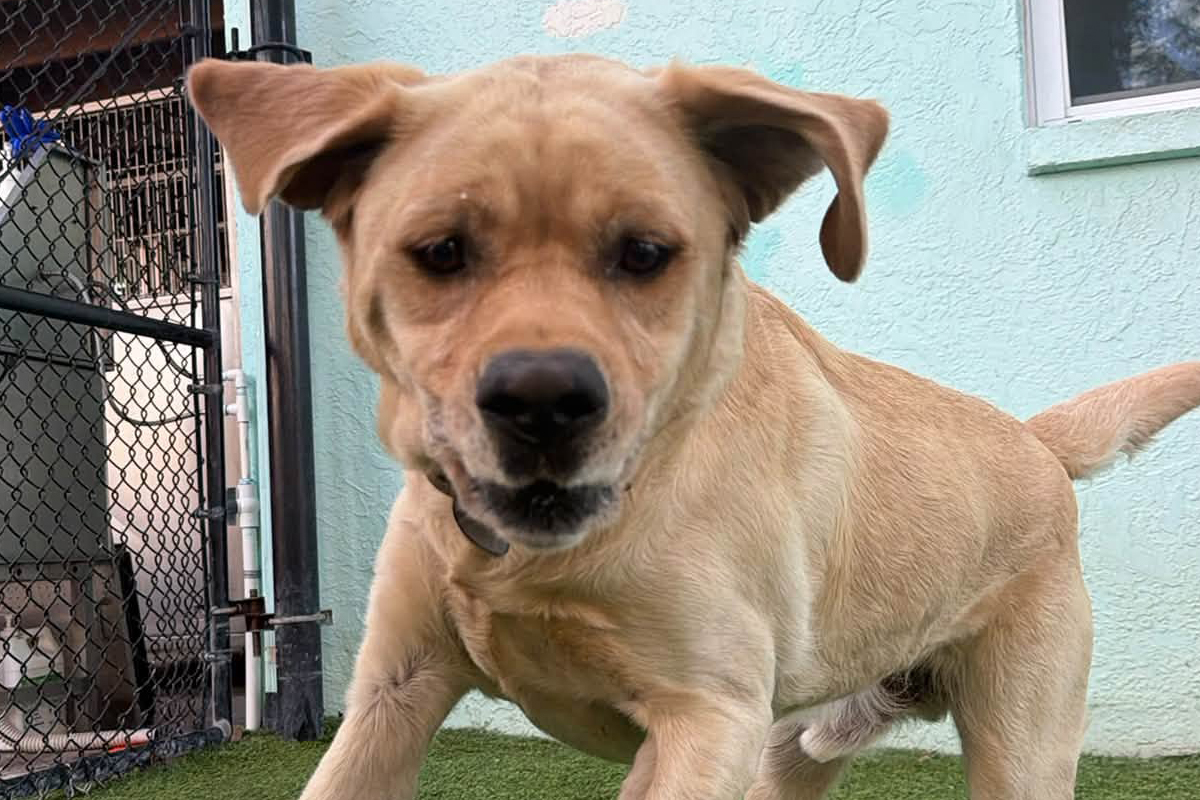
Some dogs seem to notice the moment attention shifts away from them.
Two people start talking and the dog walks over. A phone call begins and they start barking. Guests sit down to visit and the dog pushes between them. Family members try to have a conversation and the dog paws, nudges, brings a toy, jumps, or demands attention until someone responds.
This can quickly become frustrating.
The behavior may look social or affectionate at first, but over time the dog can learn that interrupting is an effective way to control where attention goes.
The dog does not need to understand the idea of “interrupting” the way a person does. They only need to learn that certain behaviors make people stop talking and start responding to them.
That is why the solution is not simply telling the dog to be quiet. The dog needs a clearer job and a different way to handle moments when they are not the center of the interaction.
Teaching calm independence, place work, and better attention boundaries can make everyday conversations much easier. Building those skills is an important part of the professional dog training and boarding support families receive from The DogHouse LLC in Pinellas County, Florida.
Dogs Quickly Learn When Attention Moves Away
Dogs pay close attention to human behavior.
They notice when someone looks at them.
Touches them.
Talks to them.
Calls their name.
They also notice when that attention disappears.
For some dogs, a conversation between people creates a sudden change.
The humans are focused on each other.
The dog is no longer involved.
That is often when the interruption begins.
Interrupting Usually Works Because Someone Responds
The dog paws.
Someone pets them.
The dog barks.
A person says, “Stop.”
The dog pushes between two people.
Someone moves to make room.
The dog brings a toy.
Someone throws it.
Every one of these reactions can reinforce the behavior.
The dog has successfully changed what the humans were doing.
Negative Attention Can Still Be Attention
Families sometimes believe they are discouraging interruptions because they respond with correction.
“Stop it.”
“Go away.”
“Not now.”
But for an attention-seeking dog, this is still interaction.
The dog interrupted.
The person looked at them.
Spoke to them.
Changed their body position.
That can be enough to keep the behavior going.
Pawing Is a Common Conversation Interruptor
Some dogs use a paw because it gets an immediate response.
They place it on a leg.
Someone looks down.
The dog paws again.
The person eventually pets them.
The sequence becomes stronger.
Over time, a gentle paw can turn into repeated scratching or pushing.
The dog learns that physical persistence works.
Nose Nudging Can Become Just as Pushy
Other dogs use their nose.
They push under a hand.
Nudge an arm.
Lift someone’s hand away from another person.
The behavior may look affectionate, but the dog is still controlling the interaction.
A dog should be able to remain near people without deciding when everyone must stop and focus on them.
Barking Can Become the Fastest Way to Interrupt
Some dogs discover that vocal behavior works even better.
The conversation starts.
The dog barks.
Everyone stops.
The dog has immediately changed the room.
That makes barking extremely powerful.
If this happens repeatedly, the dog may begin barking sooner and with more intensity.
Bringing Toys Can Be Another Form of Interruption
A dog may place a ball in someone’s lap while they are talking.
The person throws it without thinking.
The dog returns.
Now the dog has learned that toys can redirect attention.
This can create a constant cycle where every conversation becomes a play opportunity.
Interactive toys should not automatically start a game just because the dog presented them.
Jumping Between People Can Become a Habit
Some dogs physically insert themselves into conversations.
They climb onto the couch.
Push between legs.
Stand directly between two people.
Lean into the person they want attention from.
If everyone adjusts around the dog, the behavior works.
Clear personal-space boundaries can prevent the dog from using their body to control social situations.
The Dog Does Not Need to Be Part of Every Interaction
This is an important household lesson.
People can talk without the dog participating.
They can sit together.
Stand in the kitchen.
Speak at the door.
Have a phone conversation.
The dog can remain nearby without being involved.
That kind of neutrality is a very useful life skill.
Place Work Is One of the Best Solutions
Place work gives the dog a clear responsibility during conversations.
The dog goes to a bed, mat, or cot.
The family talks.
The dog remains settled.
This removes the need for constant correction.
Instead of repeatedly saying no, the dog knows where they are supposed to be.
Start With Short Conversations
Do not begin with a thirty-minute visit if the dog has never practiced.
Start with something simple.
Two people talk for a minute.
The dog remains on place.
Then they are released.
Gradually increase duration.
The dog learns that conversation time is manageable.
The Dog Should Stay on Place While People Move
Real conversations are not always still.
Someone stands.
Moves to another chair.
Walks toward the kitchen.
The dog may see that movement as a release.
Practice with mild movement.
The dog remains on place while people shift around.
This helps make the behavior useful in real life.
A Clear Release Cue Matters
Some dogs stay on place until the conversation becomes interesting.
Then they get up on their own.
A clear release helps.
Place means remain there until the family decides the exercise is finished.
This teaches patience and prevents the dog from choosing the moment to re-enter the interaction.
Conversations Should Not Always End With Immediate Attention
If every conversation ends and the dog instantly gets petting, the dog may spend the whole time waiting for that moment.
Sometimes release the dog and simply continue normal life.
Other times invite them over.
This keeps the routine flexible.
The dog learns that waiting calmly does not always predict one exact reward.
Reward Calm Behavior During the Conversation
If the dog remains settled while people talk, that is valuable.
A calm food reward may be appropriate during early training.
Quiet praise can help.
The important thing is timing.
The reward should clearly follow calm staying, not barking or getting up.
Do Not Wait for the Dog to Interrupt Before Giving Guidance
Prevention is easier.
If guests arrive and the dog normally interrupts, use place before the conversation gets going.
If a phone call starts, have the dog settle early.
This prevents the old pattern from starting.
Once the dog is already pawing and barking, the situation becomes harder to manage.
Phone Calls Are a Common Trigger
Dogs often seem to know when someone is on the phone.
The person is speaking but not to them.
That can be confusing for a dog used to responding whenever they hear the person’s voice.
Some dogs begin barking, pacing, or approaching repeatedly.
Place work during phone calls can help teach that talking does not always involve them.
Video Calls Can Be Even Harder
A person sits at a computer.
Talks.
Laughs.
Looks at the screen.
The dog may hear voices but see no visitor.
This can create extra curiosity.
If the dog interrupts meetings, establish a routine before the call starts.
Bathroom break.
Brief activity.
Then place, crate, or another structured resting area.
Work From Home Can Make the Problem Stronger
Dogs living with someone who works from home may have many opportunities to interrupt.
Calls.
Meetings.
Conversations with family.
The person is physically present but not available.
The dog may learn to create interaction through barking or nudging.
Scheduled breaks and defined quiet periods can reduce this.
The Dog Should Learn That Talking Is Background Activity
Human conversation should become ordinary.
People talk.
The dog rests.
Nothing needs to happen.
This is the same type of neutrality dogs need around household sounds and movement.
The more often the dog experiences conversation without gaining access, the less important it becomes.
Affection Before the Conversation Can Help in Some Cases
If the dog has been ignored for hours, it may be unrealistic to expect immediate calm when social activity begins.
Appropriate exercise, bathroom access, and some intentional interaction beforehand can help.
The key is that those needs are met before the dog begins demanding.
That creates a much cleaner pattern.
Do Not Use Constant Petting to Keep the Dog Quiet
Some families pet the dog continuously during a conversation to prevent interruption.
This may work temporarily.
But it can also teach the dog that conversations require constant physical attention.
The dog never learns how to settle independently.
Affection should be optional, not necessary for calm behavior.
Personal-Space Boundaries Make Conversations Easier
Dogs that crowd people physically are more likely to interrupt.
They stand too close.
Lean.
Push.
Climb onto laps.
Teaching the dog to remain a little farther away can make social situations much calmer.
The dog can be included without physically inserting themselves into the conversation.
Furniture Rules Can Affect Interruptions
A dog with unlimited couch access may move directly between people whenever they sit down.
That can become a routine.
Invitation-based furniture access may help.
The dog is allowed up when invited.
Otherwise, they remain on place.
This creates clearer social boundaries.
Dogs Need to Learn That Attention Can Shift
A dog may be fine as long as everyone is focused on them.
The problem appears when the focus changes.
That transition needs practice.
Pet the dog briefly.
End the interaction.
Start talking to someone else.
The dog remains settled.
This teaches that attention can move away without creating a problem.
Attention Boundaries Build Better Frustration Tolerance
Some interruptions happen because the dog cannot tolerate not being included.
They become frustrated.
Then bark or paw.
Waiting calmly while people talk gives the dog practice with mild social frustration.
They learn that reduced attention is temporary and manageable.
Short Delays Are Enough at First
Do not expect a highly attention-driven dog to ignore people for a long period immediately.
Start with short conversations.
Then offer a break.
Build gradually.
The dog needs repeated success, not one difficult test.
The Dog Should Not Control When the Conversation Stops
If the dog barks and everyone immediately turns toward them, they have controlled the interaction.
Try to avoid that pattern.
Use a familiar cue.
Redirect to place.
Continue talking.
The dog learns that interruption does not end the conversation.
Do Not Turn Interruptions Into a Long Argument
A dog barks.
The owner says no.
The dog barks again.
The owner repeats.
Now the dog has created an entire exchange.
A simple response is clearer.
Place.
Wait.
Return attention to the conversation.
The less social energy the interruption creates, the less rewarding it becomes.
Calm Follow-Through Matters
If the dog leaves place repeatedly, return them calmly.
Do not become frustrated.
Do not turn the whole conversation into dog management.
The behavior improves through predictable repetition.
The dog gets up.
They return to place.
Eventually, staying becomes easier than testing.
Guests Can Accidentally Reward Interruptions
Visitors often think a pawing or nudging dog is cute.
They pet them.
Talk to them.
Throw the toy.
Now the dog learns that interrupting guests is especially rewarding.
Keep visitor instructions simple.
Ignore pushy behavior.
Wait for calmness.
Let the family control when interaction begins.
The Dog Does Not Need to Greet Every Guest Repeatedly
Some dogs greet a visitor when they arrive, then keep returning every few minutes for more interaction.
The visitor continues responding.
This can create persistent attention-seeking.
One calm greeting may be enough.
Then the dog can return to place or settle nearby.
Children Can Make Interruptions More Rewarding
Children often respond quickly.
The dog brings a toy.
The child plays.
The dog nudges.
The child laughs.
The dog jumps in.
The conversation stops.
This can make interruptions very powerful.
Simple household rules can help children avoid rewarding the behavior automatically.
Adults Should Handle the Main Training
Children can follow basic rules, but adults should manage the structure.
Place work.
Releases.
Visitor routines.
More difficult attention-seeking.
This keeps the expectations consistent and safe.
Multi Dog Homes Can Create Group Interruptions
One dog approaches during a conversation.
Another follows.
Soon, several dogs are competing for attention.
One paws.
Another barks.
A third pushes in.
This can turn a simple conversation into chaos.
Individual place work can prevent this.
Each Dog Should Have a Defined Place
Separate locations reduce competition.
One dog is not pushing another aside.
They are not clustering around the family.
Everyone has a clear responsibility.
This makes social situations much easier.
One Dog Can Teach the Others to Interrupt
Dogs observe each other.
One dog learns that barking gets attention.
The others join.
Soon, the whole group is involved.
Changing the first dog’s pattern can help, but each dog still needs independent training.
Attention Competition Can Increase Tension
In multi dog homes, human attention can become a resource.
One dog pushes closer.
Another blocks.
A third vocalizes.
Structured attention helps.
Each dog can receive individual interaction at appropriate times without needing to compete during conversations.
The Dog Should Learn to Wait While Another Dog Gets Attention
This is a valuable advanced skill.
One dog receives petting.
The other remains on place.
Then roles switch.
This teaches that attention to another dog does not mean the waiting dog has been forgotten.
It reduces both interruption and competition.
Conversations at the Front Door Can Be Especially Difficult
Someone arrives.
The dog is already excited.
Then people stand at the doorway talking.
The dog may jump, crowd, bark, and move between everyone.
Use place before opening the door.
Let the conversation happen while the dog remains back.
This creates safer and calmer doorway behavior.
Kitchen Conversations Can Create Another Challenge
People stand in the kitchen talking.
Food smells are present.
The dog sees opportunity and social attention at the same time.
This can lead to crowding.
A place outside the active kitchen area can solve both problems.
The dog is not begging or interrupting.
Evening Conversations Often Trigger More Demand Behavior
Many dogs become more attention-seeking later in the day.
The family sits down.
Conversation begins.
The dog assumes this is social time.
They bring toys or demand petting.
A structured evening routine can help.
Appropriate interaction first.
Then place or calm rest.
The dog learns that the whole evening is not open-ended attention time.
Overtired Dogs May Interrupt More
A dog that has been busy all day may become less capable of settling.
They appear restless.
Follow everyone.
Demand interaction.
Interrupt constantly.
This can look like excess energy when the dog may actually need rest.
Structured downtime earlier in the day can improve evening behavior.
More Exercise Is Not Always the Answer
A dog that interrupts may benefit from appropriate exercise.
But a tired dog can still demand attention.
If the habit has been rewarded for months, another walk will not automatically fix it.
The dog needs practice with boundaries and independent settling.
Boredom Tolerance Matters
Conversations are boring from the dog’s perspective.
That is okay.
The dog should be able to handle a period where nothing is happening for them.
This is part of healthy household behavior.
A dog that can tolerate boredom has less reason to manufacture interaction.
Toys Should Not Always Solve Boredom
Giving the dog a toy every time people talk can create another dependency.
The dog may never learn to simply rest.
Toys and chews can be useful tools, but they should not be required for every conversation.
The long-term goal is genuine calmness.
Crate Training Can Help During Longer Social Periods
A properly introduced crate can provide a quiet resting option during long conversations or gatherings.
The dog can disengage from the social environment.
This can be especially useful for dogs that become increasingly overstimulated around guests.
Crate time should be positive and appropriate, not punishment for interrupting.
Gates Can Create Useful Space
A gate may also help.
The dog remains nearby but cannot physically enter the conversation area.
This is useful for dogs that struggle with personal-space boundaries.
They can observe without inserting themselves.
The Dog Should Be Comfortable With People Hugging or Greeting
Some dogs interrupt when people physically greet each other.
A handshake.
A hug.
Someone sitting closely.
The dog pushes in.
This is often another form of overinvolvement.
Place work can help teach that physical interaction between people does not require the dog’s participation.
The Dog Does Not Need to Supervise Social Contact
People can talk, hug, laugh, and move around.
The dog can remain settled.
This is an important extension of household neutrality.
The dog learns that social activity can happen without them being responsible for it.
Reward Calmness After the Conversation Too
When the conversation ends, do not immediately reward the loudest dog.
If the dog stayed settled, invite them over calmly.
Offer affection.
Release for a break.
This teaches that patience has value.
Do Not Let Escalation Win
The dog starts with staring.
Then pawing.
Then barking.
Finally, someone responds.
The lesson is that escalation works.
If genuine needs have been met, louder behavior should not be what changes the outcome.
Calmness should be the path to access.
Genuine Needs Still Matter
Not every interruption is demand behavior.
The dog may truly need to go outside.
They may be uncomfortable.
Something unusual may be happening.
Families should use common sense and consider context.
A sudden increase in restlessness, vocalization, or attention-seeking may warrant closer attention, and veterinary guidance may be appropriate if the behavior change is significant or accompanied by physical symptoms.
Not Every Dog Interrupts for the Same Reason
Some want attention.
Some want play.
Some are overexcited.
Some struggle with frustration.
Some are anxious or overly dependent on one family member.
Understanding the larger behavior pattern helps determine which skills need the most work.
A Clingy Dog May Interrupt More Often
Dogs that follow one person everywhere often struggle when that person focuses on someone else.
They may move between them.
Paw.
Lean.
Bark.
Teaching healthy independence can reduce this.
The dog learns that the relationship remains secure even when attention shifts.
Independence Training Supports Better Social Manners
Place work.
Short separations.
Resting on another bed.
Staying settled while someone leaves the room.
These skills reduce the dog’s need to be constantly involved.
The more independent the dog becomes, the easier conversations usually get.
Consistency Across the Household Matters
If one person ignores interruptions and another pets immediately, the dog will keep testing.
If place is required during some conversations but not others, the rule becomes unclear.
Families should agree on a basic standard.
Pushy behavior does not control attention.
Calm behavior creates access.
The Dog Should Respond to More Than One Family Member
If only one person can send the dog to place, social situations remain difficult.
Other capable family members should practice.
This gives the household more flexibility and prevents one person from becoming responsible for every interaction.
Simple Rules Work Best
The family does not need a complicated system.
A few clear rules can make a big difference.
Go to place when asked.
Stay until released.
Do not reward barking, pawing, or jumping with immediate attention.
Invite the dog into interaction during calm moments.
Simple standards are easier to maintain.
Progress Often Starts With Smaller Interruptions
The dog may still approach but stop pawing.
They may look toward the conversation but remain on place.
They may bark once instead of repeatedly.
These are meaningful improvements.
The dog is learning a new pattern.
Recovery Matters Too
A dog may still make a mistake.
They leave place.
Approach.
The important question is whether they can return to the expected behavior quickly.
Faster recovery shows that training is becoming more familiar.
Do Not Expect a Long-Term Habit to Disappear Immediately
A dog that has interrupted conversations for years has a strong reinforcement history.
The behavior has worked many times.
Change takes repetition.
The family needs to make the old strategy less successful and the new strategy more rewarding.
Over time, the balance shifts.
Better Conversation Manners Create More Freedom
A dog that constantly interrupts may eventually be removed whenever guests visit.
A dog that can settle can remain in the room.
They get more social inclusion because they are easier to live with.
This is another example of how boundaries can actually create more freedom.
Calm Dogs Are Easier to Include in Family Life
Dinner conversations.
Visitors.
Phone calls.
Family gatherings.
A dog that can relax through these moments can remain nearby naturally.
The family does not need to spend the entire interaction managing them.
That makes time together more enjoyable for everyone.
Board-and-Train Can Help Reset Long-Standing Attention-Seeking Habits
Some dogs have learned to interrupt nearly every social interaction in the home.
They bark when people talk, paw for attention, bring toys repeatedly, push between family members, jump onto furniture, follow guests, and struggle to settle whenever attention moves away from them.
These behaviors often involve more than simple sociability.
They can reflect weak attention boundaries, limited independence, poor frustration tolerance, excessive household involvement, and a lack of a reliable off switch.
A structured board-and-train program can help build a stronger foundation.
The dog receives consistent practice with place work, waiting, personal-space boundaries, crate routines, impulse control, doorway manners, calm greetings, and transitions between interaction and independent rest.
They learn that people can talk, visit, work, and spend time together without the dog needing to control the interaction.
The family also receives guidance on maintaining those expectations at home so barking, pawing, and persistent interruptions do not become rewarding again.
Stopping your dog from interrupting conversations is not really about teaching them to be silent.
It is about teaching them that human attention can move elsewhere without creating a problem.
People can talk.
Guests can visit.
Phone calls can happen.
The dog can remain nearby without barking, pawing, bringing toys, or physically pushing into the interaction.
Place work, personal-space boundaries, independent rest, attention rules, frustration tolerance, and consistent household responses can help create that change.
From our perspective, one of the clearest signs of good household manners is a dog that can be part of the room without needing to control the room. When the dog can remain settled while people talk and wait for appropriate opportunities to interact, family life becomes calmer and much easier to enjoy.
Contact The DogHouse LLC to learn how a structured board-and-train program can help your dog develop healthier attention boundaries, stronger impulse control, and calmer household behavior in Pinellas County, Florida.