

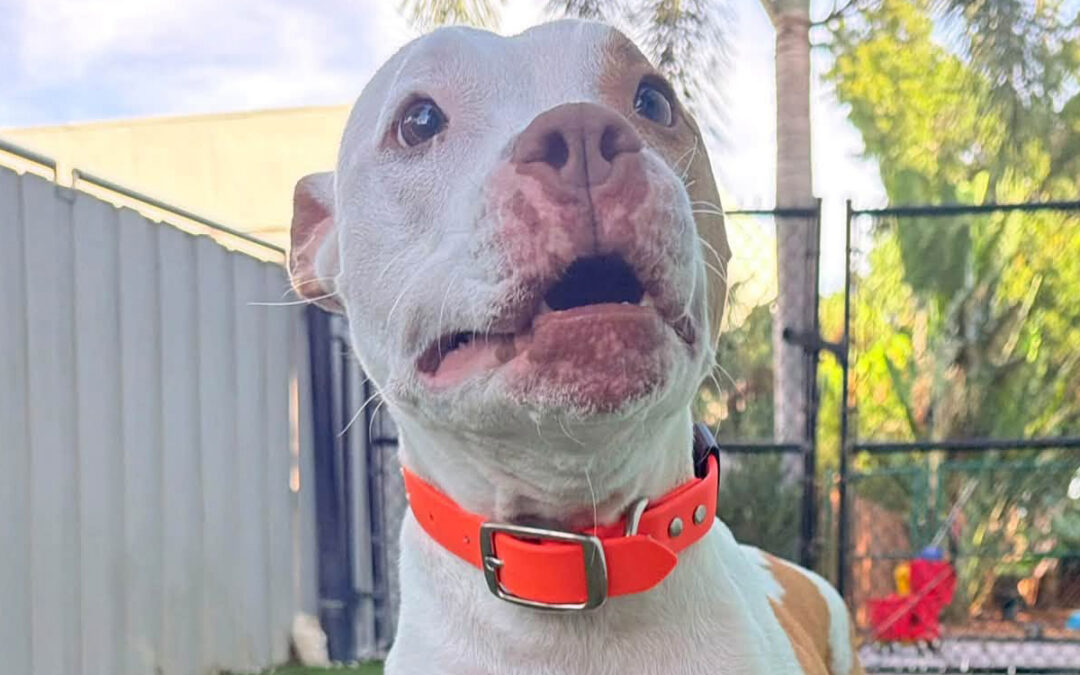
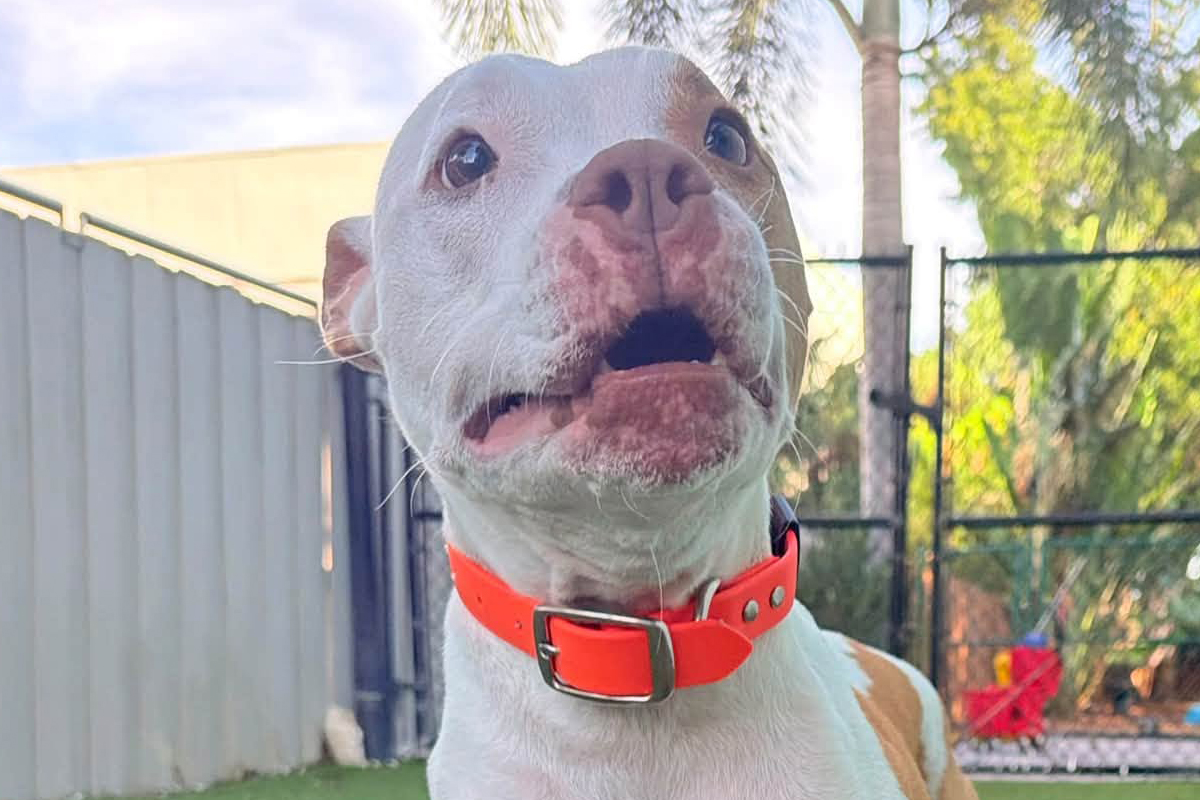
A barking dog can quickly change the entire mood of a walk.
Your dog may be moving calmly one moment, then suddenly hear another dog barking behind a fence, from a yard, through a window, or across the street.
The reaction can happen fast.
The head turns.
The body stiffens.
The leash tightens.
Your dog may bark back, pull toward the sound, freeze, stare, or become so distracted that familiar commands stop working.
For some dogs, the barking itself is more difficult than seeing another dog quietly.
The sound adds intensity.
It can trigger excitement, frustration, uncertainty, or defensiveness, especially if the barking dog is hidden from view or moving behind a barrier.
Teaching your dog to stay calm in these moments is not about expecting them to ignore every sound completely. The goal is helping them notice the barking without becoming controlled by it.
Building that kind of real-world focus and emotional control is an important part of the dog training and boarding support families receive from The DogHouse LLC in Pinellas County, Florida.
Barking Changes the Difficulty of the Situation
A quiet dog across the street may be manageable.
That same dog begins barking and suddenly your dog reacts.
The environment has changed.
Sound adds emotional pressure.
The barking may feel closer, more urgent, or more confrontational.
That is why a dog who handles quiet dogs well may still struggle when barking starts.
Dogs Often Respond to Sound Before They Fully See the Other Dog
Sometimes your dog hears barking before they know where it is coming from.
That uncertainty can make the situation harder.
The dog scans.
Looks around.
Becomes alert.
The sound itself may be enough to trigger a reaction.
Training should include situations where barking is heard at a manageable distance, not only situations where another dog is clearly visible.
The Goal Is Recovery, Not Perfect Silence
Your dog may look toward the barking.
That is normal.
They may become briefly alert.
The important question is what happens next.
Can they look back toward you?
Can they continue walking?
Can they respond to a familiar cue?
Can they settle again?
That recovery is the skill you want to build.
Barking Back Can Become a Habit
If your dog repeatedly responds to barking with barking, the pattern can become automatic.
Another dog barks.
Your dog answers.
Now both dogs are involved.
The longer this happens, the more practiced the response becomes.
Interrupting the pattern early is important.
Distance Is One of the Best Tools
If your dog immediately reacts when another dog barks ten feet away, that distance may be too difficult.
Move farther away.
At thirty feet, your dog may be able to listen.
At fifty feet, they may remain completely calm.
Start where the dog can succeed.
Then gradually work closer over time.
More Space Helps the Dog Think
When the barking is too close, your dog may become emotionally overwhelmed.
Pulling.
Staring.
Barking.
Ignoring you.
More distance lowers the pressure.
The dog can hear the barking without feeling as though they need to respond.
That is where productive training can happen.
Distance Is Not Avoidance
Crossing the street or moving farther away is not giving up.
It is creating a better setup.
The barking is still present.
The dog is still learning.
You are simply working at a level where the dog can stay functional.
Start Before the Reaction Gets Big
Do not wait until your dog is barking hard and pulling toward the other dog.
Watch for the earlier signs.
Head turns.
Body tension.
Mouth closes.
Leash pressure increases.
Staring begins.
That is your opportunity to act.
Fixation Often Comes Before Barking
A dog may become silent and still.
That can look calm.
But if the eyes are locked onto the other dog and the body is rigid, the dog may already be struggling.
Use movement or distance before the reaction escalates.
Reward the Look Away
Your dog hears barking.
Looks toward it.
Then looks back at you.
That is excellent behavior.
Reward it.
You are teaching the dog that noticing the barking and then disengaging is a better response than joining in.
Engagement Makes Barking Easier to Handle
A dog that already checks in with the handler is easier to guide.
Practice engagement on calm parts of the walk.
Responding to their name.
Following changes in direction.
Looking back voluntarily.
Then those skills are available when a barking dog appears.
Do Not Wait for Barking Dogs to Start Training
If you only practice focus when a difficult trigger appears, the dog may already be too distracted.
Build the habit during easy moments.
The stronger the engagement is normally, the more useful it becomes during challenging situations.
Keep the Leash Manageable
A tight leash can add tension.
If the dog is already reacting and the leash becomes a constant struggle, the situation may become even harder.
Create space early.
Keep enough control for safety.
Avoid turning the encounter into a pulling contest.
Movement Can Help Break Fixation
If your dog locks onto the barking dog, keep moving when appropriate.
Change direction.
Arc away.
Walk behind a visual barrier.
Movement can help the dog disengage.
Standing still and staring often makes the moment harder.
U-Turns Are Useful
Sometimes a barking dog appears suddenly.
There is no good passing distance.
Turn calmly.
Create more space.
Regain focus.
This is a practical training skill.
The goal is success, not proving the dog can handle every close encounter.
Crossing the Street Can Prevent a Bigger Reaction
If the barking is coming from a yard or another dog on the sidewalk, crossing early may be the best option.
Your dog gets more space.
The leash stays calmer.
You have more room to work.
This creates a better repetition.
Fence Barking Can Be Especially Difficult
Dogs behind fences may bark intensely.
Your dog may not be able to see them clearly.
The barrier itself can increase frustration on both sides.
This makes fence lines one of the harder real-world situations.
Use extra distance.
Do Not Walk Directly Along the Fence if Your Dog Is Struggling
If every house with a barking dog creates a reaction, give more room.
Walk farther from the property line.
Cross to the other side.
Use a wider path.
Repeated calm passes are more useful than repeated close reactions.
Hidden Dogs Can Be More Startling
A dog barking behind a privacy fence may be harder than one your dog can see.
The sound appears suddenly.
There is uncertainty about where it is coming from.
Your dog may become more alert.
Give extra space and move forward rather than stopping to investigate.
Window Barking Can Trigger Outdoor Reactions
A dog may bark from inside a house as you pass.
Your dog hears it and turns toward the window.
Keep walking.
Reward calm attention back toward you.
The goal is making the sound unimportant.
Dogs Barking From Cars Can Be Surprising
Parking lots can create sudden barking encounters.
A dog inside a vehicle may bark when you walk past.
That can startle your dog.
Keep distance from parked vehicles when possible.
Stay aware of the environment.
Apartment and Condo Areas Can Be Harder
Hallways and shared entrances reduce distance.
A dog may bark from behind a door.
Another may appear around a corner.
In tighter spaces, management becomes even more important.
Use alternate routes or wait for more room when possible.
Elevators Can Be Too Close for Some Dogs
A door opens.
Another dog is barking inside.
That may be more than your dog can handle comfortably.
Do not force the encounter.
Wait for another elevator if possible.
Safety and control come first.
Barking Dogs Behind Gates Can Create Frustration
The barrier prevents normal movement and interaction.
Some dogs become more reactive when they cannot reach the other dog.
Your dog may also become frustrated.
Extra distance can reduce that emotional intensity.
Neutrality Is the Long-Term Goal
Your dog does not need to answer every bark.
They should be able to hear another dog and continue with their own behavior.
Look.
Stay connected.
Move on.
That is useful real-world neutrality.
Your Dog Does Not Need to Investigate Every Bark
Some dogs hear barking and immediately want to locate the source.
They turn around.
Move toward the sound.
Scan.
This can strengthen environmental monitoring.
Teach them that not every barking dog requires investigation.
Avoid Letting the Dog Stand and Listen for Too Long
The longer the dog focuses on the barking, the more important it can become.
Keep the encounter moving.
A brief look is fine.
Then continue.
This helps prevent fixation.
Simple Obedience Can Help
Use familiar cues when the dog is still capable of responding.
Heel.
Come.
Sit.
Look.
The command gives the dog something productive to do.
Keep it simple.
Do Not Overload the Dog With Commands
A dog that is already struggling does not need a stream of instructions.
“Sit.”
“Leave it.”
“Look.”
“No.”
“Come.”
This can become noise.
Create space first.
Then use one clear cue.
First-Time Responses Matter
If you repeat a command several times while the dog stares at the barking dog, the cue can lose meaning.
Use the command when the dog is still capable of responding.
Reward a good first response.
That builds stronger obedience.
Food Can Help Create a Better Association
The dog hears barking.
Remains responsive.
Reward.
This can help change the emotional pattern.
Barking no longer automatically predicts tension.
It becomes an opportunity to reconnect with the handler.
Use the Reward After the Behavior You Want
Do not simply wave food in front of the dog while they continue staring.
Wait for a better response.
A look away.
A check-in.
Movement with you.
Then reward.
The timing should make the lesson clear.
Higher-Value Rewards May Help
A barking dog may be much more difficult than a quiet environment.
The reward may need to match that challenge.
Use something the dog finds genuinely valuable.
That can help build a stronger response history.
Toys Can Work for Some Dogs
Food is not the only option.
Some dogs respond better to short play.
A favorite toy can help redirect attention after the dog disengages.
The goal is making the handler worth reconnecting with.
Do Not Turn the Encounter Into a Party
The reward should help focus, not raise arousal unnecessarily.
If the dog is already highly excited, very intense play may make it harder to settle.
Choose reinforcement appropriate for the dog and situation.
Barking Does Not Always Mean the Other Dog Wants Contact
Owners sometimes assume the barking dog is simply excited or friendly.
That may not be true.
Do not approach to “let them work it out.”
Maintain distance.
Your job is keeping your dog under control.
Avoid On-Leash Greetings After Barking
If your dog reacts and then gets to approach the other dog, the reaction may become part of the path to access.
This can strengthen pulling and barking.
Calm behavior should be what earns any appropriate interaction.
Not Every Dog Needs to Meet
Your dog can have good social skills without greeting barking dogs.
Passing calmly is often the better goal.
There is no need to turn every encounter into social contact.
Calm Passing Is a Major Skill
A dog barks nearby.
Your dog notices.
You continue walking.
Nothing dramatic happens.
That is successful training.
The more often this happens, the more normal barking becomes.
Different Barking Styles Can Affect Your Dog Differently
A single bark may barely matter.
Rapid barking may create more intensity.
Low barking may feel more threatening.
High-pitched barking may increase excitement.
Dogs respond to sound differently.
Train gradually across different situations.
Barking Plus Movement Is Harder
A barking dog that is also running the fence line is much more difficult than a dog standing still.
Movement raises the intensity.
Increase distance.
Do not expect the same level of performance.
Barking Plus Pulling Can Be Harder Too
If another dog is lunging toward your dog while barking, create more space immediately.
Your dog’s reaction may increase because the visual pressure is stronger.
Safety comes first.
Do Not Punish Fearful Responses
If your dog is worried by barking, harsh correction may add more negative emotion to the situation.
Use space.
Clear guidance.
Calm movement.
Fear and uncertainty need a thoughtful approach.
Fear Can Look Like Reactivity
A fearful dog may bark back.
Pull away.
Freeze.
Hide behind the handler.
Do not assume every vocal response is aggressive.
The underlying emotion matters.
Excited Dogs Can Look Similar
A social dog may bark because they want to reach the other dog.
They pull forward.
Whine.
Become frustrated.
This is still poor impulse control even if the motivation is friendly.
Training should still focus on neutrality.
Frustration Can Build Through Barriers
Fences, leashes, windows, and gates can increase frustration.
The dogs can see or hear each other but cannot interact naturally.
This can make barking exchanges more intense.
Distance helps lower that pressure.
Barrier Frustration Can Become a Learned Pattern
The dog sees another dog behind a fence.
Pulls and barks.
This happens repeatedly.
Eventually, the fence itself may become part of the trigger.
Preventing repeated rehearsal is important.
Choose Routes Strategically
If one street contains several dogs that bark intensely behind fences, consider another route while training is still developing.
This does not mean avoiding the issue forever.
It prevents the dog from practicing five reactions in ten minutes.
One Difficult Encounter Is Enough for Training
The dog does not need repeated exposure to multiple barking dogs in one outing.
A single successful encounter can be valuable.
Then continue with a calmer walk.
Quality matters more than volume.
Trigger Stacking Can Make Later Reactions Worse
Your dog passes one barking dog.
Then another.
Then a third.
By the fourth, their tolerance may be much lower.
Each event adds emotional load.
Take that into account.
The First Reaction Can Affect the Rest of the Walk
If your dog has a major reaction early, they may remain more alert afterward.
They scan more.
Respond faster.
This is another reason early management matters.
Preventing the first big reaction can improve the entire outing.
Recovery Time Matters
After a barking encounter, give the dog time to settle.
Walk in a quieter area.
Let them sniff appropriately.
Regain normal breathing and movement.
Do not immediately push into another difficult situation.
Sniffing Can Help Some Dogs Reset
Once the dog has disengaged and the situation is safe, allowing some sniffing may help lower arousal.
Use it as a release after good behavior.
This can create a smoother transition.
The Dog Should Not Spend the Rest of the Walk Searching for Dogs
Some dogs stay mentally engaged after one barking encounter.
They look behind.
Scan yards.
Watch every fence.
Bring attention back toward normal walking.
The event should end when it ends.
Place Work Can Help at Home
Dogs that react strongly to barking outside may also react to neighborhood dogs from windows or the yard.
Place work can teach them to remain settled while sounds happen.
The dog hears barking.
Remains on place.
This is valuable practice.
Start With Lower-Level Sounds
If nearby barking sends the dog into immediate chaos, begin with more manageable situations.
Distant real barking.
Low-volume recordings if appropriate.
Short exposure.
The dog practices staying settled.
Then difficulty can increase.
Sound Practice Should Be Controlled
The goal is not blasting barking sounds until the dog gives up.
That can overwhelm the dog.
Use a level where they notice but can still respond.
Gradual exposure is more productive.
The Dog Should Learn That Barking Does Not Require a Response
This is the larger lesson.
A dog barks outside.
Nothing needs to happen.
Your dog can remain where they are.
That neutrality can reduce household barking too.
Front Window Access Can Make the Problem Worse
A dog hears barking.
Runs to the window.
Looks for the source.
Barks back.
This gives the dog repeated practice.
Reducing access to the window can make training easier.
Backyard Barking Can Reinforce the Same Pattern
Your dog goes outside.
A neighbor’s dog barks.
Your dog runs to the fence.
They exchange barking.
This can become a daily habit.
Supervised yard time may be necessary while you change the pattern.
Recall Is Important in the Yard
The dog hears the neighbor dog.
Starts moving toward the fence.
Recall early.
Reward.
Redirect.
This can prevent the full barking exchange.
Do Not Wait Until the Dog Is Already at the Fence
Recall is much harder once the dog is fully engaged.
Act sooner.
The first head turn toward the barking dog is a better time.
Good timing protects the cue.
Fence Lines Should Not Become the Dog’s Job
Some dogs spend outdoor time patrolling for other dogs.
This keeps them constantly ready to react.
The yard should not become a security assignment.
Structure and supervision can change that.
Multi Dog Homes Can Make Barking Reactions Bigger
One dog hears barking.
Responds.
The others join.
Now the whole house is activated.
This can happen very quickly.
Individual training matters.
One Dog Often Starts the Chain Reaction
Identify which dog reacts first.
Improving that dog’s response may reduce the group reaction.
Still, every dog should learn their own calm behavior.
Separate Place Areas Can Help
If several dogs become reactive to outside barking, give each dog a defined place.
The sound happens.
Each dog stays responsible for their own position.
This reduces crowding and group escalation.
Individual Walks May Be Needed
Two dogs together may react more strongly than either dog alone.
Train separately first.
Build individual neutrality.
Then work on group walks.
Group Behavior Is Harder
One dog hears barking and pulls.
The other follows.
The movement itself becomes contagious.
Strong individual skills make group management much easier.
Family Members Should Respond the Same Way
One person allows the dog to bark back.
Another tries to stop it.
The dog receives mixed information.
Shared expectations matter.
Everyone should know when to create distance and how to reinforce calmness.
Avoid Yelling Over the Barking
If the dog is barking and the person begins shouting, the overall energy increases.
The dog may not understand the difference between correction and participation.
Use calm, clear handling.
Create space.
Regain focus.
Repeated “No” May Not Solve the Pattern
The dog hears barking.
Barks back.
The family says “no” repeatedly.
But the dog never learns what to do instead.
Training should provide an alternative.
Look at the handler.
Move away.
Stay on place.
Continue walking.
Teach the Replacement Behavior
Good training answers the question, “What should the dog do instead?”
Hear barking.
Check in.
Follow.
Keep walking.
That is much clearer than simply trying to suppress the reaction.
Success Should Become Predictable
The dog hears another dog.
You create appropriate distance.
The dog reconnects.
You reward.
The walk continues.
Repeated enough, this becomes a new habit.
Do Not Expect Every Barking Dog to Feel the Same
A small dog behind a fence may be easy.
A large barking dog rushing a gate may be difficult.
A dog barking from inside a house may be surprising.
Adjust expectations to the situation.
Training should be flexible.
New Environments Can Make Barking Harder
Your dog may handle neighborhood barking well but struggle somewhere unfamiliar.
That is normal.
New surroundings already require more mental effort.
Increase distance again and rebuild success.
Practice in More Than One Environment
Once the dog improves on the usual walking route, work in other controlled locations.
This helps generalize the skill.
Barking should become something the dog can handle in different places.
Parking Lots Can Offer Controlled Practice
At a safe distance, your dog may hear dogs barking from vehicles or nearby areas.
Use the quieter edges.
Practice engagement.
Do not move into high-traffic areas just to increase difficulty.
Parks Can Be Useful With Plenty of Space
A park allows you to adjust distance.
If another dog begins barking, move farther away.
Practice calm focus.
This is often easier than narrow neighborhood sidewalks.
Narrow Trails Are More Advanced
Limited space makes passing much harder.
Dogs should have stronger skills before practicing in places where creating distance is difficult.
Management matters.
Your Dog Does Not Need Perfect Eye Contact
The dog can look toward the barking.
You do not need constant staring at your face.
Functional focus is enough.
Notice.
Disengage.
Continue.
That is practical.
Calmness Is More Than Silence
A quiet dog can still be highly tense.
Watch the body.
Loose movement.
Ability to respond.
Ability to take food.
Ability to recover.
These tell you more than barking alone.
Less Intensity Is Progress
Maybe your dog still looks toward the barking dog.
But no longer lunges.
That is progress.
Maybe they bark once instead of ten times.
Progress.
Maybe they recover in seconds instead of minutes.
Also progress.
Faster Recovery Matters
The goal is not only reducing the initial reaction.
The dog should also come back down more quickly.
That emotional recovery is a major sign of improvement.
Do Not Rush Closer Distance
A dog succeeds at forty feet.
Do not immediately try ten.
Move gradually.
Reliable behavior at a greater distance is better than repeated failure up close.
One Variable at a Time Helps
If the barking becomes louder, increase distance.
If you move closer, choose a calmer barking dog.
This makes training more manageable.
Duration Matters Too
A few seconds of barking may be manageable.
Several minutes may be much harder.
Keep exposure short at first.
End on success.
Then build duration gradually.
Rest Affects Reactivity
A tired dog may have less emotional control.
They may bark faster.
Recover slower.
Quality rest supports better behavior.
The whole daily routine matters.
Exercise Helps but Does Not Replace Training
An appropriately exercised dog may have better focus.
But exercise alone will not teach neutrality around barking dogs.
The dog still needs successful practice.
Training builds the specific response.
Do Not Try to Exhaust the Reaction Away
A dog can be physically tired and still react to barking.
That is because the behavior is connected to a trigger.
The trigger-response pattern needs to change.
More activity is not always the answer.
Heat Can Affect Training in Pinellas County
Florida heat and humidity can reduce patience and focus.
Training outdoors may be easier during cooler parts of the day.
Shorter sessions may be appropriate.
A comfortable dog learns better.
Hot Pavement Can Affect Behavior
If the surface is uncomfortable, the dog may become restless or less responsive.
Consider physical conditions before assuming the dog is simply ignoring training.
Safety comes first.
Puppies Benefit From Early Neutrality
A puppy hears another dog barking.
This is an opportunity.
Reward calm observation.
Keep enough distance.
Move on.
The puppy learns early that barking dogs are not automatically important.
Do Not Force Puppies Into Loud Dog Encounters
Early exposure should be manageable.
The goal is confidence, not overwhelming the puppy.
Too much intensity can create a negative association.
Short successful experiences are better.
Adolescents Often Become More Reactive to Dog Sounds
Young dogs may suddenly become more socially aware.
Barking catches their attention faster.
They may respond more strongly.
This is a good time to reinforce neutrality and impulse control.
Adult Dogs Can Learn a New Response
A dog that has barked back for years can still improve.
The habit may be deeply practiced.
That means management and consistency are especially important.
Change is still possible.
Senior Dogs May Respond Differently to Sound
Hearing changes can affect how older dogs perceive barking.
They may become more startled or uncertain.
If behavior changes suddenly, consider veterinary guidance.
Do not assume every change is purely behavioral.
Sudden New Reactivity Deserves Attention
If your dog previously ignored barking and suddenly becomes highly reactive, consider the larger picture.
Pain.
Hearing changes.
Stress.
Recent negative experiences.
Medical or behavioral factors may be involved.
Veterinary guidance may be appropriate when the change is sudden or concerning.
Reliable Obedience Makes These Situations Easier
A dog that already has good leash manners, recall, and engagement has more tools available.
Training around barking dogs becomes less about controlling chaos and more about applying familiar skills.
This is why foundation work matters.
Household Structure Supports Outdoor Behavior
Dogs that practice waiting, place, and calm transitions at home often have better emotional control outside.
Impulse control transfers.
The same dog that can ignore kitchen activity may become better at ignoring environmental activity too.
Neutrality Is Built Through Repetition
One calm pass is good.
Ten are better.
Dozens over time create a stronger habit.
The dog learns that barking dogs are simply part of the environment.
They do not always require action.
The Best Response Eventually Looks Ordinary
A dog barks nearby.
Your dog hears it.
Maybe glances over.
Then keeps walking.
Nothing else happens.
That ordinary response is exactly what good training is trying to create.
Board-and-Train Can Help Dogs Build Better Responses to Barking Dogs
Some dogs seem manageable around other dogs until barking begins.
Then they pull, stare, bark back, lunge, or stop responding completely.
These dogs may already understand basic obedience but struggle with the emotional intensity created by sound and movement.
A structured board-and-train program can help build stronger responses.
The dog receives consistent practice with leash manners, engagement, place work, recall, impulse control, environmental neutrality, and recovery around carefully controlled distractions.
Distance and intensity can be adjusted so the dog can learn without repeatedly becoming overwhelmed.
The family also receives guidance on recognizing early signs of fixation, creating appropriate space, and maintaining the same expectations during neighborhood walks and at home.
That follow-through matters because barking dogs are a normal part of many neighborhoods, and reliability comes from repeated successful responses.
Teaching your dog to stay calm when another dog barks nearby is about helping them hear the sound without feeling the need to answer it.
Your dog may notice.
They may look.
But they should still be able to remain connected, follow your direction, and recover quickly.
Appropriate distance, better engagement, early timing, leash structure, controlled exposure, and repeated successful practice can gradually make barking dogs less important.
From our perspective, the goal is not a dog that never notices another dog barking. It is a dog that can hear the barking, stay functional, and trust the family to decide what happens next. When that skill becomes stronger, walks become calmer, reactions become smaller, and everyday dog encounters become much easier to manage.
Contact The DogHouse LLC to learn how a structured board-and-train program can help your dog develop better focus, stronger neutrality, and more reliable behavior around barking dogs and other real-world distractions throughout Pinellas County, Florida.