


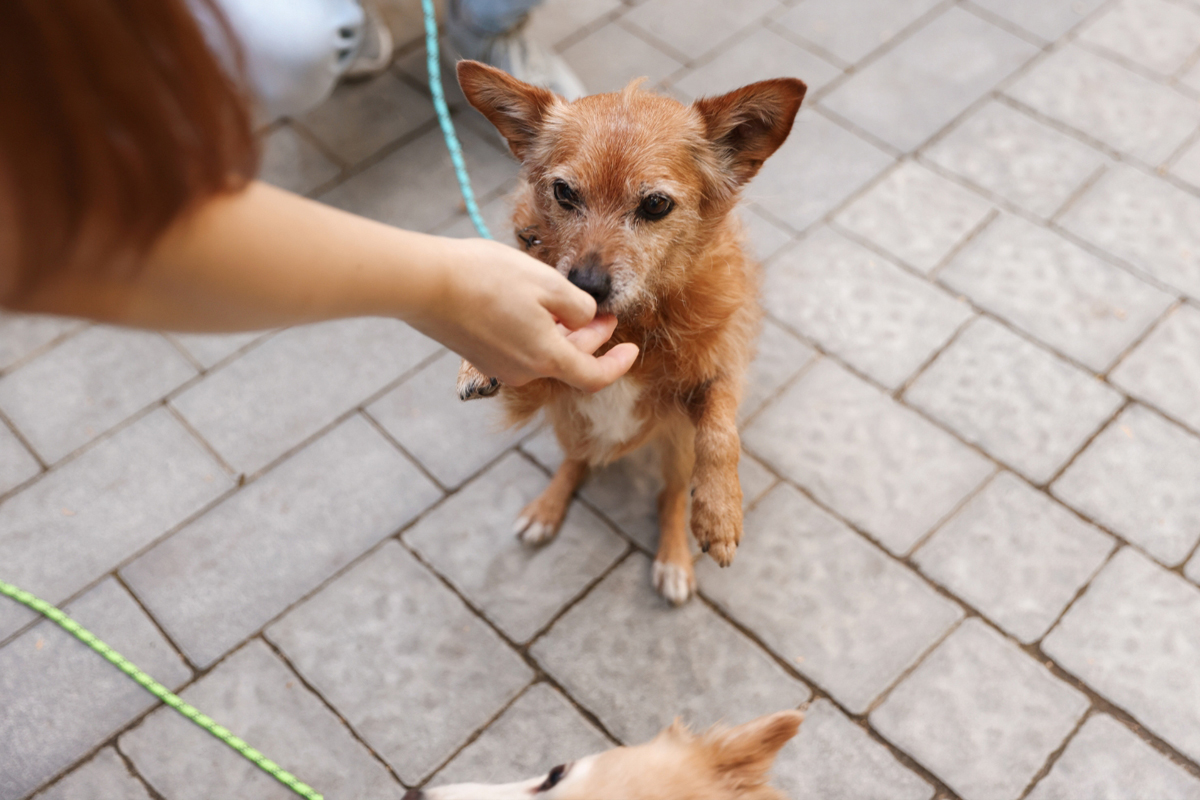
Treats are one of the most common tools used in dog training, and when used correctly, they can be effective. But treats are meant to teach, not to become a permanent requirement for obedience.
Many owners eventually find themselves asking: “Why does my dog only listen when I have food?”
That question highlights an important distinction in training: teaching behavior versus building reliability.
At The DogHouse LLC, our family-owned dog training and boarding business has spent nearly 20 years helping owners understand how to transition from food-dependent responses to trust-based obedience that works in real life.
Treats Teach, They Don’t Sustain
Food rewards are helpful during the introduction phase of a behavior.
They help dogs:
- understand what action is being requested
- associate the command with a positive outcome
- repeat a new behavior more willingly
But if treats are never phased out properly, they can unintentionally teach the dog that obedience is optional unless payment is visible.
Why Dogs Become Treat-Dependent
Dogs are excellent observers.
If a dog learns that commands are followed by visible food rewards every time, they begin checking for that reward before responding. This doesn’t mean they are stubborn, it means they are responding logically based on reinforcement patterns.
Dependency develops when rewards are predictable and constant.
The Difference Between Luring and Reinforcing
Early training often involves luring, using food to guide a dog into position.
As training progresses, rewards should shift to reinforcement, rewarding behavior after it is performed correctly.
This subtle shift changes the dog’s motivation from chasing food to following direction.
Gradual Reduction Builds Reliability
Transitioning away from treats should be intentional.
Effective reward progression includes:
- intermittent food rewards
- verbal praise
- physical affection (if appropriate for the dog)
- play as reinforcement
- calm acknowledgment
Unpredictable rewards strengthen behavior more than constant rewards.
Trust Comes From Consistency
Trust-based obedience develops when dogs understand that commands always matter — regardless of what the owner is holding.
This requires:
- consistent follow-through
- calm enforcement
- clear expectations
- predictable consequences
When dogs trust that expectations remain the same every time, they respond more reliably.
Why Timing Matters More Than Treat Quantity
The effectiveness of a reward depends more on timing than on size or frequency.
Well-timed reinforcement strengthens behavior quickly. Poor timing weakens clarity and creates confusion.
As food rewards decrease, precision and consistency become more important.
Real-World Obedience Requires Internal Motivation
Dogs who only work for food struggle in high-distraction environments where treats aren’t present.
Transitioning to trust builds:
- impulse control
- emotional regulation
- confidence
- responsiveness without bribery
The goal is a dog that responds because they understand and trust the structure, not because they are negotiating for payment.
What Replaces Treats Long-Term
Food never has to disappear entirely, but it should become secondary.
Long-term reinforcement often includes:
- clear verbal markers
- calm praise
- structured release
- opportunities for movement or play
- simply the consistency of expectation
Reliability grows when obedience is part of daily life, not a food-based exchange.
Common Mistakes During Transition
Owners often struggle during the treat-to-trust shift.
Common errors include:
- removing rewards too abruptly
- repeating commands when ignored
- softening expectations
- reverting to bribery
Transition should be gradual, structured, and supported by clear follow-through.
Why Structure Makes the Transition Easier
Structured training environments make this shift smoother.
When dogs experience consistent repetition and clear boundaries, they learn that expectations don’t fluctuate. That clarity reduces reliance on food and strengthens internal motivation.
Consistency builds trust faster than rewards alone.
Why We Emphasize Trust Over Bribery
At The DogHouse LLC, we use rewards strategically, not permanently.
Our goal is to help dogs understand expectations clearly and respond reliably, whether food is present or not. Treats can introduce behaviors, but structure and trust sustain them.
Treats are a tool, not a lifelong contract.
Transitioning from treats to trust builds stronger obedience, better impulse control, and more reliable behavior in real-world situations. When dogs understand that expectations are consistent, they respond with confidence rather than negotiation.
If your dog listens only when food is visible, it may be time to refine your reward strategy.
Contact The DogHouse LLC today to learn how to build obedience that lasts beyond the treat pouch.