

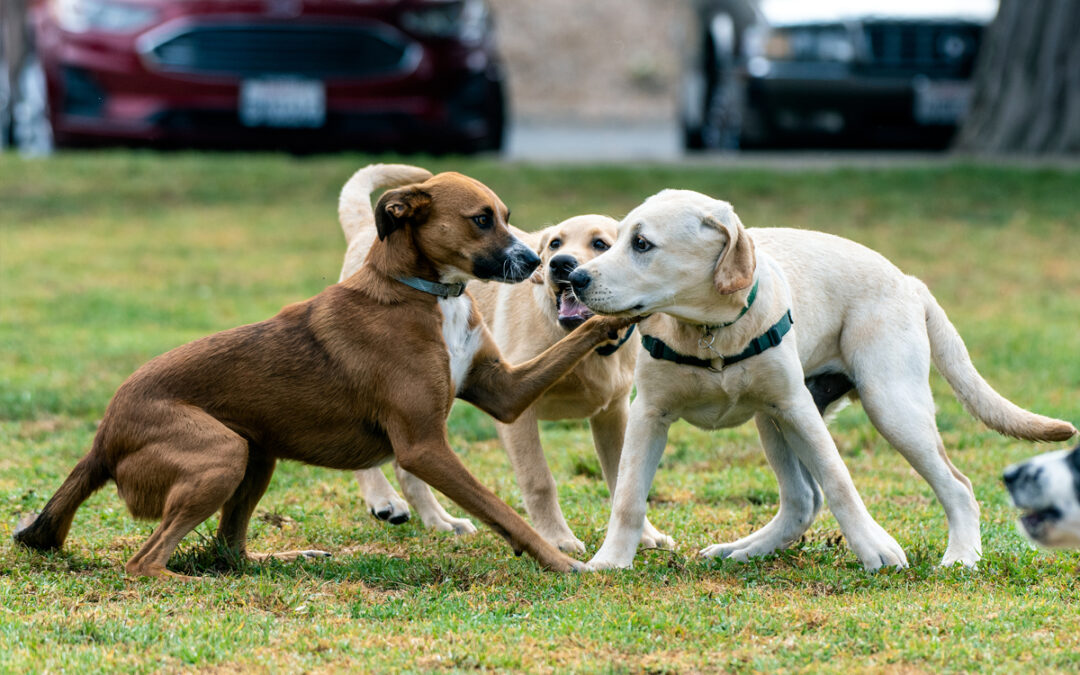

Have you ever felt like your dog “forgets” everything they’ve learned the moment you step outside or add a distraction? Chances are, your dog isn’t being stubborn — they’re overstimulated.
Overstimulation happens when a dog’s senses and emotions become overwhelmed, making it hard for them to focus, think, or follow direction. At The DogHouse LLC, our family-owned dog training and boarding business has worked with thousands of dogs across Pinellas County, helping owners understand that calm focus — not chaos — is the key to great obedience.
When you know how to recognize and manage overstimulation, your training sessions will become more effective, enjoyable, and rewarding for both you and your dog.
1. What Is Overstimulation in Dogs?
Overstimulation occurs when a dog becomes mentally or emotionally overloaded by their environment. This can happen during training sessions, walks, or playtime — especially when too much is happening at once.
Common Triggers for Overstimulation:
- Loud noises or high-energy environments
- Crowds, other dogs, or new people
- Fast movement (bikes, squirrels, kids running)
- Too much excitement or pressure during training
Trainer’s Insight:
An overstimulated dog isn’t trying to be disobedient — they’re simply too aroused to think clearly. Calm, consistent leadership helps bring them back into a learning mindset.
2. Signs Your Dog Is Overstimulated
Recognizing early signs of overstimulation can prevent training sessions from going off track.
Look for These Behaviors:
- Ignoring commands they usually know
- Panting, pacing, or shaking even when not hot or tired
- Excessive barking, jumping, or lunging
- Zoomies or erratic movements during training
- Fixating on sounds, people, or animals
- Difficulty settling or making eye contact
Trainer’s Tip:
When you see these signs, take a break. Continuing to push your dog through overstimulation can lead to frustration — or worse, create negative associations with training.
3. Why Overstimulation Hurts Training Progress
Dogs can only learn when they’re calm and focused. When arousal levels are too high, their brain shifts from thinking to reacting — and obedience breaks down.
Trainer’s Explanation:
Training under overstimulation is like trying to learn math during a fireworks show. The brain is distracted by emotion, not logic.
Effects of Overstimulation:
- Poor recall and focus
- Increased frustration for both dog and owner
- Slower learning and inconsistent responses
- Potential development of reactivity or anxiety
At The DogHouse LLC, we train dogs in a calm, structured environment before introducing distractions — helping them build confidence and focus one step at a time.
4. Preventing Overstimulation Starts with Structure
The key to preventing overstimulation is structure — both in your dog’s daily routine and in your training sessions.
Trainer’s Recommendations:
- Keep training sessions short: 10–15 minutes is plenty.
- Use calm, neutral energy during instruction.
- Begin in low-distraction environments and gradually build up.
- End sessions on a calm, successful note.
Why It Works: Predictability helps dogs relax. When they understand what’s expected, their mind stays balanced and focused.
5. Manage Energy Before Training
A dog with too much pent-up energy is more likely to become overstimulated.
Trainer’s Tip:
- Give your dog a short walk or mental exercise before training.
- Avoid starting sessions right after meals or high excitement (like playtime).
- Use obedience commands during the walk to engage their brain before formal training begins.
At The DogHouse LLC: We teach owners to “drain energy, not excitement.” Exercise should balance the mind — not create more chaos.
6. Control the Environment
Set your dog up for success by creating a training environment that matches their current skill level.
Trainer’s Guidance:
- Start in a quiet space and slowly add mild distractions.
- Keep your dog on a leash or long line for control.
- If your dog becomes overwhelmed, calmly move farther from the distraction.
- Don’t compete with the environment — control it when possible.
Why It Works: Gradual exposure builds confidence. Your dog learns to stay focused without being flooded by too many stimuli at once.
7. Use Calm Leadership and Clear Communication
Dogs take their cues from you. If you’re calm, they’ll be calm. If you’re anxious or impatient, they’ll feel it immediately.
Trainer’s Advice:
- Use steady movements and a calm, low tone of voice.
- Avoid rapid-fire commands or over-repeating cues.
- Take slow, deep breaths and maintain relaxed body language.
Trainer’s Insight:
Your calm energy is the foundation of your dog’s focus. A well-timed pause can communicate more than a dozen verbal corrections ever could.
8. Incorporate Place Training for Relaxation
The place command is one of the best tools to help dogs learn self-control and recover from overstimulation.
How It Works:
- Use a raised bed or mat as your dog’s “safe zone.”
- Practice sending them to place during or after training sessions.
- Reward calm lying down, not hyper alertness.
At The DogHouse LLC: We use place training to teach dogs how to self-soothe — a skill that carries over into daily life and real-world situations.
9. Reward Calmness, Not Chaos
It’s easy to accidentally reward overstimulation — especially if you comfort, pet, or engage your dog while they’re hyper.
Trainer’s Tip:
- Only reward calm, relaxed body language.
- If your dog is overly excited, wait for calmness before giving praise.
- Use verbal rewards like “good calm” to reinforce the desired state of mind.
Why It Works: Dogs learn to associate calmness with positive outcomes — and overstimulation with neutral responses.
10. Be Patient and End on a Win
Some dogs take longer to develop impulse control than others, especially high-energy or working breeds. Patience and consistency are essential.
Trainer’s Advice:
- Always end sessions with a simple success.
- Keep your tone calm and encouraging.
- Progress gradually, not emotionally.
At The DogHouse LLC: We remind owners that the goal isn’t perfection — it’s progress. A calm, focused dog today leads to reliable obedience tomorrow.
Overstimulation is one of the biggest barriers to effective training — but it’s also one of the easiest to manage once you understand it. By creating structure, staying calm, and rewarding focus over excitement, you’ll help your dog learn faster, behave better, and enjoy training more.
At The DogHouse LLC, we specialize in helping dogs stay balanced and focused through proven, real-world training methods. Whether your dog struggles with reactivity, distraction, or hyperactivity, our experienced trainers can help restore calm and confidence — one session at a time.
Ready to help your dog stay calm and focused during training? Contact us to learn more about our professional obedience and behavior programs.