


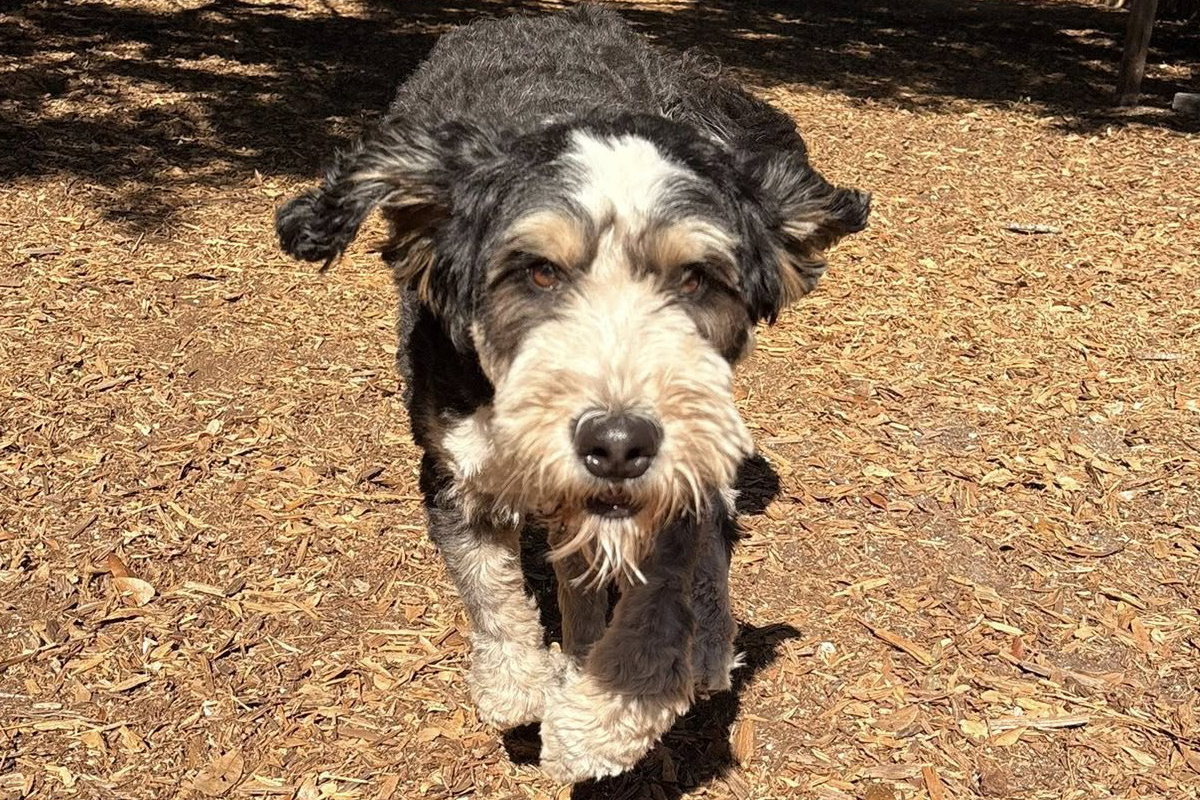
A lot of dog behavior problems do not look serious at first.
They look pushy.
Clingy.
Overfriendly.
A little too close.
A dog may:
- lean into people constantly
- jump into laps uninvited
- crowd guests at the door
- block movement through the house
- push between people or other dogs
- follow so closely that there is no real space left
Some owners interpret this as affection. Sometimes part of it is.
But when a dog consistently fails to respect personal space, the issue is usually bigger than simple friendliness.
At The DogHouse LLC, our family-owned professional dog training and boarding business has spent nearly 20 years helping owners understand that space matters. Dogs that do not respect space often struggle with boundaries, impulse control, and emotional regulation.
That is why these behaviors rarely stay small if they are left unaddressed.
Personal Space Is Part of Everyday Structure
Dogs live closely with people, so spatial manners matter more than many owners realize.
Respect for space shows up in daily moments such as:
- how a dog greets people
- how they move through doors
- whether they crowd furniture
- how they behave around children
- how they interact with guests
- whether they can settle without constantly pressing in
A dog that understands boundaries around space is usually easier to guide, calmer in the home, and less likely to create tension in shared environments.
A dog that does not understand those boundaries often becomes harder to manage over time.
Space Problems Often Start Looking “Cute”
A lot of poor spatial behavior starts in ways owners excuse.
- A puppy climbs into laps constantly.
- A young dog jumps up for face-level greetings.
- A dog squeezes between people for attention.
- A dog leans heavily into guests because they seem affectionate.
At first, it may seem harmless.
But dogs learn through repetition.
If crowding, blocking, jumping, or pushing into people keeps working, the dog begins treating those behaviors as normal ways to interact.
That is when personal-space issues start becoming real behavior problems.
Dogs That Crowd Often Struggle With Impulse Control
When a dog does not respect personal space, the issue is usually not just physical closeness.
It often reflects weak self-control.
That may show up as:
- rushing into people
- pushing into greetings
- jumping before being invited
- squeezing into tight areas without waiting
- stepping over boundaries instead of pausing
These are all signs that the dog is acting on impulse instead of responding to structure.
That matters because impulse control affects much more than greetings. It affects walks, doorways, guest behavior, household calmness, and overall obedience.
Space problems are often one of the first signs that a dog needs better boundaries everywhere else too.
Crowding Creates Stress for People
Many owners feel guilty admitting this, but dogs that invade space constantly can be exhausting.
It can make people feel:
- crowded at home
- tense when guests arrive
- unable to relax on the couch
- cautious when children or older adults are nearby
- embarrassed in social settings
Even when the dog is not aggressive, the constant pressure can wear people down.
Not everyone wants a dog jumping into their body, leaning all their weight onto them, or crowding them every time they move.
And when owners start bracing for that behavior, the relationship often becomes more stressful than it should be.
Poor Spatial Manners Also Create Tension Between Dogs
In multi-dog homes, personal-space issues can create even more problems.
Dogs that do not respect space may:
- crowd another dog in a hallway
- push into resting areas
- block access to people
- press into greetings
- hover over furniture or preferred spots
These behaviors often create subtle tension long before any obvious conflict appears.
One dog may become pushier.
Another may become avoidant.
Another may begin reacting after repeated pressure.
This is why spatial boundaries matter so much in shared environments.
Respect for space helps reduce pressure before it becomes conflict.
Overfriendliness Can Still Be Unstable
A lot of owners describe space-invading dogs as “just very friendly.”
Sometimes that is partly true.
But friendliness without boundaries often becomes unstable behavior.
A dog that cannot control themselves around people may also struggle with:
- jumping
- overexcitement
- frantic greetings
- poor settling
- weak response to commands during stimulation
That is why “friendly” is not the same as well-mannered.
A well-mannered dog can be affectionate and respectful.
A dog with poor spatial manners is often operating from impulse, not calm social behavior.
That distinction matters.
Dogs Learn What Access Looks Like
One of the biggest questions every dog is answering in daily life is:
“How do I get what I want?”
If the answer keeps being:
- jump closer
- lean harder
- squeeze in
- push forward
- climb onto people
- block first
then the dog learns that pressure creates access.
Over time, that pressure starts showing up more often and in more situations.
That is why poor personal-space behavior is rarely isolated.
It becomes part of the dog’s whole approach to getting attention, movement, affection, and control over the environment.
Boundaries Around Space Reduce Emotional Chaos
Dogs usually become calmer when they no longer have to guess how close they can get, when they can approach, or whether pushing in will work.
Clear spatial boundaries teach them:
- wait before entering the space
- remain on place unless released
- greet calmly instead of jumping in
- do not block movement
- move away when asked
- settle without constant physical contact
These boundaries do not make a dog less loved.
They make the environment clearer.
And when the environment becomes clearer, behavior often settles down quickly.
Place Work and Waiting Change a Lot
Two of the most useful tools for improving spatial manners are:
- place work
- waiting for access
Place work helps teach the dog:
- where to be
- how to stay there calmly
- how to hold position during activity
- how not to insert themselves into every interaction
Waiting helps teach:
- patience before greetings
- calmness before attention
- delayed access to what they want
- self-control instead of physical pushing
Together, these two skills often change a dog’s entire relationship to space.
The dog stops assuming they can move into every moment however they want.
That is a major shift.
Owners Must Stop Rewarding Pressure by Accident
One reason spatial problems stay alive is that owners often reinforce them unintentionally.
That may happen by:
- petting the dog when they crowd in
- making room for the dog instead of asking them to move
- allowing jumping during greetings
- speaking to the dog when they demand attention physically
- letting them block doorways or personal movement without correction
From the dog’s point of view, this teaches:
“Pressure works.”
“If I move in, people respond.”
“If I push closer, I get access.”
To change the behavior, the dog has to start learning that calmness and respect create access — not pressure.
Some Dogs Need More Structure Than Others
Some dogs naturally handle spatial boundaries more easily. Others struggle more because they are:
highly affectionate but impulsive
- physically strong
- easily overstimulated
- pushy by temperament
- adolescent
- used to getting attention through invasion of space
These dogs often need more repetition and more consistent follow-through than owners expect.
That does not mean something is wrong with them.
It means they need more guidance in how to live calmly and respectfully around people.
That is exactly the kind of thing structure can teach.
What Progress Looks Like
As dogs improve their respect for space, owners often notice:
- calmer greetings
- less jumping or leaning
- less crowding at doors
- more ability to settle nearby without pressing in
- better response to redirection
- less tension around guests or other dogs
- more comfortable daily life in the home
These changes may seem simple, but they have a huge effect on how relaxed the household feels.
A dog that respects space is usually far easier to trust and far easier to live with.
What happens when dogs don’t respect personal space is that small pushy habits often turn into larger issues with impulse control, tension, and daily stress.
The problem is rarely just closeness.
It is what that closeness represents:
- weak boundaries
- poor self-control
- pressure around access
- confusion about what behavior is acceptable
The good news is that dogs can absolutely learn better spatial manners.
With structure, place work, waiting, and consistent follow-through, they can become affectionate without being invasive and calm without losing personality.
Contact The DogHouse LLC to learn how structured professional training can help your dog build calmer greetings, better boundaries, and the kind of respectful behavior that makes daily life easier for everyone.