
Many dog owners feel frustrated when their dog listens well at home but seems to forget everything in public.
At home, the dog will sit, stay, and come when called.
Outside, those same commands suddenly feel optional.
It can be easy to assume the dog is being stubborn or distracted on purpose. In reality, most dogs are not refusing obedience in public. They simply have not built the foundation required to succeed there yet.
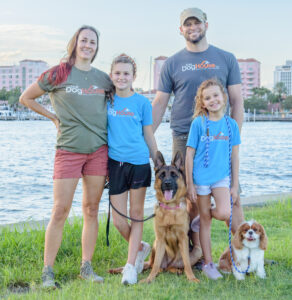
At The DogHouse LLC, our family-owned professional dog training and boarding business has spent nearly 20 years helping owners bridge the gap between basic obedience and real-world reliability. One of the biggest mistakes people make is expecting public obedience before the dog is ready for it.
Public obedience is not the beginning of training. It is the result of it.
Home Success Is Only the First Step
A dog who responds well at home has learned in a controlled, familiar environment.
That matters, but it is only the foundation.
At home, your dog already knows:
- the sights and sounds
- the layout
- the daily routine
- the people around them
Because the environment feels predictable, it is easier for them to focus. Public settings introduce a completely different level of stimulation.
A dog that behaves well in the living room is not automatically prepared to perform in a parking lot, a sidewalk, or a busy park.
Your Dog Needs Engagement Before Obedience
Before you expect reliable obedience in public, your dog must first learn to stay mentally connected to you.
If your dog is more interested in:
- passing dogs
- people nearby
- smells on the ground
- movement in the distance
then commands will always feel weak compared to the environment.
Engagement is the ability of the dog to check in with you, respond to their name, and stay mentally available even when distractions exist.
Without engagement, obedience breaks down quickly.
Your Dog Needs Emotional Control
Public obedience is not just about knowing commands. It is also about emotional regulation.
A dog that becomes highly excited, anxious, frustrated, or overstimulated will have a much harder time responding clearly.
This is why many owners see commands disappear in public settings. The dog is not calm enough to process what is being asked.
Before expecting reliable public obedience, a dog needs practice with:
- calm leash handling
- impulse control
- waiting
- disengaging from stimulation
- recovering quickly from distractions
Emotional stability makes obedience possible.
Your Dog Needs Clear Command Understanding
Many dogs technically know a command, but only in one context.
For example, a dog may understand “sit” in the kitchen but not on a sidewalk with bikes going by and another dog across the street.
That does not mean the dog is being difficult. It means the command has not yet been fully generalized.
Before public obedience can be reliable, the dog must understand that the same command applies:
- in different environments
- around different distractions
- at different distances
- under different levels of excitement
Commands must be taught beyond the home if they are expected beyond the home.
Your Dog Needs Consistent Follow-Through
A major reason obedience falls apart in public is that owners often become less consistent when distractions increase.
They may:
- repeat commands several times
- let the dog ignore them because the moment feels chaotic
- become emotional or rushed
- stop enforcing known boundaries
Dogs notice this immediately.
Before expecting strong public obedience, your dog needs a history of consistent follow-through. They need to learn that commands always matter, not just when the environment is quiet.
Consistency at home and during practice outings is what gives public obedience meaning.
Your Dog Needs Gradual Exposure
One of the biggest mistakes owners make is asking too much too soon.
Taking a dog from quiet home practice straight into a crowded public setting often creates failure.
Dogs need gradual exposure to increasing levels of difficulty.
That means progressing through environments such as:
- the backyard
- the front yard
- a quiet sidewalk
- a calm park
- a mildly busy area
- a more distracting public setting
This gradual process helps the dog build confidence and understanding without becoming overwhelmed.
Public obedience is built step by step, not all at once.
Your Dog Needs Practice Around Controlled Distractions
It is not enough for a dog to hear commands in different places. They must also learn how to respond around distractions in a structured way.
Controlled exposure teaches the dog how to remain composed when they see:
- another dog
- unfamiliar people
- movement
- noise
- new environments
The goal is not to flood the dog with stimulation. The goal is to teach them how to stay responsive without becoming emotionally overloaded.
That kind of practice creates real-world reliability.
Your Dog Needs Impulse Control
Impulse control is one of the most important skills behind public obedience.
A dog who can pause, wait, and think is far more likely to follow through in public.
Before expecting reliability outside the home, your dog should be learning habits such as:
- waiting at doors
- holding place or position
- not rushing greetings
- walking without forging ahead
- staying calm before release
Impulse control at home creates better obedience outside the home.
Your Dog Needs You to Stay Calm
Dogs are highly aware of handler tension.
If you become nervous, embarrassed, frustrated, or reactive in public, your dog will often mirror that energy.
Public obedience improves when the owner remains:
- calm
- clear
- predictable
- consistent
Your dog needs to feel that you are in control of the situation. Calm leadership makes public obedience easier because it lowers the emotional intensity of the moment.
Why Some Dogs Need More Structure Before Public Work
Some dogs can move into public obedience fairly quickly. Others need more preparation.
Dogs that often need more structure include those that are:
- highly energetic
- easily overstimulated
- reactive
- anxious
- inconsistent with known commands
These dogs usually benefit from more repetition, more clarity, and more controlled exposure before being asked to perform reliably in public.
That preparation is not a setback. It is what makes long-term success possible.
What Real Progress Looks Like
Progress toward public obedience usually looks like:
- faster check-ins with you
- reduced fixation on distractions
- more consistent command response outdoors
- calmer leash behavior
- shorter recovery time after stimulation
It does not happen because the dog suddenly “gets it.” It happens because the foundation becomes strong enough to hold up in harder environments.
That is real training progress.
Before you expect obedience in public, your dog needs more than basic commands. They need focus, emotional control, consistency, impulse control, and practice in gradually more distracting environments.
Public obedience is not created by asking louder or expecting more. It is created by building the right foundation first.
When that foundation is there, obedience outside the home becomes far more realistic, reliable, and calm.
Contact The DogHouse LLC to learn how professional training can help your dog build the foundation needed for dependable obedience in public and everyday life.