

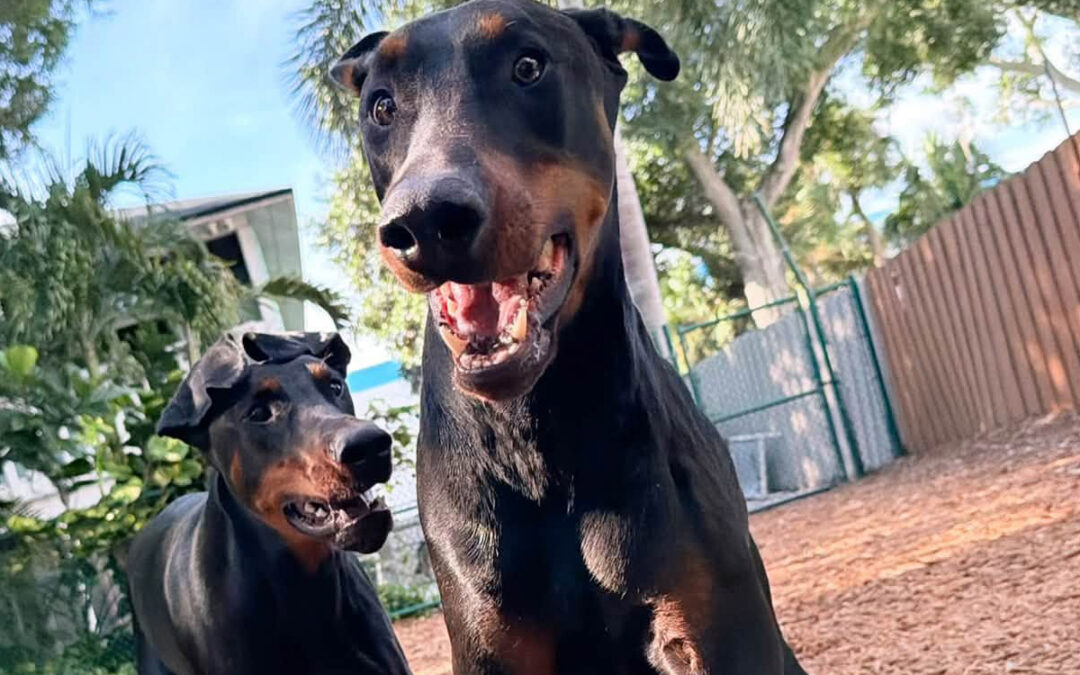
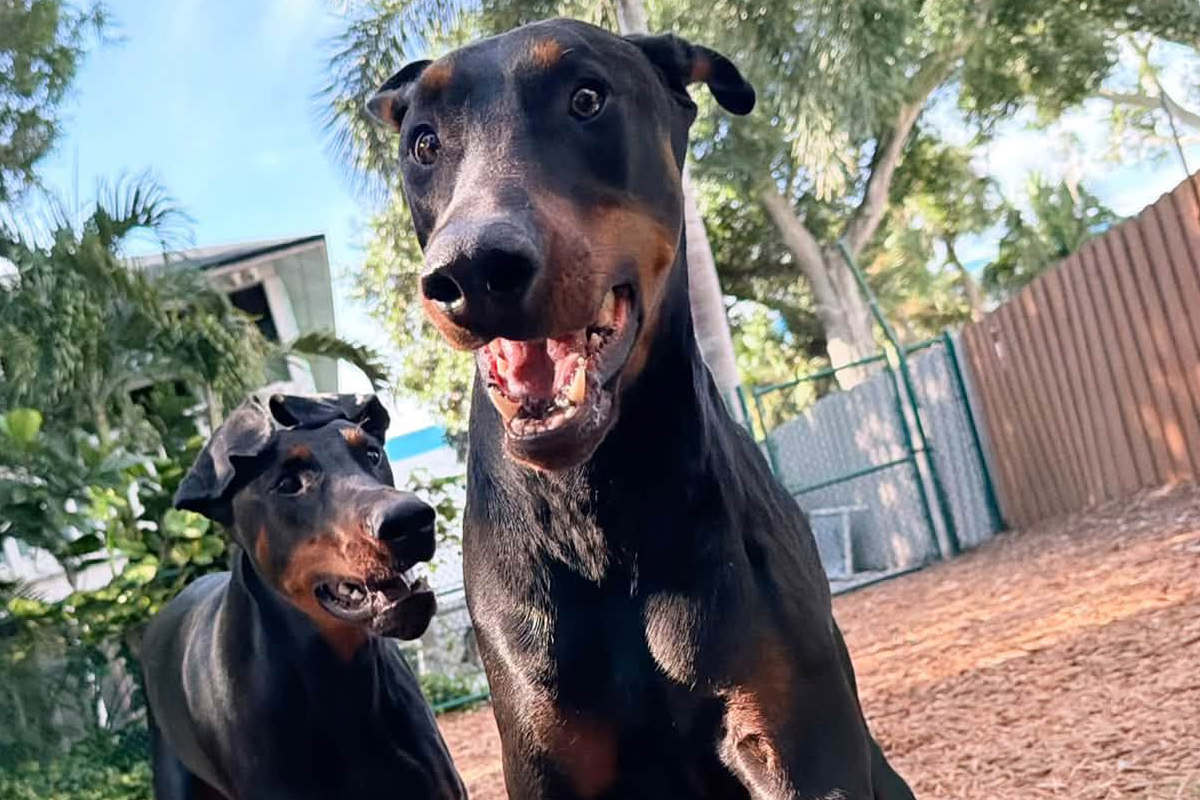
A dog can look perfectly trained in one place and surprisingly unreliable somewhere else.
At home, they sit quickly, come when called, stay on place, and follow familiar routines. Take that same dog into a driveway, a busy neighborhood, a friend’s house, a parking lot, or a park, and suddenly the behavior changes.
The dog may pull harder, stop responding, become distracted by smells, stare at people, react to other dogs, or seem as though they have forgotten everything they learned.
Usually, the dog has not forgotten.
The environment changed.
Dogs often learn behaviors in very specific contexts. A cue practiced repeatedly in the living room may not automatically carry the same meaning on a sidewalk with traffic, dogs, people, movement, and unfamiliar smells nearby.
That is why strong obedience should be practiced in more than one environment. The dog needs opportunities to learn that the same expectations still apply even when the surroundings change.
Building that kind of real-world reliability is an important part of the professional dog training and boarding support families receive from The DogHouse LLC in Pinellas County, Florida.
Dogs Do Not Generalize Automatically
People tend to assume that once a dog knows a command, they know it everywhere.
Dogs often do not learn that way.
They may connect the cue to a specific room, handler position, surface, routine, or set of surroundings.
“Sit” beside the food bowl may feel different from “sit” beside a busy street.
“Come” across the living room may feel very different from recall in an open yard.
The behavior needs to be practiced in different places before the dog fully understands the broader rule.
Home Is Usually the Easiest Environment
The house is familiar.
The dog knows the sounds.
The smells are predictable.
The family routine is familiar.
There are fewer surprises.
This makes home an excellent place to teach new skills, but it is usually not enough to create real-world reliability.
The dog needs practice outside that comfort zone.
A New Environment Changes the Entire Picture
Dogs notice details people often overlook.
Different flooring.
Different lighting.
New smells.
Different echoes.
Unfamiliar furniture.
People moving differently.
These changes can affect focus.
Even a simple command can become harder because the context is no longer familiar.
The Same Cue Should Mean the Same Thing Everywhere
That is the long-term goal.
Sit means sit in the kitchen.
In the driveway.
On a sidewalk.
At a family member’s house.
At a pet-friendly location.
The environment changes.
The cue does not.
That consistency is what generalization training is designed to build.
Start With Small Environmental Changes
Do not move directly from the living room to the busiest place in town.
Change one thing at a time.
Practice in another room.
Then the garage.
Then the driveway.
Then a quiet outdoor area.
Each step adds difficulty without overwhelming the dog.
The Driveway Is Often a Good Intermediate Step
The driveway is useful because it is still familiar but includes more outside stimulation.
Cars.
Neighbors.
Birds.
Wind.
Different smells.
The dog can begin learning that home obedience still applies in a slightly more challenging environment.
The Front Yard Adds Another Layer
The front yard usually contains more movement and sound than the inside of the house.
This makes it a good place to practice engagement, recall, waiting, and leash manners before heading into busier areas.
It is close enough to home to remain manageable while still offering useful distraction.
The Backyard Is Not Always as Easy as It Seems
Dogs may become very distracted in the backyard.
Wildlife.
Fence lines.
Neighbor sounds.
Old scent trails.
Freedom history.
A dog that listens perfectly indoors may become much less responsive outside.
This is another reason to practice familiar skills there intentionally.
Different Rooms Matter Too
Generalization begins inside the house.
A dog may sit beautifully in the kitchen but struggle in a hallway or bedroom.
Practice the same cues in several rooms.
This helps the dog understand that the word, not the location, is what matters.
Different Surfaces Can Affect Behavior
Tile.
Carpet.
Grass.
Concrete.
Wood.
Gravel.
Some dogs behave differently depending on what is under their feet.
That can be especially noticeable with down, place, or stay.
Practicing on different surfaces increases flexibility.
Different Handler Positions Matter
A dog may only respond when the person stands directly in front of them.
Try asking from the side.
Several feet away.
While seated.
While moving.
This helps prevent the dog from learning an overly specific picture.
The cue should still make sense even when the handler’s body position changes.
New Environments Add Distraction Before Anything Even Happens
Sometimes simply arriving somewhere new is enough to reduce focus.
The dog wants to sniff.
Look around.
Take in the surroundings.
This is normal.
Do not immediately expect the same level of performance they show at home.
Give the dog time to settle into the environment first.
Engagement Should Come Before Difficult Obedience
Before asking for advanced behavior in a new place, get the dog connected.
Respond to their name.
Check in.
Follow movement.
Take food if appropriate.
Once engagement improves, familiar commands become easier.
Short Sessions Work Well in New Places
A new environment can be mentally tiring.
A few focused minutes may be enough.
Practice.
Allow a break.
Leave while the dog is still successful.
Quality is more useful than pushing until the dog becomes distracted or overwhelmed.
Do Not Expect Perfect Performance on the First Visit
The first exposure to a new place may look messy.
That does not mean the dog is untrained.
The environment is simply new.
Performance often improves after repeated visits because the novelty decreases.
Repetition in the Same New Environment Helps
Visit the same quiet park several times.
Practice on the same driveway.
Work at the same pet-friendly location.
The dog becomes familiar with the setting.
Then obedience becomes easier.
After that, move to another environment.
Familiarity and Generalization Work Together
The dog first learns the skill.
Then learns it in several places.
Each successful environment strengthens the broader understanding.
Eventually, the dog becomes less dependent on familiarity.
That is when obedience starts becoming truly reliable.
Distance From Distractions Still Matters
A new environment may contain people, dogs, or traffic.
Do not put the dog directly beside those distractions immediately.
Use distance.
The goal is not only changing locations.
It is maintaining enough control that the dog can still learn.
New Places Should Not Always Mean Maximum Difficulty
A calm empty parking lot may be more useful than a crowded event.
The dog gets the benefit of a new environment without being overwhelmed by constant movement.
Newness itself is already a challenge.
There is no need to add everything at once.
Parking Lots Can Be Useful Training Environments
Quiet edges of parking lots provide realistic movement at a controllable distance.
People.
Cars.
Shopping carts.
Doors.
Practice engagement and simple obedience there.
Stay away from traffic lanes and high-activity areas until the dog is ready.
Parks Offer Multiple Levels of Difficulty
A park can be easy or very difficult depending on where you train.
The edge of the park may be quiet.
Near a playground may be busy.
Near a path with dogs may be even harder.
Use the environment strategically.
Do not automatically move toward the busiest area.
Neighborhood Walks Are Valuable Training Sessions
The neighborhood is where many families need obedience to work most often.
Walks include real distractions.
Neighbors.
Dogs.
Vehicles.
Yard activity.
This makes them ideal for practical training.
Use short repetitions rather than trying to turn the entire walk into one long obedience session.
Train in Places the Dog Actually Needs to Behave
Real-world training should reflect real life.
If the family visits relatives frequently, train at another home.
If the dog rides in the car often, practice car manners.
If walks are important, train in the neighborhood.
Training should solve practical problems.
A Friend’s House Is a Useful Test of Generalization
A dog may behave beautifully at home and become overly excited in another house.
New smells.
New rooms.
Different people.
Different furniture.
Practice place, recall, and calmness there if appropriate.
This teaches that household manners travel with the dog.
Visitor Manners Should Work Beyond the Dog’s Own Home
A dog may know how to stay on place when visitors enter at home but struggle when visiting someone else.
That is another context shift.
Practice calm greetings and place work in different settings.
The dog learns that social manners are not tied to one doorway.
Place Training Should Travel
Place is especially useful because it can be generalized easily.
Use a portable mat or cot.
Practice at home.
Patio.
Driveway.
Friend’s home.
Controlled public setting.
The dog learns that the command refers to the behavior, not one exact bed.
Recall Needs Multiple Environments Too
Recall often looks strongest at home because the competition is low.
Practice on a long line in different safe locations.
Quiet yard.
Open field.
Park at a distance from distractions.
The dog learns to return even when the environment changes.
Long Lines Help With Generalization
A long line gives the dog controlled freedom.
They can explore.
Experience a new place.
Practice recall.
The handler can still support the cue.
This makes outdoor training safer and more productive.
Leash Manners Need Different Locations
A dog that walks beautifully on one neighborhood street may pull badly somewhere new.
New smells and movement can change behavior.
Practice leash skills in multiple environments.
The dog learns that leash rules remain the same regardless of location.
Different Walking Routes Prevent Overdependence on Routine
Dogs can become very familiar with one route.
They know every turn.
Every smell.
Every house.
That can make behavior look better than it actually is.
Occasionally use a different route.
This reveals whether the dog is following the handler or simply following a memorized routine.
New Routes Should Be Added Gradually
A completely new route may create extra excitement.
Keep the first sessions short.
Focus on engagement and leash manners.
Do not worry about covering a large distance.
The training value is in the quality of the response.
Doorway Manners Should Work at Different Doors
A dog may wait perfectly at the front door but rush through a gate or car door.
Practice multiple thresholds.
Front door.
Back door.
Garage.
Gate.
Vehicle.
The dog learns the broader concept of waiting rather than memorizing one location.
Car Training Creates Another Environment
The car has its own rules.
Wait before entering.
Settle during travel.
Wait before exiting.
These behaviors should become reliable because the vehicle is part of real life for many families.
Car Exits Are Especially Important
A dog rushing out of a car can create a serious safety problem.
Practice waiting at different destinations.
The dog should not assume an open door means immediate movement.
Veterinary Offices Are High-Distraction Environments
The veterinary office includes unusual smells, animals, people, and handling.
A dog with strong generalized obedience may still need extra support there.
Keep expectations reasonable.
The value of prior training is that the family has familiar skills to fall back on.
Familiar Commands Can Help in Unfamiliar Places
Sit.
Place.
Wait.
Recall.
These known behaviors can create stability.
The dog understands what is being asked even when the setting feels new.
That can make stressful or exciting environments easier to manage.
Grooming Locations Can Require the Same Flexibility
Different floors.
Equipment.
People.
Sounds.
The dog may behave differently than at home.
Generalized handling and obedience skills can make these situations easier.
Motion Changes Environmental Difficulty
A quiet location may become harder when people begin moving.
Joggers.
Bicycles.
Children.
Dogs.
The same place can have completely different difficulty levels at different times.
Train according to what is actually happening.
Time of Day Can Change the Environment
A park at 7 a.m. may be quiet.
The same park at 5 p.m. may be full of people and dogs.
That matters.
Training should increase in difficulty gradually.
Use quieter times before busier ones.
Weather Can Change Behavior Too
Wind.
Rain.
Heat.
Storms.
These change scents, sounds, and comfort.
In Pinellas County, heat and humidity can also affect focus and stamina.
Training sessions may need to be shorter during warmer conditions.
Physical Comfort Matters in Every Environment
Hot pavement.
Uneven ground.
Crowded spaces.
A dog that appears distracted may simply be uncomfortable.
Always consider the environment before assuming the dog is refusing to listen.
Other Dogs Can Make a Familiar Place Feel New
A quiet field may be easy until another dog appears.
Now the environment changes emotionally.
The dog needs to learn that familiar commands still matter even when another dog is present.
Use enough distance to keep the dog responsive.
People Can Change the Difficulty Too
A quiet parking lot becomes harder when shoppers start moving through it.
The dog may become more excited or cautious.
Adjust distance and expectations.
The same location can offer several levels of training difficulty.
Children Add Unpredictable Movement
Children run.
Change direction.
Make noise.
Move quickly.
These things can make training harder.
Practice at a distance where the dog can observe without losing control.
Wildlife Creates Another Training Context
A dog may perform well around people but lose focus around squirrels or birds.
Generalization does not only mean different locations.
It also means different kinds of distractions.
The dog needs practice across both.
Smells Can Be More Distracting Than What People See
A dog may suddenly seem disconnected in an area that looks empty.
There may be a strong scent trail.
Another animal was there.
Food is nearby.
Remember that the dog is experiencing the environment differently.
This is another reason new places require patience.
Training Around Different Sounds Is Valuable
Traffic.
Construction.
Lawn equipment.
Doors.
Carts.
Dogs barking.
A dog should gradually learn that familiar cues still apply while normal environmental sounds are happening.
Sound Sensitivity Requires a Different Pace
If a dog is genuinely fearful of certain noises, do not force them into intense exposure.
Use greater distance and slower progression.
Fear should not be treated as simple disobedience.
Fear Can Make a Trained Dog Look Untrained
A nervous dog may stop responding.
Refuse food.
Freeze.
Pull away.
This is not necessarily a lack of obedience.
The emotional environment became too difficult.
Create space and adjust the training plan.
Excitement Can Do the Same Thing
A friendly dog may also appear to forget everything in a new place.
They want to sniff.
Greet.
Explore.
Excitement can overwhelm responsiveness just as fear can.
The solution is still controlled exposure and gradual practice.
Real-World Reliability Requires Emotional Control
Knowing the command is only one part of obedience.
The dog also needs to manage excitement, frustration, curiosity, and uncertainty.
Different environments give the dog opportunities to practice those emotional skills.
Impulse Control Should Travel With the Dog
Wait for food at home.
Wait before getting out of the car.
Wait at a new gate.
Wait before greeting someone.
The same emotional principle applies everywhere.
That is what makes the skill useful.
Attention Should Travel Too
The dog should not only check in at home.
They should learn to reconnect with the handler in unfamiliar places.
This requires repetition.
Each new environment teaches the dog that the handler remains relevant.
Reward Strong Responses in New Environments
If the dog responds beautifully somewhere difficult, that matters.
Reinforce it.
Food.
Praise.
Play.
Access to sniffing.
The dog learns that responding in new places is worthwhile.
Environmental Access Can Be the Reward
The dog performs a short piece of obedience.
Then gets permission to explore.
This is extremely useful.
Training does not need to compete against the environment.
It can control access to it.
Sniffing Can Help Reinforce Focus
Walk nicely.
Then sniff.
Recall.
Then return to exploring.
The dog learns that attention to the handler does not prevent enjoyment.
It creates opportunities.
Training Should Not Depend on Visible Food
Food is useful.
But the dog should gradually learn to respond before seeing the reward.
Otherwise, performance may disappear when food is not obvious.
The cue should remain meaningful.
Different People Should Practice in Different Environments
A dog may behave well for one handler but poorly for another.
Generalization includes people too.
Other capable family members should practice familiar skills.
This helps make obedience household-wide instead of person-specific.
Family Consistency Becomes Even More Important Outside
If one person allows pulling while another does not, the dog receives conflicting information.
New environments are already difficult.
Consistent household rules make learning much easier.
Children Should Not Manage Difficult New Environments Alone
A dog may behave differently outside the home.
Adults should handle challenging situations.
Children may participate in simple training when appropriate, but safety and control come first.
Multi Dog Homes Need Individual Generalization
A dog may perform well alone but struggle when another household dog is present.
Train individually first.
Each dog should understand the behavior in multiple environments on their own.
Group work comes later.
One Dog Can Distract Another
One dog begins pulling.
The other joins.
One barks.
The group becomes activated.
This can make a familiar environment suddenly much harder.
Individual reliability helps prevent group behavior from taking over.
Group Walks Are an Advanced Environment
Two or more dogs walking together increases complexity.
Each dog needs awareness of the handler and the others.
Strong individual leash skills should come first.
Then group reliability can be developed gradually.
The Dog Should Learn That Rules Do Not Disappear in Fun Places
Some dogs act as though arriving somewhere exciting means obedience is over.
Park.
Beach area.
Friend’s house.
The environment feels fun, so structure disappears.
Instead, keep a few familiar expectations.
Wait.
Walk appropriately.
Recall.
Settle when asked.
The dog learns that fun and obedience can exist together.
More Freedom Should Follow Reliability
A dog should not receive maximum freedom simply because the environment is new and exciting.
Use a leash.
Long line.
Controlled access.
As the dog proves reliable, freedom can increase.
Do Not Remove Support Because the Dog Did Well Once
One successful outing is encouraging.
It does not mean the behavior is fully generalized.
Continue practicing.
Different days and different situations can reveal weaknesses.
Reliability is built over time.
Different Locations Expose Different Weaknesses
Home may reveal attention problems.
The neighborhood may reveal leash issues.
A friend’s house may reveal greeting problems.
A park may reveal recall weakness.
This is useful information.
Different environments show what still needs work.
Training in More Than One Environment Makes Skills Stronger
Each successful context adds another layer.
The dog learns that commands are not location-specific.
They become more adaptable.
More confident.
More responsive.
That is the real value of environmental variety.
Confidence Often Improves Through Successful Exposure
A dog that experiences new places gradually can become more comfortable with change.
They learn how to look to the handler for guidance.
This can make future environments easier.
Success creates confidence.
Adaptability Is a Major Real-World Skill
Life does not always happen in the same place.
Travel.
Boarding.
Veterinary appointments.
Family visits.
Moves.
Vacations.
A dog with generalized obedience can adapt more easily because familiar rules still make sense.
Boarding Can Reveal Whether Skills Have Generalized
A dog that only responds in one house may struggle in a boarding environment.
Different people.
Different rooms.
Different sounds.
This is why broader training is useful.
The dog learns that communication can remain consistent even when the location changes.
Travel Becomes Easier With Generalized Manners
Hotels.
Rental homes.
Family houses.
Car stops.
A dog that understands place, waiting, leash behavior, and calmness across environments is much easier to travel with.
The training becomes practical beyond the dog’s own home.
Moving to a New Home Is Easier for a Flexible Dog
A dog with generalized skills can transition more smoothly.
The rooms change.
The neighborhood changes.
The commands do not.
Place still means place.
Wait still means wait.
That consistency provides stability.
Training Should Sometimes Include Mild Novelty
A different mat.
A new route.
A new room.
A new quiet location.
These small changes prevent the dog from becoming dependent on one exact picture.
Flexibility grows gradually.
Do Not Overload the Dog With Constant Novelty
Variety is useful.
Chaos is not.
Dogs also need familiarity and rest.
Training should balance new environments with enough stability for the dog to succeed.
Repetition Still Matters
Visiting a different place every day without building proficiency may be less useful than practicing several times in one new environment.
Give the dog enough repetition to improve.
Then move on.
The Goal Is Transfer, Not Just Exposure
Simply taking the dog somewhere new is not training.
The dog should practice familiar skills there.
Engagement.
Recall.
Waiting.
Leash manners.
Place.
This is what helps the behavior transfer.
Exposure Without Structure Can Strengthen Bad Habits
A dog goes to a busy park and pulls for an hour.
That is exposure.
But the dog practiced pulling.
A dog visits a friend and jumps on everyone.
Again, exposure happened, but the wrong behavior was rehearsed.
Structure matters.
Practice the Behavior You Want Repeated
New location.
Dog checks in.
Reward.
Dog walks calmly.
Reward.
Dog stays on place.
Reward.
These are the repetitions that build reliability.
Real-World Training Should Be Practical
The dog does not need to perform endless obedience exercises everywhere.
A few useful skills are enough.
Walk calmly.
Respond when called.
Wait at thresholds.
Settle when needed.
Stay connected around distractions.
That is practical training.
The Best Generalized Obedience Often Looks Simple
The dog enters a new place.
Sniffs briefly.
Reconnects with the handler.
Walks calmly.
Settles when asked.
Nothing dramatic happens.
That simplicity is the result of good training.
Progress May Look Uneven
The dog does well at one location.
Struggles at another.
Improves.
Then has a harder day.
This is normal.
Generalization is rarely perfectly linear.
Look for overall improvement.
Recovery Is a Useful Measure
A new environment may distract the dog.
How quickly do they reconnect?
Can they respond after noticing something?
Faster recovery is a strong sign that training is becoming more flexible.
Do Not Compare Environments Too Literally
The dog may need twenty feet of distance in one place and fifty in another.
That does not mean the dog is going backward.
The environments are different.
Train according to the actual difficulty.
Maintenance Matters After Generalization
Once the dog is reliable in several environments, continue using the skills.
Recall on walks.
Place at a relative’s house.
Wait at car doors.
Use leash manners in new areas.
Maintenance keeps the behavior strong.
Strong Training Creates More Freedom
A dog that listens in multiple environments can often go more places.
Enjoy longer outings.
Travel more easily.
Remain included around guests.
Handle new situations with less management.
Reliable behavior creates opportunity.
Board-and-Train Can Help Build Obedience Beyond One Familiar Environment
Some dogs perform well at home but struggle almost everywhere else.
They listen in the living room but become distracted outdoors, pull in new locations, ignore recall, lose place around unfamiliar activity, and stop responding when the environment changes.
These dogs may already know the commands.
What they often need is structured practice applying those commands in different contexts.
A board-and-train program can help build that broader reliability.
The dog receives consistent work with leash manners, recall, place, waiting, engagement, environmental neutrality, impulse control, and calm transitions across a variety of controlled settings.
The difficulty can be increased gradually so the dog learns that familiar cues still matter when the surroundings change.
The family also receives guidance on continuing that environmental training after the dog returns home.
That follow-through is important because generalization continues through repeated success in the places the dog actually visits with the family.
Dogs need training in more than one environment because knowing a behavior in one place does not automatically make it reliable everywhere.
The living room is one picture.
The driveway is another.
The neighborhood is another.
A park, a friend’s home, a vehicle, or a veterinary office all create different challenges.
The dog needs practice carrying familiar skills from one setting into the next.
From our perspective, the goal of obedience is not creating a dog that performs perfectly in the easiest room in the house. It is developing a dog that can recognize familiar expectations even when the environment changes. When that happens, training becomes more practical, the dog becomes more adaptable, and the family gains much greater confidence taking the dog into everyday life.
Contact The DogHouse LLC to learn how a structured board-and-train program can help your dog build stronger real-world obedience, better focus, and more reliable behavior across different environments throughout Pinellas County, Florida.