

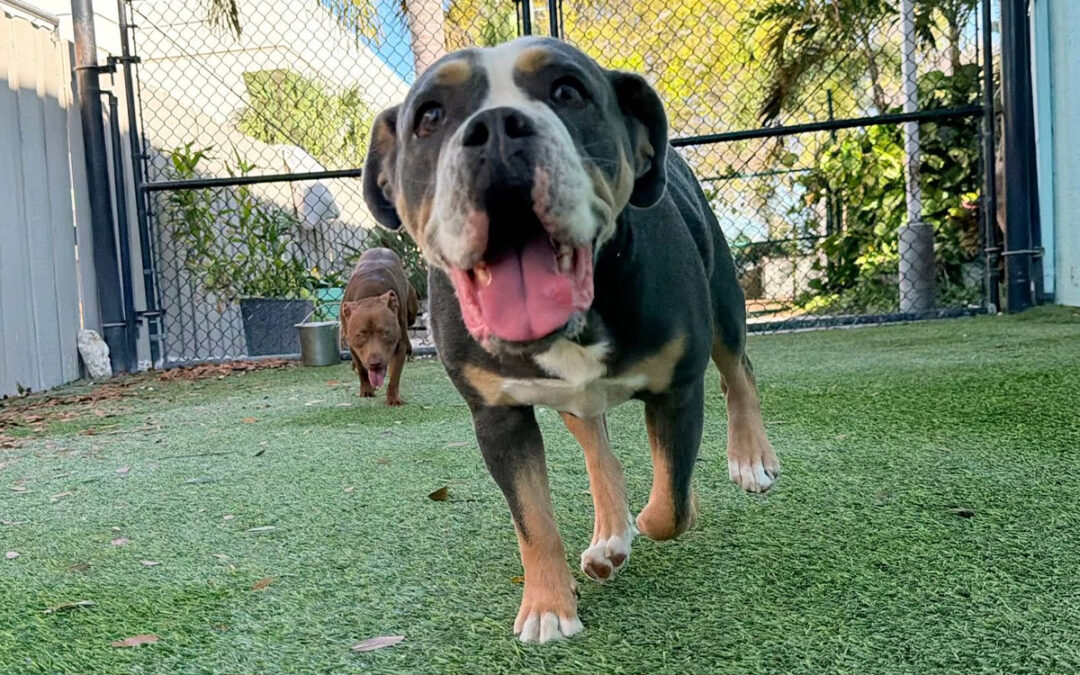
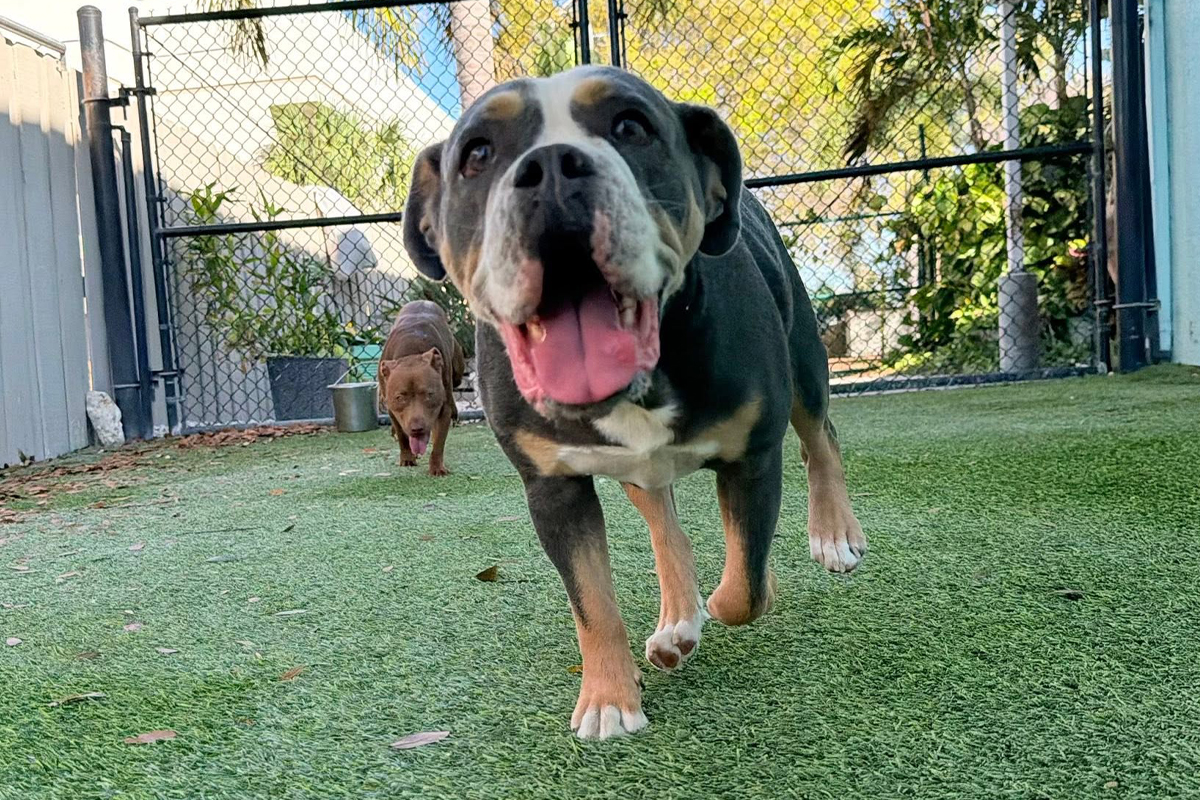
Florida dogs often spend a lot of time outside.
Walks.
Backyards.
Patios.
Parks.
Neighborhood outings.
Trips to pet-friendly places.
That makes outdoor behavior especially important.
A dog that becomes overexcited every time they step outside can quickly become difficult to manage. Pulling, barking, chasing, jumping, staring, and ignoring commands can turn normal activities into stressful situations.
Calm outdoor behavior helps the dog stay connected to the family while still enjoying the environment. At The DogHouse LLC, professional dog training and boarding focus on practical behavior that helps dogs remain more reliable around everyday distractions.
Going Outside Should Not Automatically Mean Excitement
Some dogs learn that the moment the door opens, everything becomes high energy.
They rush through.
Pull immediately.
Scan for dogs.
Look for movement.
Start barking.
The outdoor routine itself can become a trigger.
Teaching the dog to wait at the door and begin the outing calmly can change the tone of the entire experience.
Doorway Manners Create a Better Start
A calm walk often begins before the leash leaves the house.
The dog should be able to wait while the door opens instead of pushing through.
This creates an important pattern.
The family controls when the outing begins.
That simple structure can help reduce excitement and improve focus before more distractions appear.
Leash Manners Are a Major Part of Outdoor Calm
A dog that constantly pulls is already operating at a higher level of excitement.
They are moving toward whatever catches their attention instead of staying connected to the handler.
Better leash manners create clearer communication.
The dog can still sniff and explore, but they should understand how to move with the family and respond when direction changes.
Calm Does Not Mean the Dog Cannot Enjoy the Walk
Good outdoor behavior should not make the outing boring.
Dogs should be able to sniff, explore, and enjoy their surroundings.
The difference is that they do those things without controlling the entire walk.
A balanced outing can include structure and freedom.
The dog walks calmly, gets released to sniff, then reconnects when asked.
Florida Neighborhoods Offer Constant Distractions
In many Florida communities, dogs regularly encounter other dogs, golf carts, bicycles, delivery drivers, lawn equipment, traffic, and people walking nearby.
For some dogs, that creates nonstop stimulation.
Without training, the dog may begin treating every person, sound, or moving object like something that requires a reaction.
Calm outdoor behavior teaches the dog that most neighborhood activity is simply background information.
Not Every Dog Needs to Be Greeted
Many dogs become overly excited because they expect to meet every dog they see.
That expectation can lead to pulling, whining, barking, or frustration when greetings do not happen.
A more useful skill is neutrality.
Your dog should be able to see another dog and continue walking without needing access.
This makes public outings much easier.
People Should Become Normal Background Activity Too
Some dogs want to greet every person.
Others bark or stare at strangers.
Both behaviors can make outdoor activities harder.
The goal is helping the dog understand that most people passing by are not relevant.
Calm observation and continued movement are often better than constant interaction.
Moving Distractions Can Increase Arousal Quickly
Bicycles, scooters, runners, and golf carts can be especially difficult because movement often triggers chase interest or excitement.
A dog may remain calm while something is stationary and react the moment it moves.
Practice at a distance where the dog can stay responsive.
Reward calm behavior and gradually increase difficulty.
Wildlife Adds Another Challenge
Florida dogs may regularly encounter squirrels, birds, lizards, rabbits, and other wildlife.
A dog with strong chase instincts can become highly distracted.
Recall, leash control, and disengagement become especially important.
The dog should learn that seeing movement does not automatically mean chasing.
Backyard Behavior Matters Too
Outdoor calm is not only about walks.
A dog that spends hours barking, fence running, or patrolling the yard is practicing high arousal every day.
That behavior can carry over into neighborhood walks and other environments.
Structured backyard time can help.
The dog should be able to go outside without feeling responsible for monitoring everything around the property.
Recall Is an Important Outdoor Skill
A reliable recall gives the family much more control.
The dog starts moving toward something interesting.
Come.
They return.
That response can prevent many problems before they develop.
Recall should be practiced gradually, starting in easier environments before expecting the dog to respond around major distractions.
Long Lines Can Build Better Outdoor Reliability
A long line can be useful when the dog needs more room to explore but is not ready for full freedom.
The dog can practice recall, engagement, and impulse control while the family still maintains physical control.
This helps create successful repetitions without relying on luck.
Good Outdoor Behavior Includes Recovery
Dogs will sometimes get excited.
That is normal.
The important question is how quickly they recover.
Can the dog reconnect after another dog passes?
Can they settle after a loud vehicle?
Can they return to normal walking after seeing wildlife?
Faster recovery is one of the best signs that emotional control is improving.
Do Not Let Every Outing Become Overstimulating
Some families assume that more activity is always better.
Long walks.
Busy parks.
Constant social interaction.
Outdoor events.
Too much stimulation can make some dogs harder to manage.
Shorter, more successful outings may be more useful than long trips filled with repeated reactions.
Calm Outdoor Behavior Requires Impulse Control
Many outdoor problems happen because the dog reacts immediately to what they want.
They see a dog and pull.
Smell something and drag the handler toward it.
Notice a squirrel and chase.
Hear a sound and bark.
Better impulse control teaches the dog how to pause and remain responsive instead of acting automatically.
Engagement Keeps the Handler Relevant
A dog should not spend the entire outing mentally disconnected from the family.
Good engagement means the dog still notices where the handler is going, responds to their name, and checks in occasionally.
This connection makes it much easier to manage sudden distractions.
Use Distance to Protect Good Behavior
If your dog struggles around a specific trigger, create more space.
Cross the street.
Step aside.
Take a wider path.
Distance gives the dog more time to think and makes it easier to stay calm.
Training should begin where the dog can succeed.
Florida Heat Can Affect Behavior
Heat and humidity can reduce patience, stamina, and focus.
A dog that is physically uncomfortable may become harder to manage.
Choose cooler times when possible and pay attention to pavement temperature.
Keep outdoor sessions appropriate for the weather.
Physical comfort supports better learning.
Shorter Sessions Can Be Better in Warm Weather
During hotter months, long training walks may not be necessary.
Shorter sessions with good structure can be more productive.
Practice doorway manners.
Walk for a manageable period.
Work on engagement and recall.
Then head back inside before fatigue starts affecting behavior.
Outdoor Dining Requires Stronger Calmness
Many Florida communities have pet-friendly patios and outdoor dining options.
These environments can be difficult for dogs because they include food, people, other dogs, tight spaces, and constant movement.
A dog should already have good leash manners and settling skills before spending time in these situations.
Place work can be especially useful.
Parks Require Better Reliability
Parks can add open space, wildlife, dogs, children, bicycles, and more distractions than a neighborhood walk.
The dog should have strong recall and engagement before being given more freedom.
A dog that cannot remain responsive on a long line is usually not ready for less control.
Multi Dog Homes Need Individual Outdoor Skills
Two dogs can increase each other’s excitement.
One reacts and the other joins.
One pulls and the second follows.
Individual walks can help each dog learn better outdoor behavior before expecting reliable group performance.
Once both dogs are stronger independently, group outings often become easier.
Puppies Should Learn Calm Outdoor Habits Early
Puppies naturally want to explore everything.
That is healthy, but they also need structure.
Teach doorway manners, leash awareness, recall, and calm observation early.
This can prevent excitement from becoming the default response every time the puppy goes outside.
Adolescent Dogs Often Need Extra Structure
Young dogs frequently become more interested in movement, smells, people, and other dogs as they mature.
They may begin pulling more or ignoring commands.
This is a common stage, but it is also when consistency matters.
Maintaining structure during adolescence can prevent outdoor excitement from becoming a long-term habit.
Adult Dogs Can Improve Too
A dog that has spent years pulling or reacting outside can still develop calmer habits.
The process may take more repetition, but meaningful improvement is possible.
Start with easier environments and create successful experiences before increasing difficulty.
Calm Outdoor Behavior Creates More Freedom
A dog that remains responsive outside can usually be included in more activities.
Walks become easier.
Parks become more manageable.
Patios become more realistic.
Neighborhood outings become less stressful.
The dog may eventually earn more freedom because the family can trust their behavior.
Professional Training Can Help When Outdoor Behavior Falls Apart
Some dogs behave well inside but seem like a completely different dog once they step outside.
They pull, react, ignore commands, or become overwhelmed by the environment.
Professional training can help rebuild focus and obedience under controlled levels of distraction.
The goal is teaching the dog that the same expectations still apply outside the home.
Board-and-Train Can Build Better Outdoor Reliability
A structured board-and-train program can provide repeated practice with leash manners, recall, engagement, impulse control, neutrality, and real-world distractions.
The difficulty can increase gradually so the dog learns how to stay calm around movement, traffic, dogs, people, and other outdoor activity.
The family also learns how to maintain those same expectations after the dog returns home.
Florida dog owners have many opportunities to include their dogs in outdoor activities, but those experiences are much easier when the dog knows how to stay calm.
Good outdoor behavior starts with better leash manners, stronger recall, engagement, impulse control, and the ability to recover after excitement.
From our perspective, the goal is not to make a dog uninterested in the outdoors. It is to help them enjoy the environment without being controlled by every sight, smell, sound, or movement. When that balance develops, outdoor time becomes safer, calmer, and much more enjoyable for everyone.
Contact The DogHouse LLC to learn how professional dog training and board-and-train programs can help your dog build calmer outdoor behavior, stronger focus, and more reliable obedience throughout Pinellas County and the surrounding Florida communities.