


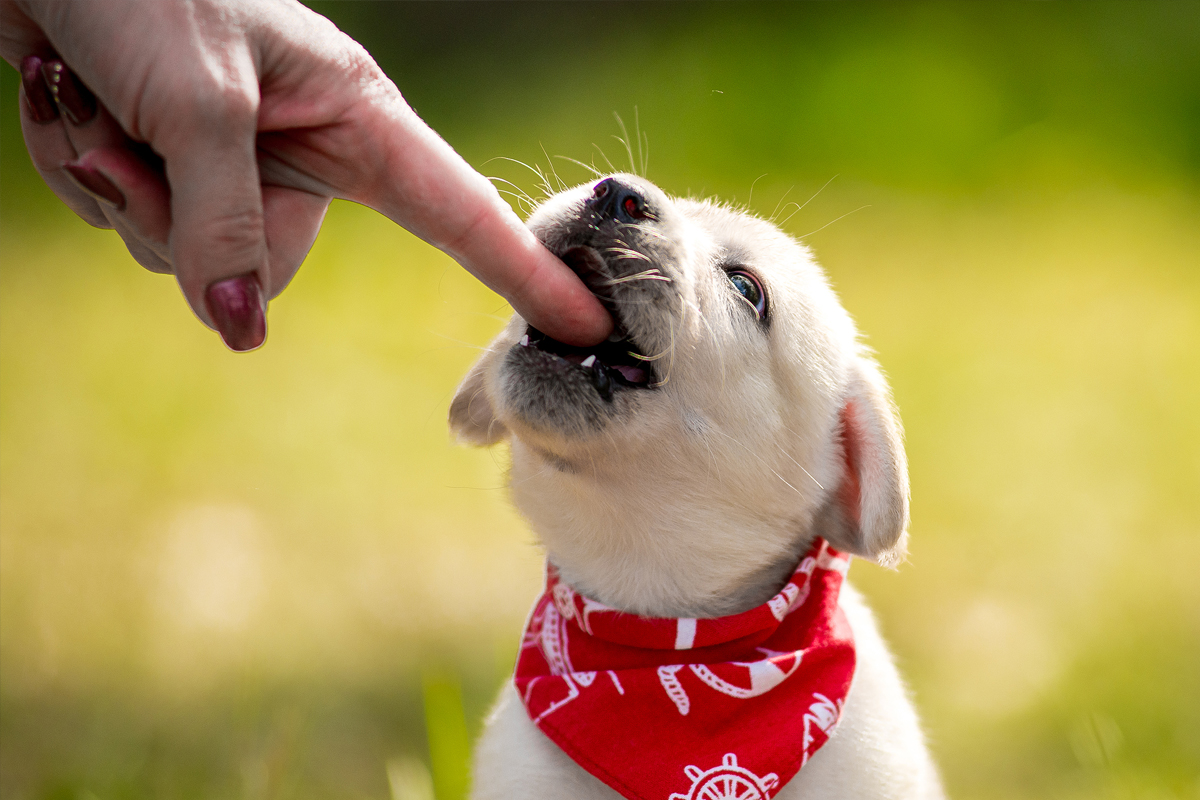
 If you’ve recently brought home a new puppy, you’ve probably experienced those sharp little teeth firsthand. Puppy biting is completely normal — but that doesn’t make it pleasant. Puppies explore the world with their mouths, and nipping can quickly become a bad habit if not handled the right way.
At The DogHouse LLC, our family-owned dog training and boarding business has helped Pinellas County families raise well-mannered, happy puppies for nearly 20 years. With the right approach, you can teach your pup to control their mouth and develop calm, respectful behavior early on.
1. Understand Why Puppies Bite
Before you can stop biting, it’s important to understand why it happens. Puppies don’t bite out of aggression — it’s usually a part of normal development and social learning.
Common Reasons Puppies Bite:
- Teething: Between 3–6 months, puppies chew to relieve sore gums.
- Play and excitement: Puppies bite when they play, just like littermates do.
- Attention seeking: Jumping, nipping, and mouthing often get a reaction from you — which reinforces the behavior.
- Lack of structure: Puppies without boundaries test limits through mouthy play.
Trainer’s Insight: Puppies don’t automatically know that human skin is off-limits. It’s up to you to teach them what’s acceptable through calm, consistent correction and redirection.
2. Don’t Encourage Rough Play
Many owners unintentionally encourage biting by allowing rough play or using their hands as toys. While it’s fun when they’re small, it teaches the wrong lesson.
Trainer’s Advice:
- Avoid wrestling or letting your puppy bite your hands or clothing.
- Use toys, not hands, for tug or chase games.
- If your puppy gets too rough, stop play immediately and walk away.
Why It Works: Puppies learn that gentle play keeps the fun going, while biting makes the fun stop.
3. Redirect Biting to Appropriate Toys
When your puppy starts to nip, calmly replace your hand or clothing with a chew toy or teething ring.
Trainer’s Tip:
- Keep chew toys handy in every room.
- Praise your puppy for chewing the toy instead of your hand.
- Rotate toys often to keep interest high.
At The DogHouse LLC: We use positive redirection techniques that satisfy a puppy’s natural urge to chew while reinforcing calm, focused behavior.
4. Use a Calm, Clear Correction
Yelling or reacting dramatically can overstimulate a puppy and make biting worse. Instead, use a consistent, calm correction.
Trainer’s Recommendation:
- When your puppy bites, say a firm “No” or “Ah-ah” in a neutral tone.
- Pause all interaction for a few seconds.
- Once the puppy calms down, reward gentle behavior.
Why It Works: Calm corrections teach boundaries without creating fear. Your puppy learns that gentle behavior earns attention, while rough play ends it.
5. Teach Bite Inhibition Early
Bite inhibition means your puppy learns to control how hard they bite. Dogs develop this naturally with littermates — if they bite too hard, play stops. You can mimic this lesson at home.
Trainer’s Method:
- If your puppy bites too hard, say “Ouch!” and freeze for a moment.
- Withdraw your attention until your puppy settles.
- Resume calm play after a short break.
Why It Works: Consistent feedback helps your puppy learn to regulate bite pressure and develop self-control.
6. Give Plenty of Exercise and Mental Stimulation
A bored puppy is a mouthy puppy. Physical and mental activity reduce frustration and channel energy in healthy ways.
Trainer’s Tips:
- Provide several short play or walk sessions each day.
- Include short obedience lessons (sit, stay, come) to engage the mind.
- Offer puzzle toys or frozen treats to occupy teething pups.
At The DogHouse LLC: We teach families how structured activity and obedience training prevent common puppy issues like nipping and hyperactivity.
7. Stay Consistent — Every Time
Consistency is key. If your puppy is allowed to bite sometimes (especially during excitement) but corrected at other times, they’ll never understand what’s expected.
Trainer’s Advice:
- Everyone in the household must follow the same rules.
- Never allow biting “just this once.”
- Reward calm behavior immediately — even short moments of stillness.
Why It Works: Clear, predictable feedback builds trust and speeds up learning.
8. Know When to Get Professional Help
If biting persists beyond six months or escalates into snapping, it may be time for professional guidance. A skilled trainer can assess whether the behavior stems from teething, excitement, or fear and customize a solution.
At The DogHouse LLC: Our trainers specialize in puppy development programs that focus on obedience, confidence, and impulse control — turning playful energy into balanced behavior that lasts a lifetime.
Puppy biting is a normal stage, but it doesn’t have to become a habit. With structure, consistency, and calm leadership, your puppy will learn that gentle behavior earns attention — and biting gets them nowhere.
At The DogHouse LLC, our family-owned team has been helping local families raise polite, confident dogs for nearly two decades. From early-age obedience to real-world socialization, we’re here to guide you through every stage of your puppy’s training journey.
Need help managing your puppy’s biting or behavior? Contact our team today to learn more about our professional puppy training programs built for happy, well-mannered dogs.