

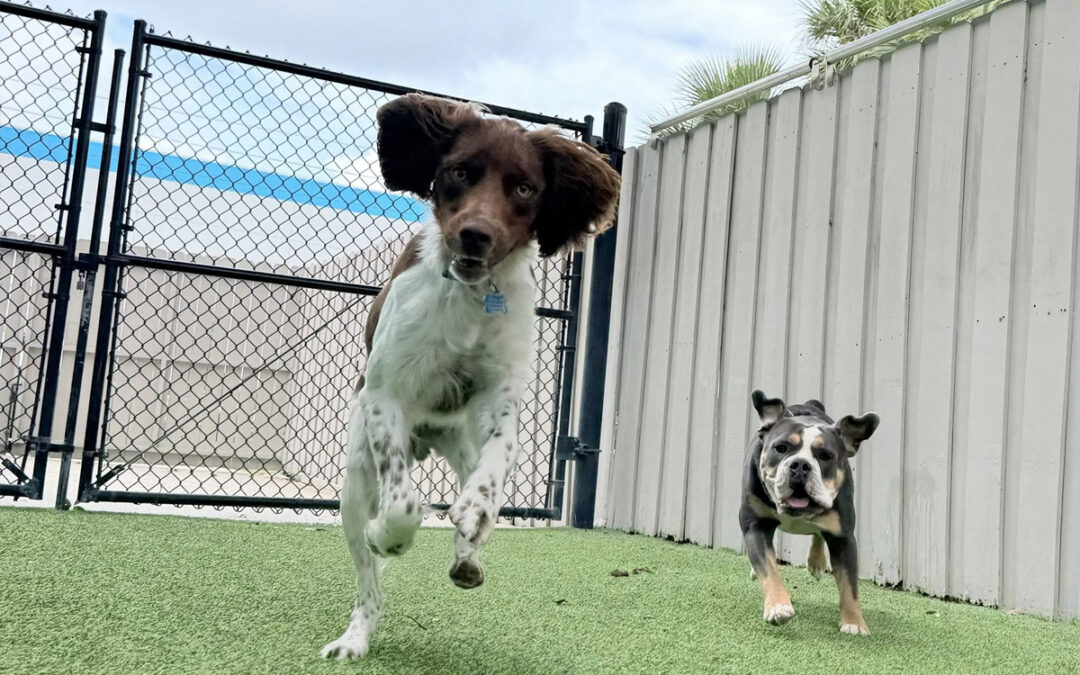
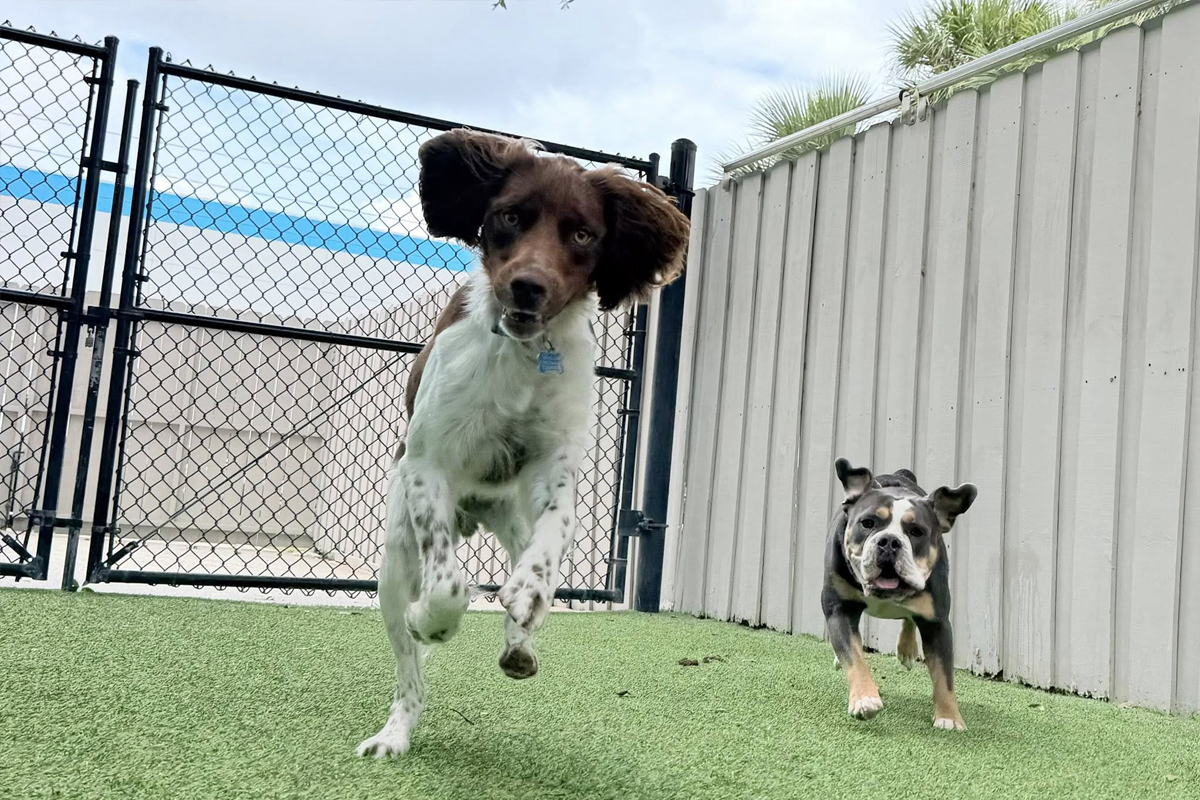
Living with more than one dog can be incredibly rewarding.
There is something special about seeing dogs share space, move through life together, and become part of the rhythm of a home as a group instead of just as individuals. Many owners love the companionship their dogs have with each other. They love the energy, the personality, and the feeling of a fuller home.
But as a trainer and business owner, I can also say this very honestly: adding another dog changes everything.
What felt manageable with one dog can start feeling much more complicated with two or three. The excitement gets bigger. The barking spreads faster. The tension builds more easily. Greetings become harder. Mealtime matters more. Personal space matters more. The house can start feeling emotionally louder without the owner fully understanding why. And when there is not enough structure in place, small issues often become much more obvious very quickly.
That is why I believe structure becomes more important with multiple dogs, not less. The more dogs you have in a home, the more the household needs clarity, consistency, and calm leadership built into everyday life. Without that, dogs often start shaping each other’s habits in ways that make the whole house harder to manage.
One Dog’s Behavior Rarely Stays Just That Dog’s Behavior
One of the biggest changes that happens in a multi-dog household is that behavior stops being isolated.
With one dog, a bad habit may stay mostly contained to that dog. With multiple dogs, behavior often spreads. One dog barks, and the others join. One dog rushes the door, and the rest follow. One dog reacts to movement outside, and the whole room lights up. One dog gets overexcited when guests arrive, and suddenly the energy of the entire group rises with them.
That is why things can feel so much bigger with multiple dogs.
It is not just that there are more dogs physically in the space. It is that emotion moves between them. Dogs influence each other constantly. They feed off tension, excitement, anticipation, insecurity, and momentum. In a house without enough structure, that emotional crossover can create a level of chaos that feels much larger than what any one dog would create alone.
From my perspective, this is one of the most important reasons structure matters more in a multi-dog home. It helps stop one emotional reaction from becoming the whole group’s pattern.
Excitement Gets Amplified Fast
I think this is something many owners feel before they fully understand it.
Two or more dogs together often create a kind of emotional amplification. What one dog feels, the others often notice and respond to. If one dog gets excited, the others may rise with that energy. If one dog starts pacing, barking, or rushing, the others may become more alert and more reactive too. Even when the dogs are not directly copying each other, the environment starts feeling bigger because their energy stacks.
That can happen around guests, the front door, meal time, walks, toys, backyard time, people coming home, and even small household movements.
A moment that would be manageable with one dog can become completely different with multiple dogs because now excitement is bouncing back and forth instead of fading out. And if no one is slowing that pattern down, it gets stronger with repetition.
As a female trainer, I think this is one of the most exhausting parts of living with multiple dogs when structure is weak. The house can start feeling “up” all the time. Even simple moments feel emotionally crowded.
Boundaries Matter More When Space Is Shared
Another reason structure becomes so important with multiple dogs is that shared space changes everything.
With more than one dog, personal space is no longer just about the dog and the owner. It is also about dog-to-dog boundaries. Who moves where. Who crowds who. Who pushes into greetings, food, toys, beds, doorways, couches, attention, or movement through the house. These things matter a great deal, even in homes where the dogs are not fighting outright.
A lot of low-level tension in multi-dog homes comes from poor boundaries, not dramatic aggression.
One dog always hovering over another. One dog interrupting the other. One dog never giving space. Dogs crowding each other at doors, around food, around people, or during transitions. These patterns can build stress over time, especially if one or more dogs already has weak impulse control or poor emotional regulation.
That is where structure protects the home.
It creates clearer routines around movement, greetings, feeding, waiting, and settling. It helps each dog understand there is order here. And that order often makes the whole household feel calmer because the dogs are no longer left to negotiate everything on their own.
Calmness Does Not Usually Happen Naturally in a Group
This is one of the biggest misconceptions people have about multiple dogs.
They assume the dogs will naturally “work it out” or settle each other. Sometimes dogs do provide companionship and emotional support to each other, but that is not the same thing as creating a calm household. In many homes, multiple dogs actually make it harder for calmness to appear naturally because there is always something for one dog to notice in the others.
One dog gets up, and the others pop up too.
One dog hears something outside, and the others start scanning.
One dog gets excited for dinner, and the room changes immediately.
One dog starts shadowing a person, and the others fall into the same movement.
This is why place work, waiting, and structured settling become so valuable in multi-dog homes. Calmness usually needs to be built intentionally. It does not just show up because the dogs love each other.
And in my experience, when owners help create that structure, the dogs often relax more than expected. The house no longer feels like one long chain reaction.
Inconsistency Gets More Expensive With Multiple Dogs
A home with one dog can sometimes absorb inconsistency without everything falling apart immediately.
A home with multiple dogs usually cannot.
If greetings are loose, multiple dogs may turn them chaotic. If door manners are weak, multiple dogs make that riskier and harder to manage. If feeding routines are sloppy, tension rises faster. If the dogs are allowed to emotionally escalate together around windows, fences, sounds, or visitors, those patterns become deeply ingrained quickly.
That is why consistency matters more in a multi-dog household. The cost of unclear routines is simply higher.
One weak habit does not stay small for long because it is being repeated by more than one dog and often reinforced by the social energy between them. In my experience, this is why some owners feel like life with multiple dogs became harder so quickly. They were not dealing with one dog’s inconsistency anymore. They were living inside a system where inconsistency multiplies.
Structure Helps Dogs Feel More Secure Too
I also think it is important to say that structure in a multi-dog home is not only for the humans.
It helps the dogs feel safer too.
Many dogs actually relax more when the household rules are clear. They stop needing to compete so much. They stop feeling like they have to claim space, grab attention, rush first, react first, or stay hyper-aware of what the other dogs are doing. The emotional pressure comes down because the environment itself has more order.
This matters especially in homes where one dog is more confident and another is softer, where one is more impulsive and another is more sensitive, or where there is low-level friction that never fully becomes a fight but never fully feels easy either.
From my perspective, structure often gives those dogs something they did not realize they needed. Relief.
Board-and-Train Can Help Create Order in a Multi-Dog Home
This is one of the reasons board-and-train can be so valuable for households with multiple dogs, especially when the home has started feeling noisy, tense, unpredictable, or emotionally crowded.
A good program helps each dog build better individual habits first. Better place work. Better obedience. Better waiting. Better settling. Better emotional control. And when those stronger patterns come back into the home, it becomes much easier to create more order across the group.
That is important because a multi-dog household usually does not get easier just by addressing the dogs as a group. Often, each dog needs clearer structure as an individual so they stop feeding the same bad patterns into the shared environment.
When that happens, the house often changes dramatically. The dogs become easier to guide, easier to interrupt, easier to settle, and much less likely to turn every little moment into a group event.
Why structure becomes more important with multiple dogs really comes down to one simple truth: more dogs create more emotional movement, more social influence, and more opportunities for chaos to spread if the household does not have enough clarity.
That does not mean multiple dogs cannot live beautifully together. They absolutely can. But in most homes, that kind of peace does not happen by accident. It comes from stronger routines, better boundaries, calmer transitions, and enough structure that the dogs are no longer shaping the whole emotional tone of the house on their own.
From my perspective, that is one of the kindest things an owner can build in a multi-dog home. Not just control, but clarity. And when that clarity is present, the dogs often become calmer, the house becomes quieter, and life together becomes much easier to enjoy.
Contact The DogHouse LLC to learn how a structured board-and-train program can help bring calmer routines, better boundaries, and more stability to your multi-dog home.