


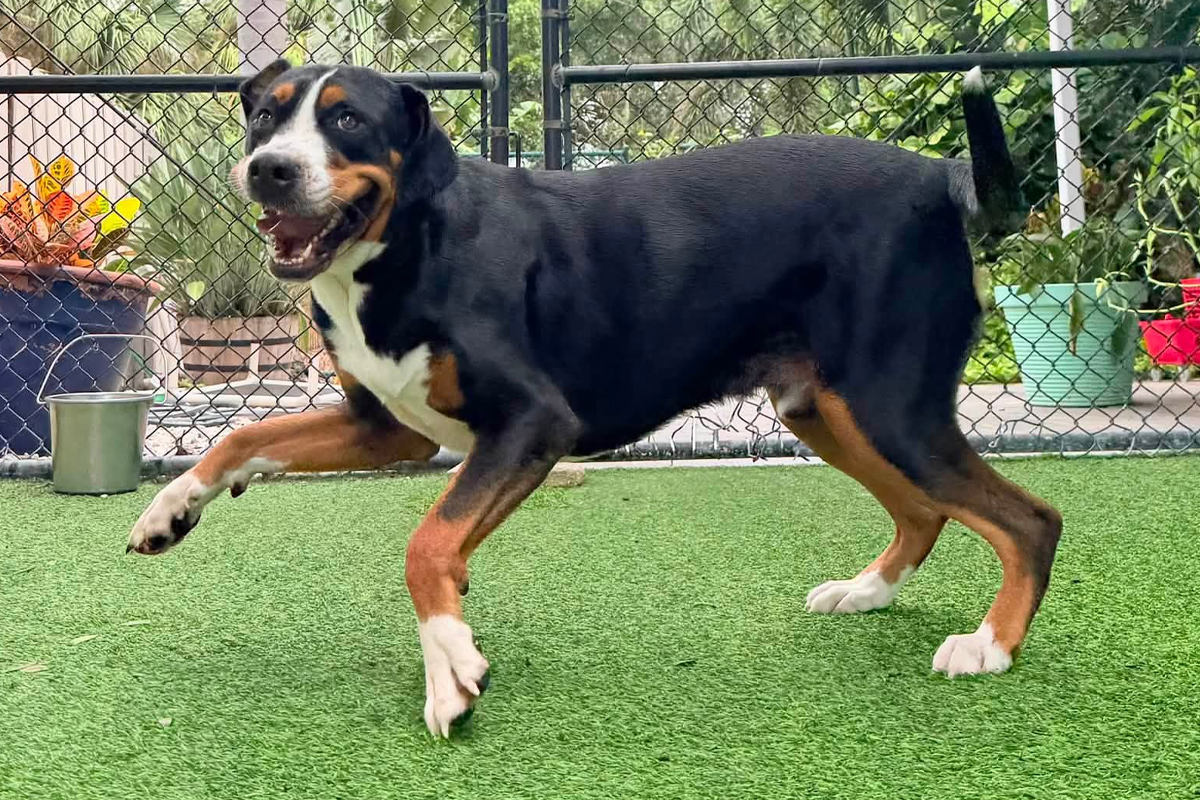
Giving a dog attention is a normal and important part of the relationship.
Affection, play, conversation, walks, and time together all help dogs feel connected to the people they live with. The problem is not attention itself. The problem begins when a dog receives attention so frequently, and so immediately, that they start expecting it whenever they ask.
A dog nudges a hand and gets petted. They paw at someone and receive more affection. They bring a toy and play begins. They bark at the family and someone responds. They follow a person from room to room and are constantly acknowledged along the way.
Over time, the dog may begin to believe that people should always be available.
That can create a more demanding dog, not because the dog is spoiled in some simple sense, but because repeated patterns have taught them that persistent behavior gets results.
Helping a dog learn that attention has boundaries can improve calmness, independence, and household manners without making the relationship less affectionate. This balance is an important part of the professional dog training and boarding support families receive from The DogHouse LLC in Pinellas County, Florida.
Attention Is a Powerful Reward
Dogs do not only work for food.
For many dogs, human attention is just as valuable.
Eye contact, talking, petting, touching, laughing, and play can all reinforce behavior.
This is important because families often reward demanding behavior without realizing it.
The dog paws.
Someone says, “What do you want?”
The dog barks.
Someone looks over.
The dog nudges a hand.
Petting begins.
From the dog’s perspective, the behavior worked.
Even a response that seems minor can strengthen the pattern if attention is what the dog wanted.
Demand Behavior Usually Starts Small
A demanding dog does not always begin with loud barking or obvious pushiness.
The pattern may start with subtle behavior.
A dog rests their chin on someone’s leg.
The person pets them.
The dog nudges again.
More petting happens.
Soon, the dog paws when the person stops.
Eventually, they may bark or climb closer to restart the interaction.
The behavior grows because each step has been successful.
This is why it is easier to address attention boundaries early than after the dog has practiced demanding interaction for months or years.
Constant Attention Can Make Quiet Time Feel Unusual
Dogs that receive frequent interaction may have very little experience simply doing nothing.
Someone is always talking to them.
Someone is petting them.
There is always a toy, walk, game, treat, or activity available.
When the family finally becomes busy, the dog does not know what to do with the change.
They pace.
Follow.
Whine.
Bark.
Bring toys.
Push into people.
The dog may not actually need more activity.
They may simply have never learned that quiet periods are a normal part of household life.
Dogs Need to Learn That Attention Is Not Always Available
People have work, meals, conversations, phone calls, chores, and times when they simply want to relax.
A dog should be able to exist comfortably during those moments.
That does not mean ignoring the dog all day.
It means teaching that attention has a beginning and an ending.
The dog receives affection.
Then the interaction stops.
The dog gets play.
Then the toy is put away.
The dog enjoys a walk.
Then they return home and settle.
These transitions help the dog learn that connection does not require constant access.
Pawing Is Often Reinforced Accidentally
Pawing is one of the most common forms of attention-seeking.
The dog places a paw on someone’s leg.
The person pets them.
Soon, the dog repeats the behavior whenever they want interaction.
If the person ignores the first paw, the dog may try again more forcefully.
This can become especially frustrating when the dog scratches skin or clothing.
The important lesson is not that the dog should never receive affection.
The dog should learn that pawing is not what starts it.
Wait for calmer behavior, then invite interaction intentionally.
Nudging Can Become Pushy Too
Some dogs use their nose to control attention.
They push under a hand.
They lift someone’s arm.
They shove their head between people.
At first, this may seem affectionate.
But if the dog cannot accept when petting stops, the behavior has become demanding.
A healthier pattern gives affection without allowing the dog to physically pressure someone into continuing.
The dog can remain nearby and wait.
The family decides when attention resumes.
Barking for Attention Can Become a Daily Habit
Demand barking often becomes established because it produces an immediate reaction.
The dog barks.
Someone says, “Stop.”
The dog barks again.
Someone looks over.
The dog keeps going until a person finally engages.
The dog has received exactly what they wanted.
This is one reason repeated verbal correction does not always solve attention barking.
The response itself may be part of the reward.
Clearer boundaries and alternative behaviors are usually more effective.
Following People Everywhere Can Be Another Form of Attention-Seeking
Some dogs shadow family members all day.
They follow into the kitchen, bathroom, bedroom, office, and hallway.
Sometimes this is simple habit.
Sometimes it is anticipation.
But constant attention can strengthen the behavior.
The dog follows, and someone speaks to them.
They follow again, and someone pets them.
They appear in the next room, and interaction continues.
The dog learns that staying close keeps the flow of attention going.
Teaching the dog to remain settled while people move can help break this pattern.
Place Work Helps Create Healthy Distance
Place work is one of the most practical ways to teach a dog that they can be included without being directly involved.
The dog remains on a designated bed, mat, or cot while the family cooks, talks, works, or relaxes.
They can still see everyone.
They are still part of the environment.
They simply are not controlling interaction.
This creates healthy distance without isolation.
The dog learns that being near the family does not always mean receiving attention from the family.
Affection Should Have a Clear Ending
Many demanding dogs struggle most when affection stops.
The dog is being petted.
The person stops.
The dog immediately nudges, paws, or climbs closer.
If petting resumes every time, the dog learns that the interaction never really has to end.
Families can change the pattern by creating clear endings.
Pet the dog.
Stop calmly.
Return to what you were doing.
If the dog remains settled, that is progress.
The dog begins learning that attention can end without something being wrong.
Inviting the Dog Can Be Better Than Constantly Responding
One simple shift is to initiate more interactions intentionally.
Instead of always waiting for the dog to demand affection, call them over when you want to spend time together.
Invite them to play.
Ask them to join you.
Give affection when they are calm.
This changes who controls the beginning of the interaction.
The dog still receives plenty of attention, but they no longer need to pressure the family to get it.
Too Much Attention Can Make a Dog More Restless
A dog that is constantly engaged may become more mentally active rather than calmer.
Every movement from the family becomes interesting.
Every sound may predict interaction.
The dog remains ready for the next event.
This can create a dog that has difficulty switching off.
They may appear energetic when the deeper issue is that they have never learned how to disengage.
Structured rest can help lower that constant state of expectation.
A Tired Dog Is Not Always a Calm Dog
Families sometimes respond to demanding behavior by adding more activity.
Another walk.
More fetch.
Another toy.
More training.
That can help if the dog genuinely needs an outlet, but endless activity can also create a dog that expects entertainment all day.
A calm dog should be able to rest without needing to be completely exhausted first.
Exercise and enrichment matter.
So does learning that nothing is happening right now.
Dogs Need Practice Being Bored
Boredom is not automatically a problem.
A healthy dog should be able to experience periods where no one is actively entertaining them.
They may rest.
Chew an appropriate item.
Watch the room.
Sleep.
The ability to tolerate uneventful time is an important part of household maturity.
A dog that cannot handle boredom often creates their own activity, and that activity may involve barking, stealing objects, pacing, or pestering people.
Constant Toy Play Can Build Demand Behavior
Some dogs learn that bringing a toy always starts a game.
They drop the ball in someone’s lap.
The ball gets thrown.
They repeat it.
Eventually, the family tries to stop.
The dog barks, paws, or pushes the toy harder.
If the game restarts, the dog learns that persistence works.
Play should have clear endings.
The toy can be put away, and the dog can transition to place or rest.
This teaches that enjoyable activity does not continue indefinitely just because the dog asks.
Attention Around Food Can Create Another Pattern
Dogs may become demanding around meal preparation because people interact with them constantly.
Someone talks to the dog.
Gives a small bite.
Moves them away.
Calls them back.
The entire kitchen routine becomes socially rewarding.
A clear boundary can reduce this.
The dog may remain on place or outside the cooking area while food is prepared.
This removes both the food opportunity and the constant stream of interaction.
Working From Home Can Make Attention Boundaries Harder
Dogs living with people who work from home often have access to someone all day.
That can create a strong expectation of availability.
The dog approaches the desk.
The owner pets them.
The dog brings a toy.
The owner takes a quick break.
The dog follows to the kitchen and receives more interaction.
Over time, the dog may begin interrupting work constantly.
Structured periods can help.
The dog may stay on place, rest in another room, or spend time in a crate while the owner works.
Scheduled breaks still provide walks and attention.
The dog simply learns that being home together does not mean constant engagement.
The Dog Should Not Control Your Entire Schedule
Some demanding dogs begin organizing the household around themselves.
They bark when they want breakfast.
Pace when they want a walk.
Bring toys at a certain time.
Demand outside access.
Push for affection in the evening.
The family responds to avoid conflict.
Eventually, the dog’s behavior dictates the daily routine.
Predictable schedules can help without allowing the dog to control every moment.
Meals, walks, play, training, and rest can happen in a recognizable rhythm, but not solely because the dog demanded them.
Do Not Confuse Needs With Demands
Dogs have real needs that should be met.
A dog may genuinely need to go outside.
They may need water, appropriate exercise, medical care, or a break from a stressful environment.
Owners should not dismiss every request as attention-seeking.
The goal is to understand the context.
Once reasonable needs are addressed, repeated pawing, barking, or pressure for additional interaction can be handled as a boundary issue.
Good training balances responsiveness with structure.
Calm Behavior Should Get More Attention
Families often notice the dog most when the dog is being disruptive.
The dog barks.
Everyone responds.
The dog paws.
Someone talks to them.
The dog is lying quietly in the corner.
No one notices.
This can accidentally make disruptive behavior more rewarding than calm behavior.
Flip the pattern.
Notice the dog when they are settled.
Offer calm affection.
Release them from place for interaction.
Invite play after they have been relaxed.
The dog learns that calm behavior creates connection too.
Independent Rest Is a Skill
Some dogs are perfectly capable of sleeping when someone is beside them but struggle to rest alone.
They follow people from room to room and rarely choose their own resting area.
Independent rest should be practiced.
The dog can lie on place while the family moves around.
They can rest behind a gate.
They can spend appropriate time in a crate.
These experiences teach that relaxation does not depend on constant physical closeness.
Crate Time Can Support Better Attention Boundaries
A properly introduced crate can provide useful downtime.
The dog rests after exercise, training, or a meal while the family continues normal household activity.
This creates a predictable period where no interaction is expected.
For dogs that struggle to turn off, the physical boundary can make relaxation easier.
Crate time should be used positively and reasonably.
The goal is not to remove the dog whenever they ask for attention.
It is to create part of a balanced routine that includes both connection and independent rest.
Do Not Make Every Quiet Moment a Training Session
Some families become so focused on improving behavior that they engage the dog constantly through commands and exercises.
Training is valuable, but even training is still attention.
Dogs also need time where nothing is being asked of them.
They should be able to settle without waiting for the next cue, treat, or activity.
Calm household life is a skill too.
Children Can Reinforce Demanding Behavior Very Quickly
Children often respond enthusiastically when a dog asks for attention.
The dog paws.
The child pets them.
The dog brings a toy.
The child throws it.
The dog barks.
The child starts playing.
The dog learns that children are excellent sources of immediate interaction.
Families can give children a few simple rules.
Do not throw the toy because the dog is barking.
Do not pet because the dog is pawing.
Allow the dog to stay on place when resting.
This helps everyone support the same household expectations.
Guests Can Make Demanding Dogs Even Pushier
Visitors often provide concentrated attention.
They pet the dog repeatedly, talk to them, and respond every time the dog approaches.
When attention stops, the dog may paw, nudge, bark, or follow the guest.
This can make visits exhausting.
Place work and structured greeting periods help.
The dog can receive some appropriate attention, then return to place.
They learn that visitors are not available for unlimited interaction.
Multi Dog Homes Can Create Competition for Attention
When several dogs live together, attention can become competitive.
One dog approaches a person.
Another pushes in.
A third starts barking.
The family begins petting everyone to reduce the chaos.
This can reward the competition.
Individual place work and separate attention can help.
Each dog should learn that another dog receiving affection does not mean they need to push into the interaction.
Calm waiting can become part of the household routine.
One Dog Can Teach Another to Become Demanding
Dogs often learn from each other’s patterns.
One dog barks for the backyard and the door opens.
Another dog begins barking too.
One dog paws for attention and receives it.
The other starts trying the same thing.
Demand behavior can spread through a multi dog household when it consistently works.
Clear individual boundaries help prevent group habits from becoming established.
Attention Should Not Always Happen at Peak Excitement
Dogs often receive the most attention when they are highly excited.
Someone comes home and the dog jumps, spins, and barks.
The family responds enthusiastically.
The dog learns that emotional intensity produces a bigger interaction.
Calmer greetings can change this.
Allow the initial excitement to settle.
Then offer affection.
The dog learns that calmness does not reduce connection.
It actually creates access to it.
Coming Home Does Not Need to Become a Major Event
Some dogs become extremely demanding around arrivals.
They hear the door and immediately expect a long greeting.
If every return becomes highly emotional, the dog may become increasingly reactive to people coming and going.
A calmer arrival routine can help.
Enter.
Put things down.
Allow the dog to settle.
Then greet appropriately.
This lowers the emotional value of the doorway and makes household transitions easier.
Leaving the Room Should Not Automatically Trigger Following
Dogs accustomed to constant attention may get up every time someone moves.
They do not want to miss the next interaction.
Practice leaving the room while the dog remains on place or continues resting.
These small separations teach that the family can move without the dog needing to follow.
This supports both independence and better attention boundaries.
Do Not Reward Escalation
A dog asks quietly.
Nothing happens.
They paw.
Still nothing.
They bark.
The family gives in.
The dog has learned that escalation works.
Next time, they may skip the quiet request and go directly to barking.
This is why consistent outcomes matter.
If the dog’s needs are met and the boundary is reasonable, increased pressure should not be what changes the answer.
Otherwise, the family unintentionally trains stronger demanding behavior.
Expect Some Testing When You Change the Pattern
Dogs notice when a previously successful strategy stops working.
A dog that usually gets petted after pawing may paw more frequently at first.
A dog that barks to start play may bark longer.
The dog is testing whether the old pattern still applies.
This does not necessarily mean the new approach is failing.
Consistency is especially important during this period.
If the family gives in only after the dog becomes more persistent, they teach an even stronger lesson.
Persistence eventually works.
Boundaries Do Not Make a Dog Feel Unloved
Families sometimes worry that ignoring a demand or ending an interaction will hurt the relationship.
Healthy boundaries do not remove affection.
They make affection clearer.
The dog still receives play, touch, walks, and time together.
They simply learn that those things are not controlled through constant pressure.
A dog can be deeply connected to the family and still understand that people are allowed to be unavailable sometimes.
Predictable Routines Can Reduce Attention-Seeking
Dogs often become more demanding when they do not know what to expect.
If walks, meals, play, and rest happen randomly, the dog may spend more time asking.
A recognizable routine helps.
The dog begins trusting that their needs will be met.
They do not have to remind the family every few minutes.
The schedule does not need to be exact, but some predictability can reduce unnecessary pressure.
Dogs Need Clear Endings to Activities
A demanding dog often struggles when something ends.
Petting stops.
Play ends.
The walk is over.
A visitor stops interacting.
The dog attempts to restart the activity.
Clear endings can help.
The toy goes away.
The dog goes to place.
The leash comes off and rest begins.
The person simply moves on after affection.
The dog learns that activities end normally and do not need to be restarted through pestering.
More Attention Is Not Always the Solution to Restlessness
When a dog becomes restless, owners often assume they need more interaction.
Sometimes they do.
Other times, more attention simply reinforces the restlessness.
The dog paces.
Someone engages.
Now pacing has become a successful strategy.
Before adding another activity, consider whether the dog has already had appropriate exercise, mental stimulation, bathroom access, and social time.
If those needs are met, structured rest may be the better answer.
Better Independence Often Improves Affection
This may sound surprising, but boundaries can make affection more enjoyable.
When a dog is not constantly pushing for interaction, the family can choose moments of genuine connection.
Petting feels relaxed instead of obligatory.
Play has clearer beginnings and endings.
Couch time becomes enjoyable because the dog is not constantly pawing or climbing.
The relationship becomes less about responding to demands and more about sharing time intentionally.
Calm Dogs Often Receive More Attention in the Long Run
A demanding dog can eventually cause people to withdraw.
Family members become tired of the pawing, barking, following, and constant requests.
They start closing doors, using gates, or avoiding interaction.
A dog with better boundaries is easier to enjoy.
They can remain nearby without pressure.
They wait.
They settle.
They accept when interaction ends.
That often results in more natural inclusion and affection because the relationship feels easier.
Training Attention Boundaries Creates More Freedom
Dogs that cannot handle being ignored often need more management.
They may be removed during dinner, guests, work calls, or other activities because they will not stop demanding.
A dog that can settle can remain present.
They may lie on place while people eat.
Stay in the room during a conversation.
Rest while someone works.
Healthy independence gives the dog more opportunities to remain part of family life.
Board-and-Train Can Help Reset Demanding Attention Habits
Some dogs have practiced attention-seeking so consistently that it affects nearly every part of the day.
They paw, bark, follow, jump, bring toys repeatedly, crowd people, struggle with place, and become frustrated whenever interaction stops.
These behaviors often share a foundation of weak impulse control, limited independence, and unclear household boundaries.
A structured board-and-train program can help rebuild those underlying habits.
The dog receives consistent practice with place work, waiting, crate routines, personal-space boundaries, doorway manners, impulse control, calm greetings, and transitions between activity and rest.
They learn that attention is still available, but it is not something they control through pressure.
The family also receives guidance on maintaining the same balance at home.
That follow-through is especially important because demanding behavior can return quickly if pawing, barking, and persistence once again produce immediate attention.
Too much attention can create a more demanding dog when the dog begins to believe interaction should always be available.
The issue is not affection.
It is the pattern around it.
When pawing creates petting, barking creates play, following creates constant interaction, and restlessness creates entertainment, the dog learns that pressure works.
Over time, quiet independence can become harder.
The solution is not withholding affection or becoming distant.
It is creating a better balance.
Intentional attention, clear endings, place work, independent rest, predictable routines, calm greetings, and consistent responses to demand behavior can help the dog learn that they are still an important part of the family even when no one is actively interacting with them.
From our perspective, one of the healthiest household skills a dog can develop is the ability to enjoy attention without depending on it every minute. A dog that can receive affection, let the interaction end, and calmly settle nearby is usually easier to live with and easier to include in everyday family life.
Contact The DogHouse LLC to learn how a structured board-and-train program can help your dog develop healthier attention boundaries, stronger independence, and calmer everyday behavior in Pinellas County, Florida.