

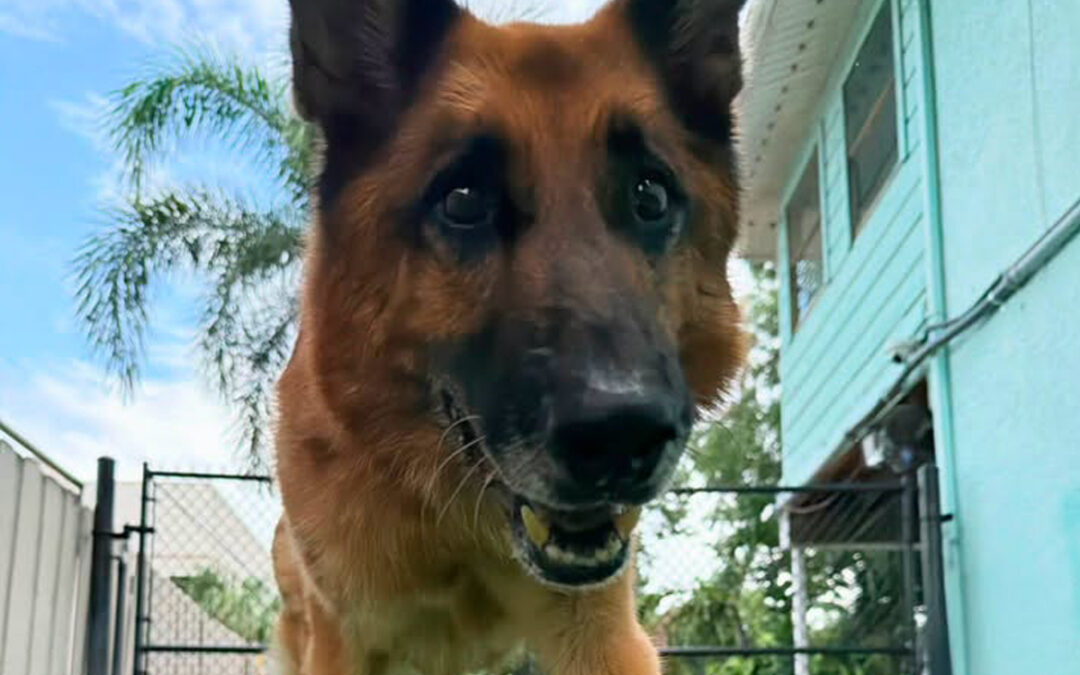
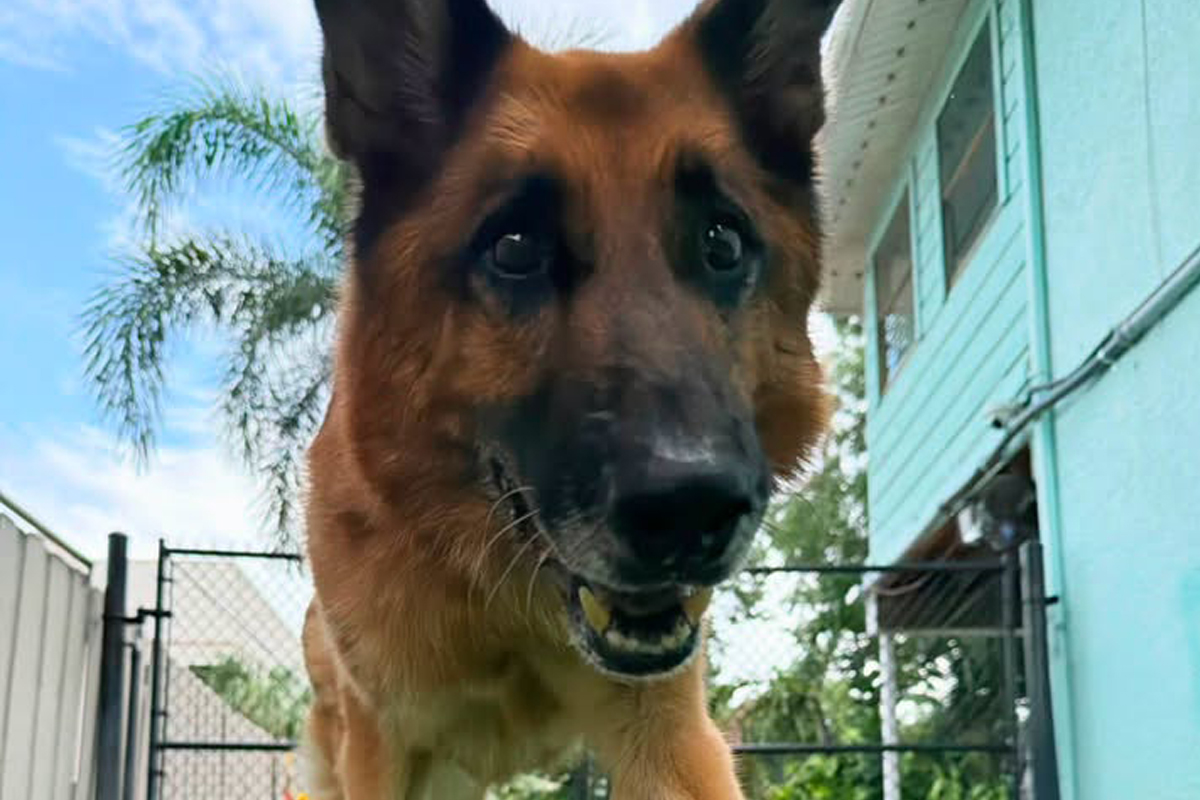
You sit down, and your dog settles nearby.
A few minutes later, you stand up to get a glass of water. Your dog immediately gets up too. You walk into the kitchen, and they follow. You return to the couch, and they lie back down. Then you stand again, and the same pattern repeats.
For some families, this happens all day.
The dog appears unable to remain settled whenever someone moves. They follow from room to room, monitor every doorway, and seem convinced that standing up must mean something interesting is about to happen.
At first, the behavior may seem harmless. Many owners even find it endearing that their dog wants to stay close. But when a dog feels the need to respond to every movement in the home, it can interfere with their ability to rest and create other habits such as constant following, attention-seeking, kitchen hovering, doorway crowding, and difficulty being independent.
Helping a dog learn that ordinary human movement does not always require a response can create a much calmer household. This type of practical independence and household training is an important part of the professional dog training and boarding support families receive from The DogHouse LLC in Pinellas County, Florida.
Your Dog Has Learned That Movement Predicts Something
Dogs are excellent at recognizing patterns.
They notice what usually happens immediately before something they enjoy.
You stand up before taking them outside.
You walk toward the kitchen before food appears.
You move toward the front door before a walk.
You head into another room before grabbing a toy.
Over time, the dog begins paying attention to the first part of that sequence.
You have not even reached the door yet, but the dog is already standing because your movement predicts what might happen next.
This is a learned response.
The dog has discovered that getting up immediately helps them avoid missing an opportunity.
Sometimes Following Has Been Rewarded Hundreds of Times
A dog does not need to receive something every time they follow you for the behavior to become strong.
Occasional rewards can be enough.
The dog follows you into the kitchen and once in a while receives a piece of food.
They follow toward the back door and sometimes get to go outside.
They follow into another room and receive affection.
Those successful moments make following worthwhile.
The dog thinks there is always a possibility that your next movement leads to something valuable.
That uncertainty can actually make the dog more persistent.
If they stayed behind, they might miss something.
So they get up.
Every time.
The Dog May Not Actually Be Anxious
Owners sometimes assume a dog that follows constantly must be experiencing anxiety.
That is not always the case.
Some dogs are perfectly comfortable when left home alone but still get up every time someone moves while the family is present.
In those cases, the behavior may be driven more by habit, anticipation, and opportunity than emotional distress.
The dog has simply practiced monitoring people for a long time.
Other dogs may show genuine distress when they cannot follow.
They may whine continuously, panic behind a barrier, attempt to escape, become destructive, or show other significant signs of separation-related distress.
Those situations may require a more individualized training plan and veterinary guidance.
It is important to understand the difference between a dog who has learned to shadow people and a dog who is truly struggling with separation.
Constant Monitoring Can Prevent Quality Rest
A dog may appear to sleep a lot while still getting very little uninterrupted rest.
They lie down, but one ear remains tuned to the household.
Someone moves a chair, and the dog lifts their head.
A person stands, and the dog gets up.
A door opens, and they follow.
The dog may repeat this pattern dozens of times throughout the day.
That is not the same as deeply disengaging.
A dog that constantly monitors household movement can remain mentally active even while physically lying down.
Teaching them to stay settled when people move helps them learn how to truly switch off.
Dogs Often Become More Sensitive to Movement Over Time
The more the dog practices getting up, the more automatic the response can become.
Eventually, they may react before they even know where the person is going.
A family member shifts forward on the couch, and the dog stands.
Someone reaches for their shoes, and the dog becomes excited.
A chair moves, and the dog heads toward the doorway.
The behavior starts happening earlier in the sequence.
This is common with well-established habits.
The dog is no longer carefully deciding whether something interesting is happening. They are responding to familiar signals automatically.
Changing the pattern requires giving them repeated experiences where those signals lead to nothing important.
Make Your Movement Less Meaningful
One simple way to begin changing the habit is to move around without always involving the dog.
Stand up from the couch.
Walk across the room.
Then sit back down.
Go into the kitchen without preparing food.
Walk toward the back door without opening it for the dog.
Move through the house while the dog remains settled.
These repetitions change the meaning of your movement.
The dog gradually discovers that standing up does not always predict a walk, food, attention, or outdoor access.
Your movement becomes part of normal household background activity rather than a signal that the dog needs to participate.
Place Work Gives the Dog a Better Choice
Place work is especially useful for dogs that get up whenever someone moves.
Instead of simply hoping the dog stays down, give them a clear responsibility.
The dog remains on a designated bed, mat, or cot until released.
At first, the challenge can be very simple.
Ask the dog to stay on place while you stand up.
Sit back down.
Repeat.
Then take a few steps away.
Walk across the room.
Enter an adjacent space briefly.
The dog begins learning that your movement does not change their responsibility.
This creates a much clearer training pattern than repeatedly telling the dog to lie down after they have already followed you.
Start With Movement the Dog Can Handle
If the dog has followed you for years, expecting them to remain settled while you disappear upstairs may be too difficult at first.
Begin small.
Stand and immediately sit again.
Take two steps away.
Walk around the coffee table.
Step into the hallway for one second.
These short exercises may seem almost too easy, but that is the point.
The dog needs successful repetitions.
Once they stop reacting to small movements, gradually increase the difficulty.
Trying to create independence too quickly often leads to repeated failure and frustration.
Do Not Accidentally Release the Dog With Your Body Language
Dogs notice more than verbal cues.
An owner may tell the dog to remain on place, then turn toward them, pat their leg, or walk away while looking back repeatedly.
The dog may interpret this as an invitation.
Clear body language helps.
If the dog is expected to stay, move naturally and confidently without accidentally encouraging them to come along.
The more consistent the entire interaction becomes, the easier the expectation is for the dog to understand.
The Kitchen Usually Makes the Habit Worse
Many dogs pay extra attention when someone moves toward the kitchen.
Food makes human movement highly valuable.
The dog may have learned that following into the kitchen occasionally results in something falling on the floor, receiving a treat, or getting attention while food is prepared.
That makes kitchen trips difficult to ignore.
A clear kitchen boundary can help.
The dog may remain on place in another part of the room or outside the kitchen while family members cook.
This prevents constant following and reduces food-related hovering at the same time.
It also creates a safer environment because the dog is not moving around feet, hot pans, or open appliances.
Getting Up Can Become Part of Attention-Seeking
Sometimes the dog follows because moving closer creates interaction.
They get up when you move, follow into the next room, and stand directly beside you.
You speak to them.
Pet them.
Ask what they want.
The dog has now received attention.
Even if you are telling them to go back and lie down, the following behavior still created an interaction.
Dogs that value attention may find that rewarding enough to continue.
Clearer boundaries can reduce this pattern.
Stop Turning Every Follow Into a Conversation
People naturally talk to their dogs.
That is not a problem.
But a dog that constantly shadows the family can receive a surprising amount of reinforcement through conversation alone.
“Where are you going?”
“You don’t need to follow me.”
“Go lie down.”
“Why are you always under my feet?”
From the dog’s perspective, following made the person engage.
Sometimes the better response is much simpler.
Guide the dog back to place when needed, then continue with the household activity without making the situation emotionally important.
Your Dog May Be Afraid of Missing Out
Some dogs are extremely interested in household activity.
They do not necessarily need anything.
They simply want to know what is happening.
A person leaves the room and the dog thinks there could be food, visitors, outdoor access, play, or something else worth investigating.
This creates a pattern similar to constantly checking.
The dog gets up because staying behind feels like missing an opportunity.
Structured independence helps change this expectation.
The dog learns that they do not need to witness every household event.
Attention Does Not Need to Follow the Dog Everywhere
Dogs that monitor every movement may also receive affection in nearly every room.
They follow, and someone pets them.
They follow again, and someone talks to them.
The family unintentionally creates a continuous stream of rewards for staying close.
Affection should remain plentiful, but it can become more intentional.
Invite the dog to interact sometimes.
Other times, allow them to remain where they are.
The dog learns that connection does not require constant physical proximity.
A Clear Release Is Important
When using place work or another stationary behavior, the dog should understand when they are allowed to move again.
Without a clear release, they may start making their own decisions.
The dog remains for twenty seconds, gets bored, and follows.
If nothing happens, that becomes the new pattern.
Use a consistent release cue.
The dog learns that people moving around does not end place.
The release does.
This creates much stronger reliability over time.
Interior Doorways Are Useful Practice Opportunities
Families often focus on exterior doors because of safety, but interior doorways can be valuable for independence training too.
Walk into another room while the dog remains behind.
Initially, leave the door open.
The dog can still see you but learns they are not required to follow.
Later, you may briefly move out of sight.
This helps the dog become more comfortable with small amounts of distance.
The goal is to make ordinary separation inside the home feel uneventful.
Gates Can Stop Constant Rehearsal
If the dog follows hundreds of times per day, training becomes much harder because the old habit is still being practiced constantly.
A gate can help.
The dog stays outside the kitchen while someone cooks.
They remain outside the office during part of the workday.
They can still see or hear the family but cannot automatically follow every movement.
This reduces rehearsal while teaching the dog that physical access is not always necessary.
Management supports training by making the desired behavior easier to practice consistently.
Work From Home Can Make the Pattern Stronger
Dogs living with people who work from home may become especially sensitive to movement.
They spend hours beside the desk.
The person stands for coffee, and the dog follows.
They go to another room, and the dog follows.
This pattern may happen dozens of times during one workday.
Because the owner is almost always available, the dog gets very little practice staying behind.
Creating designated work periods can help.
The dog may stay on place, rest in another room, or spend part of the day in a crate.
Planned breaks can still include walks, affection, training, and play.
The dog begins learning that being home together does not require constant movement together.
Crate Training Can Help the Dog Truly Switch Off
Some dogs need more environmental help before they learn to rest deeply.
A properly introduced crate can provide that boundary.
After appropriate activity, the dog spends time resting while family members continue moving through the home.
They cannot repeatedly get up and follow.
Over time, the dog may become much more comfortable sleeping through ordinary household activity.
Crate time should be used thoughtfully and positively, not simply as somewhere to put the dog whenever they become inconvenient.
Used appropriately, it can support the broader goal of healthy independence.
Exercise Alone Usually Does Not Fix the Problem
Families may assume the dog keeps getting up because they have too much energy.
They add longer walks, fetch, or extra backyard play.
Physical activity is important, but it does not necessarily change a movement-triggered habit.
A tired dog may still lift their head and follow every time someone stands.
They have learned to monitor people.
The solution needs to include actual practice with staying settled while movement happens.
Exercise can make that practice easier, but it should not be the only strategy.
Dogs Need to Learn to Relax While They Still Have Energy
If the dog can only stay settled when completely exhausted, they have not really developed an off switch.
A well-balanced dog should gradually learn that calm behavior is possible even when some energy remains.
They can complete a reasonable walk and then relax.
They can play briefly and accept that play has ended.
They can lie on place while the household continues functioning.
This type of emotional control is more valuable than simply trying to tire the dog into inactivity.
Children Can Reinforce the Habit Without Realizing It
Children often enjoy a dog that follows them everywhere.
They move into another room and call the dog along.
They get up to play and encourage the dog to chase.
They walk toward the kitchen and share a snack.
The dog quickly learns that following children can be especially rewarding.
Families can create simple boundaries.
Do not call the dog off place unless an adult says it is okay.
Do not share food because the dog followed into the kitchen.
Allow the dog to rest when they are already settled.
These small changes help the whole household support the same goal.
Multi Dog Homes Can Turn One Dog’s Movement Into Everyone’s Movement
In a home with several dogs, the pattern can spread quickly.
One dog sees someone stand and gets up.
The second dog sees the first moving and follows.
Soon, the entire group is walking from one room to another.
This creates constant household motion.
Individual place work is especially useful in these homes.
Each dog should learn that another dog getting up does not automatically release them.
Individual rest periods may also help prevent the group from keeping each other mentally active all day.
Do Not Correct the Dog for Every Small Movement
Owners can become frustrated when the dog repeatedly gets up.
The day turns into constant correction.
“Stay.”
“Lie down.”
“Go back.”
“Stop following me.”
This can make everyone tense.
A clearer system is easier.
Use a defined place behavior, household barriers, or a consistent resting area.
The dog needs to know what they should do, not simply that getting up annoys the family.
Good training replaces the unwanted behavior with an understandable alternative.
Expect the Dog to Test the New Pattern
When the family first changes the routine, the dog may continue getting up.
They may even become more persistent.
The old pattern has worked for a long time.
If following usually led to access or interaction, the dog has no reason to immediately believe the rule has changed.
Consistency matters here.
If the dog gets released because they keep trying, persistence becomes even stronger.
Calmly return to the expectation and keep the practice manageable.
The new pattern becomes easier as it becomes familiar.
Rewarding Calm Does Not Require Constant Treats
Families often ask whether they should give the dog food every time they stay down.
Treats can be useful during training, but they are not the only reward.
Remaining on place may eventually lead to being released to go outside.
Calm waiting may lead to affection.
The dog may simply discover that relaxing feels comfortable.
Daily life offers many opportunities to reinforce good behavior naturally.
The goal is for calmness to become normal, not a trick the dog performs only when food is visible.
Let the Dog Remain Asleep
This sounds simple, but it matters.
If the dog is finally sleeping deeply while the family moves around, do not keep waking them to interact.
Owners sometimes call a resting dog over because they want affection.
The dog gets up, engages, and then resumes monitoring.
Allowing good rest to continue helps reinforce independence.
A dog choosing to remain asleep while someone walks out of the room is making exactly the kind of decision the family wants.
Better Settling Can Improve Several Other Behaviors
The dog that gets up every time you move may also be the dog that crowds the kitchen, rushes the door, monitors windows, and follows visitors.
These behaviors often share a common foundation.
The dog is overly involved in household movement.
As they learn to remain settled, the opportunities for those other habits decrease.
They are not standing at the kitchen counter.
They are not following everyone toward the door.
They are not investigating every sound.
Better settling can change the overall energy of the household.
Independent Dogs Can Still Be Very Connected
Teaching the dog to remain settled does not make them less bonded to the family.
Healthy attachment does not require constant following.
A dog can enjoy affection, play, walks, and closeness while also being comfortable several feet away.
That balance often creates a more secure relationship.
The dog does not need to monitor every movement to know they are still part of the family.
Knowing When the Behavior Needs More Help
Most movement-following habits can be improved through structure, place work, boundaries, and consistent practice.
Some cases are more complicated.
If a dog becomes severely distressed whenever a person moves away, cannot tolerate even brief separation, attempts to escape barriers, becomes destructive, or shows intense panic, families should consider more individualized professional and veterinary guidance.
The goal should always match the reason behind the behavior.
A habit of following and a serious separation-related issue should not be treated as though they are identical.
Better Independence Usually Leads to More Household Freedom
A dog that cannot settle may eventually be restricted because the family becomes overwhelmed.
They are gated away, crated more often, or excluded from certain rooms because they constantly follow and get underfoot.
A dog that learns to stay settled can often receive more freedom.
They can remain loose while the family cooks, works, or moves through the house because they are no longer compelled to participate in everything.
Temporary structure can create long-term freedom.
Board-and-Train Can Help Break Constant Monitoring Habits
Some dogs have practiced getting up and following for so long that it has become part of nearly every household interaction.
They struggle to remain on place, crowd people, monitor doors, demand attention, and rarely appear capable of fully switching off.
A structured board-and-train program can help rebuild the foundation behind these behaviors.
The dog receives consistent practice with place work, waiting, crate routines, doorway manners, impulse control, and calm transitions. They learn that people can stand up, walk away, enter other rooms, and continue normal activity without requiring the dog to respond.
Just as importantly, the dog receives repeated opportunities to practice meaningful rest.
The family also receives guidance on maintaining these expectations at home.
That follow-through helps prevent the old movement-following pattern from becoming normal again.
If your dog gets up every time you move, the behavior may have much less to do with needing you and much more to do with what your movement has come to mean.
Dogs quickly learn that people standing up may predict food, outdoor access, attention, play, or something else worth investigating. When following occasionally produces a reward, the habit becomes even stronger.
Over time, the dog can become so accustomed to monitoring the household that they rarely settle through normal movement.
That pattern can be changed.
Place work, clearer boundaries, short independence exercises, gates, crate routines, less meaningful household movement, and consistent follow-through can teach the dog that they do not need to respond to every step you take.
From our perspective, one of the clearest signs of a dog developing healthy household independence is surprisingly simple. A person gets up, walks into another room, and the dog decides that staying comfortable where they are is perfectly fine.
Contact The DogHouse LLC to learn how a structured board-and-train program can help your dog develop healthier independence, stronger settling skills, and calmer everyday household behavior in Pinellas County, Florida.