

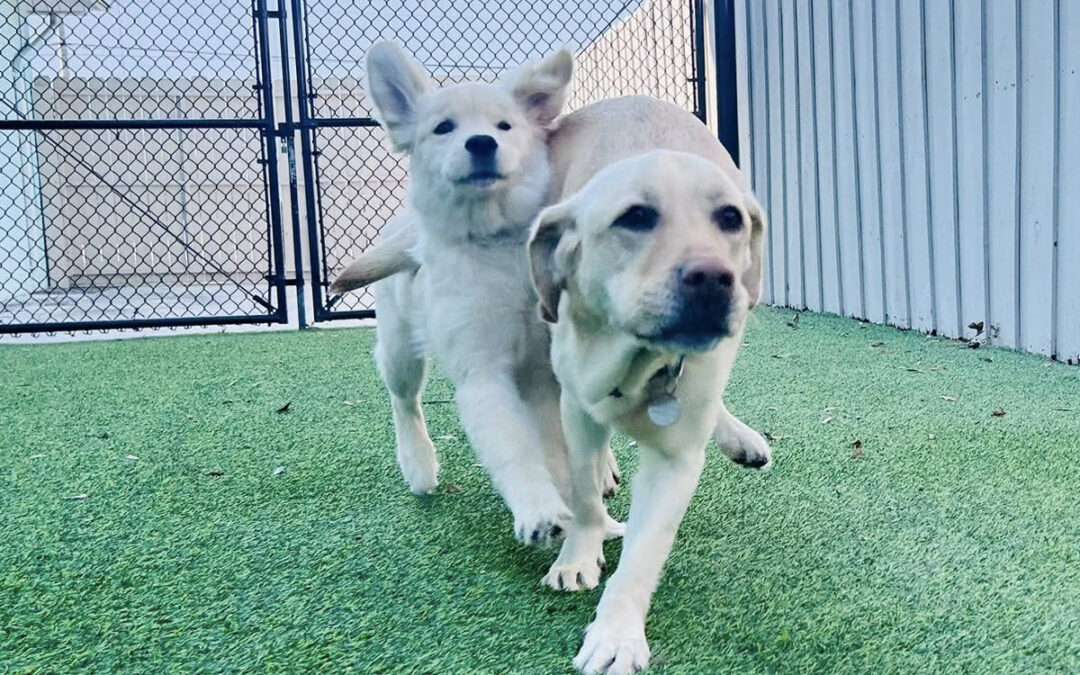
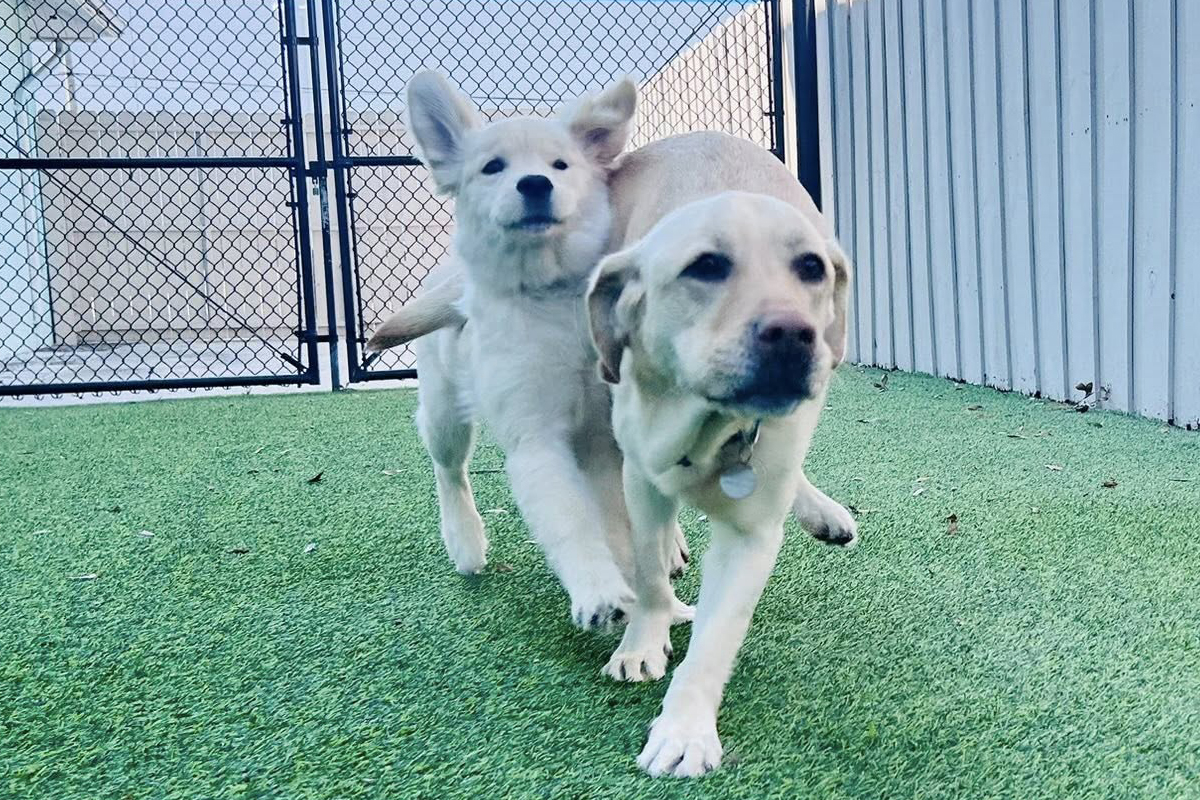
Puppies are easy to excuse.
They are small.
They are playful.
They are curious.
They are still learning.
So when a puppy jumps, mouths, ignores a cue, rushes the door, or pulls on the leash, many owners assume it is just part of the stage.
Sometimes it is.
But when those behaviors happen without structure, they do not simply disappear. They grow with the dog.
At The DogHouse LLC, our family-owned professional dog training and boarding business has spent nearly 20 years helping owners understand that puppyhood is not just a cute stage. It is one of the most important behavior-building windows a dog will ever have.
What happens during those early months often shapes what daily life looks like later.
Puppies Are Always Learning
One of the biggest misconceptions about puppies is that training can wait because they are “still babies.”
But puppies do not wait to learn.
They are learning every day from what works for them.
If jumping gets attention, they learn to jump.
If barking creates a response, they learn to bark.
If pulling moves them forward, they learn to pull.
If ignoring direction has no consequence, they learn that commands are optional.
This means that even when formal training is not happening, learning still is.
The puppy is always building habits — either with guidance or without it.
Cute Behavior Becomes Adult Behavior
Many problem behaviors start in ways that seem harmless when the dog is small.
A little jumping may feel manageable at ten pounds.
A little leash pulling may seem unimportant when the dog is tiny.
A little mouthiness may seem like normal puppy play.
But puppies grow fast.
And when the behavior grows with them, it becomes far harder to live with.
What looked playful at first can become:
- jumping on guests
- dragging on the leash
- biting from frustration
- pushing boundaries constantly
- ignoring commands with confidence
The behavior may look new later, but often it is simply the same early pattern that was never given direction.
Lack of Structure Creates Confusion
Puppies need to understand the world they are living in.
Without structure, they are left to figure out things on their own:
- What earns attention
- When calmness matters
- Where boundaries exist
- What rules apply and when
This often leads to inconsistency.
One day the puppy is allowed on someone’s lap while excited. The next day that same excitement is corrected. One family member reinforces calm greetings while another encourages jumping.
To the puppy, these mixed signals create confusion.
And confused puppies do not become reliable adults. They become dogs that test, guess, and repeat whatever works.
Puppies Without Structure Often Become Impulsive Adolescents
One of the reasons adolescence feels so hard for many owners is that the foundation underneath it was never fully built.
A puppy that grows without early structure often enters adolescence already practicing:
- poor impulse control
- weak obedience
- high arousal around stimulation
- inconsistent response to direction
- habits of pulling, barking, or jumping
Then, as the dog gets older, bigger, and more confident, those behaviors become harder to interrupt.
At that point, owners often feel like the dog suddenly changed.
In reality, adolescence is often just the stage where early gaps become more obvious.
Emotional Regulation Does Not Happen Automatically
Many owners focus on commands and overlook one of the biggest needs puppies have: learning how to regulate themselves.
Without structure, puppies often become used to:
- getting excited whenever they want
- escalating during play
- rushing into every interaction
- seeking constant stimulation
- settling only when exhausted
This creates dogs that struggle with:
- calm greetings
- frustration tolerance
- patience
- settling in busy environments
- responding under distraction
Calmness is not something puppies grow into by accident. It must be taught.
Freedom Too Early Usually Creates More Problems
A very common mistake is giving puppies too much freedom too soon.
That may include:
- unlimited access to the house
- free movement around guests
- unsupervised time during stimulating moments
- long, chaotic greetings
- little accountability around commands
Owners often do this because they want the puppy to feel comfortable and happy.
The problem is that freedom without structure teaches the puppy to rehearse poor choices over and over again.
Structure first. Freedom later.
That order matters.
Boundaries Help Puppies Feel More Secure
Some owners worry that structure is too strict for a young dog.
In reality, puppies usually feel more secure when the world becomes more predictable.
Structure helps them understand:
- what is expected
- how to succeed
- what the routine looks like
- where calmness belongs
- when they can engage and when they should wait
This reduces confusion and lowers emotional chaos.
Puppies thrive when life starts making sense.
The Home Starts Shaping Long-Term Habits Early
By the time many owners begin to feel overwhelmed, the puppy has already spent months rehearsing the same behaviors in the same environment.
That may include:
- racing to the door
- barking at windows
- pulling on walks
- jumping for attention
- ignoring commands during excitement
Once these patterns are repeated enough, they begin to feel automatic.
That is why structure early in puppyhood matters so much.
It is far easier to prevent a pattern from forming than to undo it later when it has become part of daily life.
Owners Often Mistake Normal Puppy Energy for Something That Will “Pass”
Yes, puppies are energetic.
Yes, they are curious.
Yes, they make mistakes.
But when that energy is never given direction, it often grows into problem behavior instead of maturity.
Without structure, high puppy energy can become:
- chronic overexcitement
- poor focus
- impulsive greetings
- leash frustration
- difficulty settling indoors
This is why waiting for a puppy to simply “outgrow it” is usually disappointing.
Energy may shift with age. Habits often stay.
Early Structure Builds Better Adult Dogs
When puppies are given structure early, they begin building the right habits from the start.
That includes:
- waiting calmly
- responding to commands consistently
- tolerating frustration better
- understanding boundaries
- settling more easily
- learning how to handle stimulation
These early skills do not just make puppyhood easier.
They create the kind of adult dog owners hope for later — calmer, clearer, and far more reliable in everyday life.
That is the long-term value of structure.
Some Puppies Need More Guidance Than Owners Expect
Not every puppy will respond the same way.
Some are naturally more intense, more independent, more energetic, or more sensitive to stimulation.
These puppies often need more:
- repetition
- consistency
- follow-through
- controlled exposure
- all-day structure
That does not mean something is wrong with them. It means they need guidance early before their natural tendencies become hard-to-manage habits.
For these puppies, professional structure can make a major difference in the direction their behavior takes.
What happens when puppies grow without structure is not just “puppy behavior.”
It is the beginning of patterns that often become much harder to change later.
Without structure, puppies learn from whatever works in the moment.
With structure, they learn how to live calmly, clearly, and successfully in a human world.
That early guidance shapes everything that comes after.
Contact The DogHouse LLC to learn how structured professional training can help your puppy build the right habits early and grow into a calm, reliable, and well-mannered adult dog.