

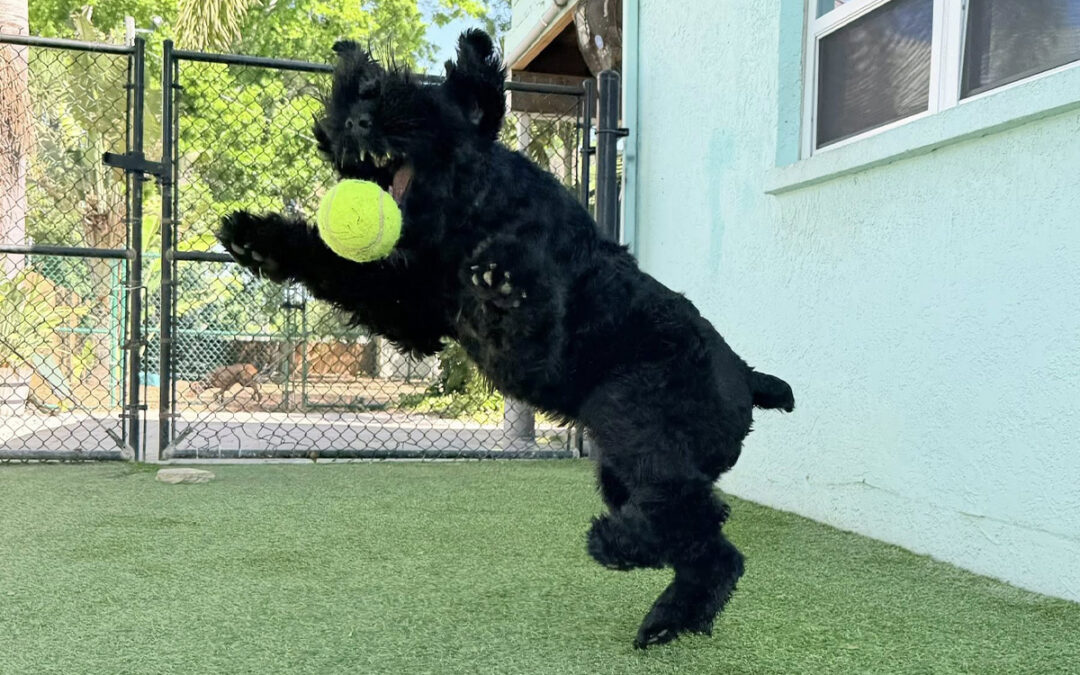
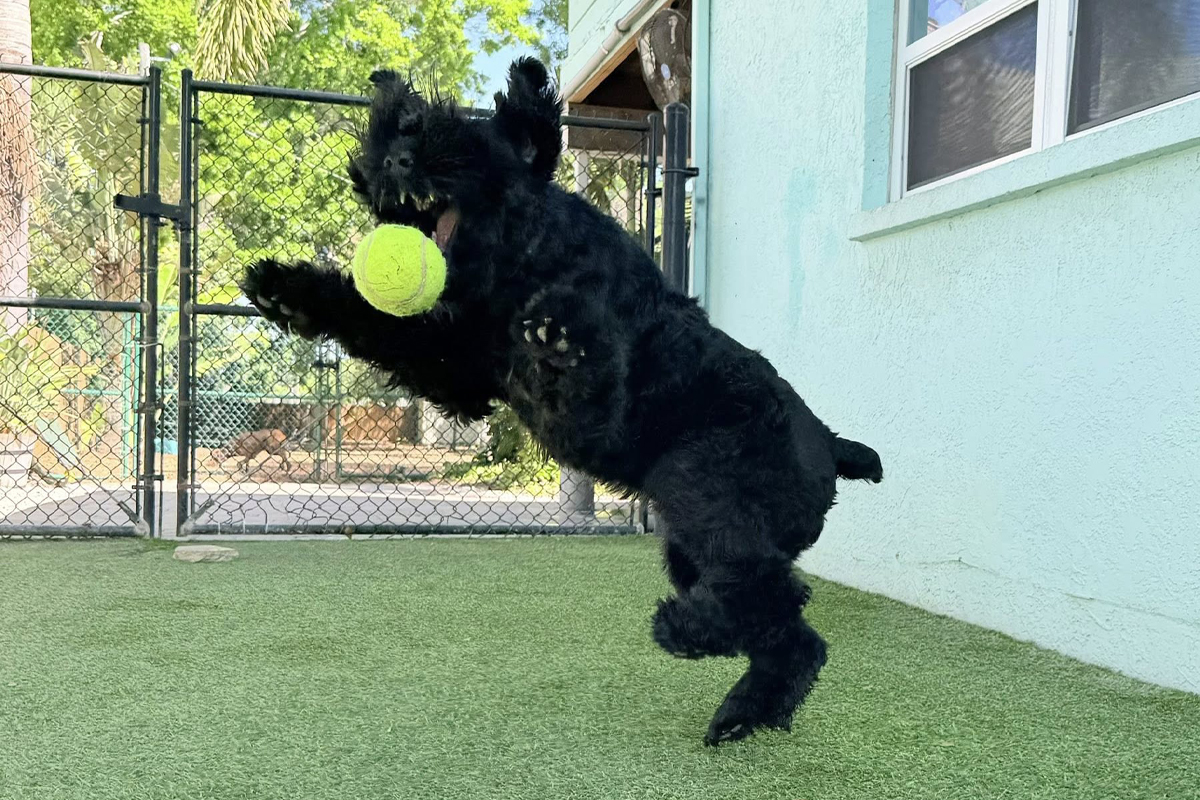
A lot of owners describe their dog the same way:
“He just has a lot of energy.”
Sometimes that is true. But energy by itself is not the real issue.
The real issue begins when that energy has no structure.
That is when normal enthusiasm starts showing up as:
- jumping on people
- pulling on the leash
- barking excessively
- ignoring commands
- pacing or struggling to settle
- reacting impulsively in stimulating situations
At The DogHouse LLC, our family-owned professional dog training and boarding business has spent nearly 20 years helping owners understand the difference between a dog who is energetic and a dog whose energy is turning into problem behavior.
That difference matters.
Because once energy starts driving behavior, it will not improve with time alone. It improves with direction.
High Energy Is Not a Bad Thing
Energy is not a flaw.
Many dogs are naturally energetic because of:
- age
- breed tendencies
- drive and enthusiasm
- curiosity and stimulation needs
A dog with energy can be fun, engaged, athletic, and highly trainable.
The problem is not the presence of energy. The problem is when that energy is unmanaged and begins spilling into daily life without boundaries.
What It Looks Like When Energy Becomes a Problem
Owners often assume behavior problems are separate from energy, when in reality they are often closely connected.
Energy tends to become problem behavior when it shows up as:
- frantic greetings
- inability to stay still
- escalating excitement around doors or guests
- pulling harder the longer the walk continues
- barking from stimulation instead of communication
- inability to focus outdoors
- constant demand for attention
At that point, the dog is not just “active.” The dog is operating without emotional regulation.
Why Exercise Alone Is Not Enough
One of the biggest misconceptions owners have is that more exercise will solve all high-energy behavior.
Exercise matters, but it is not the whole answer.
A dog can be physically tired and still:
- bark at the door
- jump on guests
- ignore commands
- lose focus around distractions
- struggle to settle indoors
That is because energy problems are often tied not only to movement needs, but to impulse control and mental structure.
A tired dog is not always a trained dog.
Unstructured Energy Creates Repetition
When a dog is allowed to rehearse impulsive behavior every day, energy turns into habit.
For example:
- racing to the door every time it opens
- pulling ahead on every walk
- jumping during every greeting
- barking whenever something changes
- pushing boundaries when excited
These patterns become stronger through repetition.
The dog begins learning that excitement leads the interaction instead of structure guiding it.
That is how manageable energy turns into unreliable behavior.
Excitement and Arousal Lower Obedience
Highly energized dogs often struggle with obedience not because they do not know commands, but because their arousal level is too high to respond clearly.
This is why owners often say:
“He listens inside, but not when he gets excited.”
“She knows what to do, but once she gets worked up, it’s gone.”
That is a regulation problem, not just a knowledge problem.
When a dog is too stimulated, thinking shuts down and reaction takes over.
Training must address that emotional state — not just the behavior that follows it.
Calmness Is a Skill, Not a Personality Trait
Many owners wait for their dog to “settle down” with age.
Sometimes age reduces intensity a little. But without training, the habits created by unmanaged energy often remain.
Calmness is something dogs must learn through:
- repetition
- clear expectations
- waiting
- place work
- impulse control exercises
- structured daily routines
Dogs do not automatically know how to downshift.
They need to be shown.
Structure Gives Energy a Job
Energetic dogs usually improve fastest when their day begins to feel organized.
That structure might include:
- calm leash-up routines
- sit or place before doors open
- waiting before meals
- structured walks instead of chaotic walks
- clear release cues
- consistent boundaries around greetings and movement
When energy has direction, it becomes useful instead of disruptive.
Structure does not suppress personality. It channels it.
The Home Often Amplifies the Problem
A busy home can accidentally make an energetic dog worse.
This happens when:
- excitement gets attention
- barking changes the household response
- jumping is inconsistently corrected
- routines shift constantly
- commands are not enforced the same way every time
In those environments, the dog never truly learns when to be “on” and when to settle.
That uncertainty fuels more chaotic behavior.
Why Professional Structure Helps High-Energy Dogs
Some dogs need more repetition and consistency than most owners can realistically provide throughout a busy day.
That is where structured professional training often makes a major difference.
A consistent training environment helps energetic dogs learn:
- how to respond before reacting
- how to work through stimulation calmly
- how to build reliable habits under structure
- how to settle instead of staying in constant motion
This kind of concentrated repetition changes behavior faster because the dog stops rehearsing chaos and starts rehearsing control.
What Improvement Looks Like
When energy is being managed well, owners usually start noticing:
- calmer greetings
- better focus on walks
- less frantic behavior around stimulation
- stronger command response under excitement
- improved settling at home
- fewer emotional spikes throughout the day
The dog still has energy. But now it is livable, manageable, and directed.
That is a huge difference.
When your dog’s energy turns into problem behavior, the answer is not simply “wear them out more.”
The answer is structure.
Energy without direction becomes chaos.
Energy with structure becomes focus, engagement, and reliability.
That is how high-energy dogs become easier to live with and easier to trust.
Contact The DogHouse LLC to learn how structured professional training can help turn your dog’s unmanaged energy into calm, reliable behavior that works in real life.