


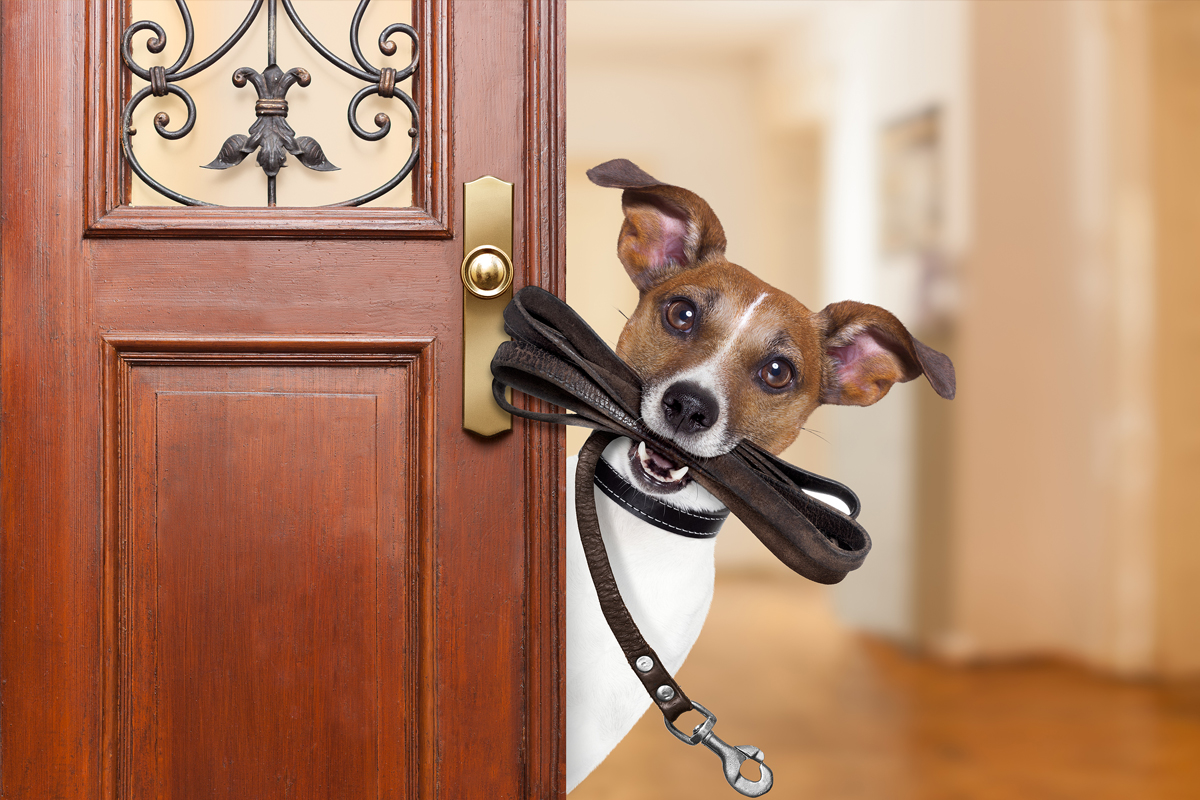
Most owners believe leash walking problems start the moment they step outside. In reality, the opposite is true. Pulling, lunging, barking, and overstimulation begin long before the leash clips onto the collar. Calm leash walking is shaped by routine, structure, and mindset inside the home — not just during the walk itself.
At The DogHouse LLC, our family-owned dog training and boarding team has trained dogs across Pinellas County for nearly two decades. One of the most common issues we hear from dog owners is leash pulling or reactivity. The solution always begins in the same place: the home environment.
Teaching a dog to walk calmly on leash starts with emotional control, leadership, and clear expectations before the front door opens.
The Biggest Misconception About Leash Training
Many owners believe they can step outside, correct pulling, and see improvement. But if your dog is excited, vocalizing, or jumping while you’re clipping the leash, calm walking won’t magically appear outside.
Dogs walk on leash how they live at home. An excited dog in the living room becomes an explosive dog on the sidewalk.
Trainer’s truth:
If your dog doesn’t follow direction inside, they won’t follow it outside.
Why Calm Starts Indoors
Dogs mirror the energy around them. Your routine before a walk tells your dog:
-
whether they should be calm or hyper
-
whether you are leading or following
-
what kind of walk they’re preparing for
If the pre-walk ritual involves excitement — such as hyped-up voices, rushing toward the door, or leash jingling — your dog is already mentally ahead of you, pulling toward the world.
Step 1: Build Emotional Control Before Touching the Leash
Your dog should already be calm before you even reach for equipment. If not, stop and wait.
Trainer Steps:
-
Stand still when your dog becomes excited.
-
Wait for a sit or relaxed posture.
-
Reward calmness with movement, not treats.
-
Only pick up the leash when your dog is composed.
This teaches your dog that their energy controls the progress of the walk.
Step 2: Leash Up Without Excitement
Clipping the leash on should be quiet and boring. No talking. No hype. No praise.
If your dog wiggles, paws, or vocalizes:
-
Pause
-
Reset
-
Try again
The rule:
Your dog must earn the leash through stillness, not enthusiasm.
Step 3: Create Structure at the Doorway
The doorway is the most overlooked training location in the home. It separates two worlds — indoor comfort and outdoor stimulation.
Dogs should:
-
sit at the door
-
wait until released
-
follow the owner out, not rush through
If a dog races through the doorway, the walk is already lost.
Step 4: Practice Walking Indoors First
A dog that cannot walk calmly across the living room won’t walk calmly down the street.
Use interior space to create success:
-
short sessions between rooms
-
hallway heel work
-
calm pacing near family members
This is how dogs learn position and leash pressure before distractions are added.
Step 5: Focus on State of Mind, Not Distance
Walks are not about mileage — they are about mindset. A 20-minute structured walk is far more valuable than an hour-long drag through the neighborhood.
Inside practice teaches:
-
focus
-
accountability
-
impulse control
-
respect
A dog walking calmly indoors is mentally ready for outside challenges.
Step 6: Leave the House Calmly
The first 10 feet outside the door determine the rest of the walk.
Trainer Tip:
If your dog surges, spins, or lunges the moment the door opens:
-
turn around
-
go back inside
-
reset
-
try again
This prevents bad patterns from forming.
Why This Method Works
Dogs follow patterns. If the pattern is excitement → leash → run outside → pull, the habit becomes permanent.
When the pattern becomes:
calm → direction → structure → movement,
dogs learn obedience faster, and owners regain control.
At The DogHouse LLC, we’ve transformed leash behavior by focusing on preparation, not just correction.
Real-World Benefit: Safer, More Enjoyable Walks
Dogs walking calmly beside their owners experience:
-
less reactivity
-
fewer distractions
-
better social behavior
-
smoother training progress
Owners enjoy walks again instead of dreading them.
When to Seek Professional Help
If your dog:
-
constantly pulls
-
ignores commands outside
-
or struggles with anxiety
professional training can make a world of difference.
Structured board-and-train programs teach dogs skills in controlled environments that translate into home success.
Calm leash walking doesn’t begin at the end of the driveway. It starts at home — in your routines, body language, and leadership. When you teach your dog to be calm before the walk, the walk itself becomes balanced and enjoyable.
At The DogHouse LLC, we specialize in training that transforms everyday struggles into reliable obedience. If you’re ready to enjoy calm, controlled walks with your dog, we’re here to help you make it happen.
Want better leash manners? Reach out today to learn more about our training programs designed for real-world success.