


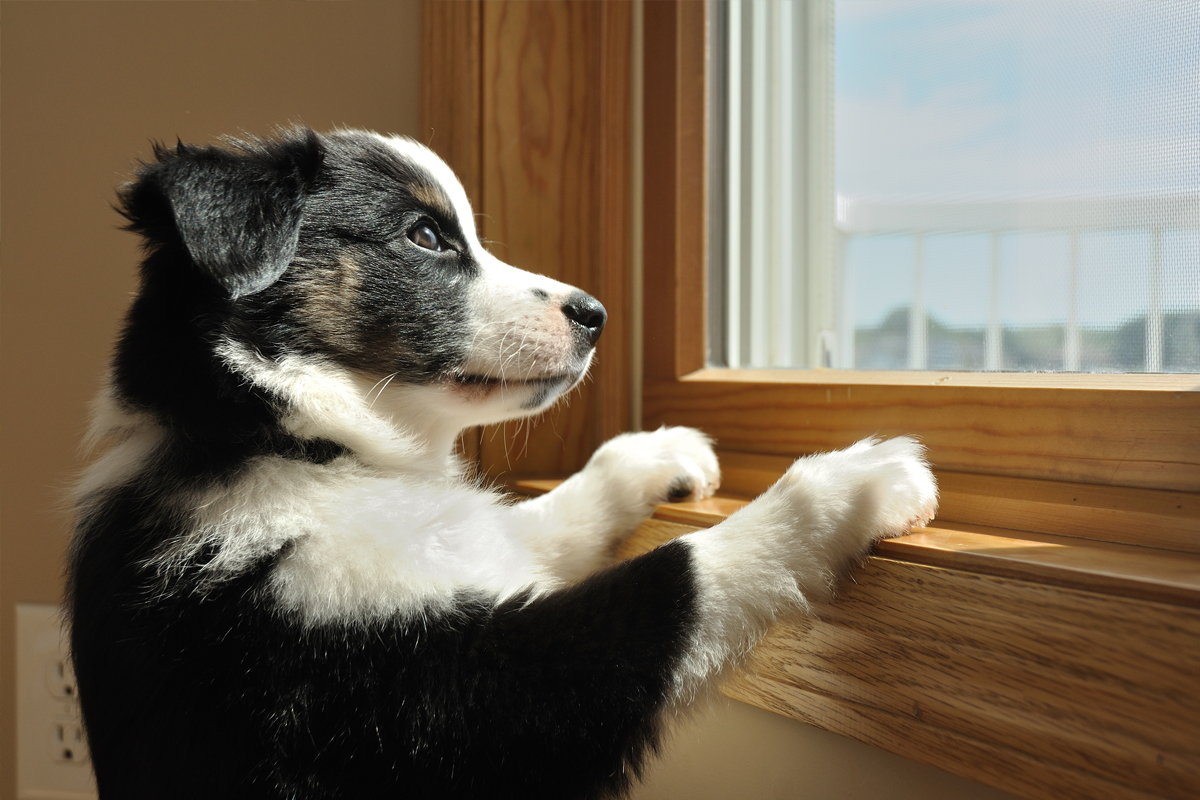
Many puppy owners believe that constant attention equals love. While bonding is important, too much togetherness early on can create long-term problems. Puppies that never learn to be alone often struggle with anxiety, vocalization, destructive behavior, and stress when their owners eventually leave.
At The DogHouse LLC, our family-owned dog training and boarding business has helped Pinellas County dog owners raise confident, well-adjusted dogs for nearly 20 years. One of the most common issues we see in adolescent and adult dogs is separation-related anxiety, and it almost always traces back to a lack of early independence training.
Teaching alone time early isn’t about neglect. It’s about building confidence, emotional stability, and resilience that lasts a lifetime.
Why Alone Time Is a Critical Skill
Independence is a learned behavior. Puppies are not born knowing how to self-soothe or relax on their own — they must be taught.
Puppies who learn alone time early are more likely to:
-
settle calmly when left
-
handle changes in routine
-
stay relaxed during boarding or daycare
-
recover faster from stress
-
remain confident in new environments
Dogs that never practice independence often panic when separation becomes unavoidable.
The Difference Between Alone Time and Isolation
Alone time is structured, intentional, and positive. Isolation is sudden, confusing, and stressful.
Healthy alone time includes:
-
a safe, comfortable space
-
short, predictable durations
-
calm exits and returns
-
no emotional buildup
Unhealthy isolation includes:
-
long absences without preparation
-
dramatic goodbyes
-
punishment-based confinement
-
lack of routine
When done correctly, alone time teaches security — not fear.
How Early Alone Time Prevents Separation Anxiety
Separation anxiety doesn’t usually appear overnight. It builds gradually when puppies never learn that being alone is safe.
Early alone-time training teaches puppies:
-
owners always return
-
quiet behavior is rewarded
-
independence is normal
-
relaxation is possible without constant interaction
This emotional foundation protects puppies as life changes.
When to Start Teaching Alone Time
The earlier, the better.
Puppies can begin learning alone time as soon as they settle into their new home. This doesn’t mean leaving for hours — it means starting with minutes and building gradually.
Trainer’s Guideline:
Short, frequent alone-time sessions are more effective than long, infrequent ones.
Creating a Safe Space for Independence
A puppy’s alone-time environment should feel calm and predictable.
Ideal spaces include:
-
a properly sized crate
-
a gated area
-
a quiet room with limited distractions
The space should be associated with rest — not excitement.
At The DogHouse LLC, we often recommend crates as a powerful tool for teaching independence and emotional regulation.
How to Introduce Alone Time the Right Way
Alone time should never feel dramatic.
Trainer’s Steps:
-
Ensure the puppy is exercised and calm
-
Place them in their safe space
-
Leave without fanfare
-
Return quietly
-
Release only when the puppy is calm
This removes emotional intensity from separation.
Why Constant Attention Can Backfire
Puppies that receive nonstop interaction struggle to self-regulate. They become dependent on stimulation instead of learning how to rest.
Signs of too much attention include:
-
whining when ignored
-
following owners constantly
-
inability to settle
-
vocalization when confined
-
panic when routines change
Teaching alone time early prevents these behaviors from forming.
Alone Time Builds Confidence
Confidence doesn’t come from constant reassurance — it comes from successful independence.
When puppies learn they can relax on their own, they develop:
-
emotional resilience
-
stronger impulse control
-
better focus during training
-
healthier attachment to owners
Confident dogs handle new experiences more easily.
The Role of Predictability
Predictable alone-time routines create calm.
Helpful practices include:
-
scheduled rest periods
-
consistent exit cues
-
similar duration sessions
-
calm reentry
Predictability tells the puppy: “This is normal. You’re safe.”
Alone Time Supports Better Obedience
Dogs that can relax independently learn faster. Their nervous systems are balanced, allowing them to focus during training.
Puppies with healthy independence often show:
-
improved impulse control
-
better leash manners
-
faster obedience learning
-
fewer attention-seeking behaviors
Rest and independence are just as important as exercise.
Common Mistakes to Avoid
Avoid these well-meaning but harmful habits:
-
rushing back at the first whine
-
emotional goodbyes
-
leaving toys constantly moving or noisy
-
using confinement only when leaving
-
allowing the puppy to dictate release timing
Calm leadership builds confidence — emotional reactions increase anxiety.
How Alone Time Helps With Boarding and Travel
Dogs that learn independence early transition more smoothly into boarding, daycare, or staying with family.
They:
-
adapt faster to new environments
-
experience less stress
-
sleep better
-
engage positively with caretakers
At The DogHouse LLC, we see clear differences between dogs that learned alone time early and those that didn’t.
When Professional Support Helps
Some puppies struggle due to genetics, past experiences, or inconsistent handling.
Professional training can help if your puppy:
-
panics when left
-
vocalizes excessively
-
cannot settle alone
-
shows early signs of anxiety
Early intervention prevents long-term struggles.
Teaching alone time early is one of the most important gifts you can give your puppy. Independence builds confidence, reduces anxiety, and supports lifelong obedience. Puppies who learn to relax on their own grow into balanced, resilient adult dogs.
At The DogHouse LLC, our family-owned training and boarding team helps puppies build independence through structure, predictability, and calm leadership. When puppies learn that alone time is safe, the entire household becomes calmer and more harmonious.
Ready to help your puppy build confidence and independence? Contact us today to learn more about our puppy training and boarding programs designed for lifelong success.